मेघदूत: "नीचैर्गच्छत्युपरि च दशा चक्रनेमिक्रमेण"

समर्थ शिष्या अक्का : "स्वामीच्या कृपाप्रसादे हे सर्व नश्वर आहे असे समजले. पण या नश्वरात तमाशा बहुत आहे."

G C Lichtenberg: “It is as if our languages were confounded: when we want a thought, they bring us a word; when we ask for a word, they give us a dash; and when we expect a dash, there comes a piece of bawdy.”

C. P. Cavafy: "I’d rather look at things than speak about them."

Martin Amis: “Gogol is funny, Tolstoy in his merciless clarity is funny, and Dostoyevsky, funnily enough, is very funny indeed; moreover, the final generation of Russian literature, before it was destroyed by Lenin and Stalin, remained emphatically comic — Bunin, Bely, Bulgakov, Zamyatin. The novel is comic because life is comic (until the inevitable tragedy of the fifth act);...”

सदानंद रेगे: "... पण तुकारामाची गाथा ज्या धुंदीनं आजपर्यंत वाचली जात होती ती धुंदी माझ्याकडे नाहीय. ती मला येऊच शकत नाही याचं कारण स्वभावतःच मी नास्तिक आहे."

".. त्यामुळं आपण त्या दारिद्र्याच्या अनुभवापलीकडे जाऊच शकत नाही. तुम्ही जर अलीकडची सगळी पुस्तके पाहिलीत...तर त्यांच्यामध्ये त्याच्याखेरीज दुसरं काही नाहीच आहे. म्हणजे माणसांच्या नात्यानात्यांतील जी सूक्ष्मता आहे ती क्वचित चितारलेली तुम्हाला दिसेल. कारण हा जो अनुभव आहे... आपले जे अनुभव आहेत ते ढोबळ प्रकारचे आहेत....."

Kenneth Goldsmith: "In 1969 the conceptual artist Douglas Huebler wrote, “The world is full of objects, more or less interesting; I do not wish to add any more.”1 I’ve come to embrace Huebler’s ideas, though it might be retooled as “The world is full of texts, more or less interesting; I do not wish to add any more.” It seems an appropriate response to a new condition in writing today: faced with an unprecedented amount of available text, the problem is not needing to write more of it; instead, we must learn to negotiate the vast quantity that exists. How I make my way through this thicket of information—how I manage it, how I parse it, how I organize and distribute it—is what distinguishes my writing from yours."

Tom Wolfe: "The first line of the doctors’ Hippocratic oath is ‘First, do no harm.’ And I think for the writers it would be: ‘First, entertain.’"

विलास सारंग: "… इ. स. 1000 नंतर ज्या प्रकारची संस्कृती रुढ झाली , त्यामध्ये साधारणत्व व विश्वात्मकता हे गुण प्राय: लुप्त झाले...आपली संस्कृती अकाली विश्वात्मक साधारणतेला मुकली आहे."

Sunday, May 19, 2013

Balraj Sahni @100...तुझ पे दिल कुर्बान

Soumitra Chatterjee:


"One person who really inspired me was Balraj Sahani. I think he is the best cinema actor that India has ever seen. He could carry on a big role, a hero's role with the nuances of a character actor."


Peter Aspden:

"The Italian neorealist classic, Vittorio De Sica’s Bicycle Thieves (1948) was subtly retitled The Bicycle Thief in the US – “perhaps it was just an American idea that the man in a film has to be its hero,” says (David) Thomson. Producer David Selznick’s reaction to the film was a wish to cast Cary Grant in the lead role. The Americans missed the wider implications of De Sica’s heart-wrenching story, adds Thomson, and failed to acknowledge how the original title’s plural focused attention on systemic failure rather than individual culpability: “And so the country, horrified at the thought of Communist influence, suppressed the gently Marxist interpretation of the title.”..."

(Financial Times, October 19 2012)


HOLLY BRUBACH:

"...Time and again, Bogart was cast as a man of principle, and his finest qualities are on display in “Tough Without a Gun”: his decency and courage in championing Fatty Arbuckle, Peter Lorre, Joan Bennett and Gene Tierney when they were in dire straits and out of favor; his generosity to charities; his integrity in a town where promises were forgotten, not kept...Bogart’s appeal was and remains completely adult — so adult that it’s hard to believe he was ever young. If men who take responsibility are hard to come by in films these days, it’s because they’re hard to come by, period, in an era when being a kid for life is the ultimate achievement, and “adult” as it pertains to film is just a euphemism for pornography."

On May 1 2013, Balraj Sahni would have turned 100.


For me, he remains the greatest Indian actor I have seen and one of the best in the world. Multiple posts on this blog refer to him. (By the way he occasionally reminds me of Humphrey Bogart. Both died before they turned 60.)

How come he never worked with Satyajit Ray?


Sandip Ray, Mr. Ray's son:

"...In fact, he (Balraj Sahni) was one of the favourite actors of the Ray family and my father (Satyajit Ray) really wanted to have him act in his movie. He was toying with the idea of making Rajsingha (a historical novel by Bankim Chandra Chattopadhyay) in the 1960s with Balraj Sahni, but it’s a pity that it kind of fizzled out. He was a real admirer of Balrajji and the feeling was mutual..."

They say he did NOT win a single award. Shame on such awards and award givers! But then Auden, Borges, Conrad, Joyce, Kafka, Nabokov, Proust, Tolstoy, Twain, Ibsen, Chekhov, Zola never won literature Nobel! Balraj Sahni was such a name the field of acting.


Balraj Sahni and Ratan Kumar in Bimal Roy's 'Do Bigha Zamin', 1953

courtesy: Shemaroo

Shyam Benegal on DBZ:

"In the last 100 years, Indian cinema has seen several marvelous films. It is very difficult to choose one over the other another — should I choose from recent films or go back into the past? And also, why am I choosing one over the other? But if there is one film which simply has to be here, it is Do Bigha Zamin. Here, Bimal Roy took the camera out of the studio and to the streets and fields, shooting on location. Before this you didn’t quite get to see the real world. It was mainly make-believe, extraordinarily done but created in a particular place. Bimal Roy introduced realism with this movie. He showed that you didn’t need to follow the same conventions. And Balraj Sahni, with his exceptional performance, did the rest."


 Balraj Sahni in Hrishikesh Mukherjee's 'Anuradha', 1960

courtesy: Shemaroo

Saturday, May 18, 2013

Can We Buy Min-suk Kim aka Kwang33 for IPL?...मनोज्ञ मुद्रा शिल्पित एक

They say billions are now riding the game of cricket, more specifically IPL. But the old cliche still holds: money can't buy every thing. 

Sure, you can buy no-balls, dropped catches, sixes, wide-balls, long hops, over-throws but can't 'buy' Korean illustrator Min-suk Kim, better known as Kwang33, who has been contributing to basketball publications for the past nine years.

Look at the following picture to realise what cricket is missing...


Michael Jordan in full flow

Artist: Min-suk Kim; 

Picture courtesy: Guardian, UK


Watching the picture is like reading the following Marathi poem of B S Mardhekar (बा सी मर्ढेकर):

"दणकट दंडस्नायू जैसे 
लोखंडाचे वळले नाग;
कभिन्न काळ्या मांड्या जैसा
पोलादाचा चिरला साग,

...

.यंत्रयुगांतिल नवनृत्याचा
स्थाणुभाव हा प्रगटे येथे
मनोज्ञ मुद्रा शिल्पित एक
संगमरवरी मांसामध्ये,

-अहा, कोळसेवाला काळा !
नव्या मनूतिल गिरिधर-पुतळा !!"

[poem no 46, "कांही कविता" ("kahi kavita") from "मर्ढेकरांची कविता" ("Mardhekaranchi Kavita"), 1959-1977; courtesy: राघव बाळ मर्ढेकर (Raghav Bal Mardhekar)]
  

Wednesday, May 15, 2013

When All That Is Over, Will Rankala Be Still There?

Paul Kingsnorth: 

"What am I to do with feelings like these? Useless feelings in a world in which everything must be made useful. Sensibilities in a world of utility. Feelings like this provide no “solutions”. They build no new eco-homes, remove no carbon from the atmosphere. This is head-in-the-clouds stuff, as relevant to our busy, modern lives as the new moon or the date of Lughnasadh. Easy to ignore, easy to dismiss, like the places that inspire the feelings, like the world outside the bubble, like the people who have seen it, if only in brief flashes beyond the ridge of some dark line of hills."

('Confessions of a Recovering Environmentalist', Orion Magazine, Jan/Feb 2012)

 In May 2013, I went to Kolhapur (कोल्हापूर) after almost a decade.

I visited Ambabai (अंबाबाई) temple.

It has now become very crowded for my taste. Although more majestic and elegantly beautiful than the most, once it was like a temple in my neighborhood where we loved to go as kids, the way we went to Dutt (दत्त)  temple at Miraj. Now, it's a destination for almost all  Hindu religious tourism. Commerce, wealth and security on display are overwhelming.

Is it better to meet Ambabai in one's heart?

As a kid,  I always wondered: if the main temple is so crowded, why are the most other temples on the campus so empty? Are other deities less important or less magnanimous? This time too I wondered the same because when we went to Shakambhari (शाकंभरी) temple, there was almost no one. Even the priest  was sitting outside.

Earlier, I visited  Rankala (रंकाळा). Once, I used to go there at least once a year. What a pleasure it was walking a couple of km to the lake (some of it on unpaved road) with my elder cousin - Diluappa (दिलुअप्पा) and loitering there for a while and breathing deep in that cool gust. I felt as if I never left the place...I felt 40 years younger.

There were kites/hawks  flying over, occasionally swooping in to pick up pieces of bread/ trash thrown by visitors into the water. But that act of vandalism by humans had no effect on me.  Rankala was simply overwhelmingly seductive...Ambabai's in her Temple/ All's right with the world!

 This is how H G Wells describes 'the end' in his ‘The Time Machine’:


“The darkness grew apace; a cold wind began to blow in freshening gusts from the east, and the showering white flakes in the air increased in number. From the edge of the sea came a ripple and whisper. Beyond these lifeless sounds the world was silent. Silent? It would be hard to convey the stillness of it. All the sounds of man, the bleating of sheep, the cries of birds, the hum of insects, the stir that makes the background of our lives—all that was over. As the darkness thickened, the eddying flakes grew more abundant, dancing before my eyes; and the cold of the air more intense. At last, one by one, swiftly, one after the other, the white peaks of the distant hills vanished into blackness. The breeze rose to a moaning wind. I saw the black central shadow of the eclipse sweeping towards me. In another moment the pale stars alone were visible. All else was rayless obscurity. The sky was absolutely black.”


When "All the sounds of man, the bleating of sheep, the cries of birds, the hum of insects, the stir that makes the background of our lives—all that was over" arrives, will Rankala still be there?

I hope so.


Artist: Les Edwards, 1979 portraying when 'all that was over'

Monday, May 13, 2013

Did Shivaji-maharaj Eat Good, Maharashtra-grown Mangoes?... Dar sift-e-ambah

Today May 13 2013 is Aakshay Trutiya (अक्षय तृतीया) day in  Maharashtrian calendar. My wife believes one should eat the first ripe mango of the season this day.


Steven Weinberg:

"...I am not so sure that world unification is an unmixed blessing. It has the side effect of shrinking the psychological space in which we live. A few hundred years ago large areas of the map were blank, leaving the imagination free to fill them with strange peoples and animals. Even Queen Victoria, who, it is said, tried to taste every fruit grown in the British Empire, never had a chance to try a mango or a durian. Now we can fly anywhere, and we buy mangoes in our local supermarkets. This is not my idea of utopia. Wouldn't it be more exciting to eat a mango if it could be done nowhere but in India? What is the good of getting somewhere quickly if it is no different from the place one has left?..." 

('Five and a Half Utopias', The Atlantic, January 2000) 

Zahir-ud-din Muhammad Babur (1483-1530) in the 'Tuzuk-i-Baburi': 

"Hindustan is a country of few charms. Its people have no good looks; of social intercourse, paying and receiving visits there is none; of genius and capacity none; of manners none; in handicraft and work, there is no form or symmetry, method or quality. There are no good horses, no good dogs, no grapes, musk melons or first-rate fruits, no ice or cold water, nor bread or cooked food in bazaars; no hamams, no colleges, no torches or candlesticks,"

Maybe but what about mangoes, Mr. Babur-Sir?...Did you eat any good mangoes when you were here?

The question that has bothered me  for the past  few years is : Did Shivaji-maharaj (1630-1680) eat good, Maharashtra-grown mangoes?

I mean not necessarily Alphonso and Payari variety on which I have gorged on whenever I have been able to live in Maharashtra during the Mango-months (May and June). 

The best years of course were when I lived in Miraj c 1961-1981 where my father, stretching his limited resources,  really pampered us with the best of mangoes..Devgad, Ratnagiri...every year. Experience of eating such quality mangoes in those numbers was - please note Dr. Weinberg- like living in utopia- "mango utopia".

Coming back to the original question:  most people of Maharashtra DO NOT bother about such things when it comes to Shivaji. 

Whenever Shivaji is mentioned, it is always about battles, army, navy, administration, forts and also caste based politics, his memorial in the Arabian sea...

But for me, 'mango question' is very important. And my guess is Shivaji did NOT eat good mangoes that were grown in Maharashtra.

One of my favourite Marathi books has been 'Peshwekalin Maharashtra' by Vasudev Krushna Bhave, 1936 ('पेशवेकालीन महाराष्ट्र',  वासुदेव कृष्ण भावे). I keep reading it from time to time and it always gives.

Mr. Bhave writes 

"शाहू महाराजांपूर्वी महाराष्ट्रात नाव घेण्याजोग्या फुलबागा व फळबागा अगदी विरळा होत्या; त्यांजकडे लक्ष पुरविण्यास पूर्वीच्या महाराजांना स्वारस्य नव्हते… शाहूमहाराजांनी महाराष्ट्रास रानटी स्थितीतून सुसंकृत  स्थितीत उद्योग केवढा चालवला होता..."

"Before Shahu-maharaj there were very few flower-gardens and fruit-gardens worth their names in Maharashta; earlier rulers had no interest in paying attention to them...So busy was Shahu-maharaj taking Maharashtra from barbaric to civilized society..." 

Mr. Bhave argues that since Shahu-maharaj (1682- 1749) had lived  in the custody of the Mughals (but as a prince) he had tasted the best of flowers and fruits. 

Penelope Hobhouse writes on "The Babur Nama" By Zahir al-Din Babur, edited by Dilip Hiro:

"(Babur) was a great warrior and commander – descended from both Tamburlaine and Genghis Khan – but also with a wonderful eye for nature and landscape. It’s rare to combine warfare and gardening. In The Babur Nama he describes the country in Fergana in Uzbekistan where he grew up, for example, noting the topography and the plants, even though he left when he was only 12. He describes the Judas tree in bloom, and planting willows around a pond and spotting wild tulips in the fields up above Kabul.
I’m writing a book about Mughal gardens at the moment, trying to follow Babur’s trail down from Afghanistan, through the Punjab and on to Delhi. And the amazing thing is that, even when campaigning, if he paused amongst beautiful scenery, he would have his men do some landscaping, enlarging a stream here or moving a bank there. He must have been the most extraordinary man and his memoir makes the best kind of bedside reading: intrigue, conquest, history on an epic scale and gardening!"


Illustrations in the Baburnama regarding the fauna of South Asia.

courtesy: Wikipedia

Is that a mango tree in the bottom right?

Saturday, May 11, 2013

Mars One: An Indian Astronaut, Not Chinese, Delivers a Baby on Her Way to Mars

James Lovegrove: 

“…Contrary to received opinion, science fiction’s preoccupation has always been the here and now. Its far-flung planets and future timelines are merely a way to analyse the contemporary. In this respect, it is the most politically engaged of all literary genres. Motifs that may appear trashy to the uninitiated - space exploration, extraterrestrials, futuristic technology - can in fact be surprisingly sophisticated tools for dissecting and examining the world as it is…"


(FT, February 9 2007)


Laurie Penny asks in New Statesman, April 30 2013  "Modern life is science fiction – but would you dare go on a one-way mission to Mars?" and explains:


"If you were offered a one-way ticket to Mars, would you take it? It’s a serious question. The first manned Mars landing, organised by a Dutch company called Mars One, has put out a call for applicants. In 2018, the planets will literally align, making a journey to the Red Planet more than feasible. You don’t have to be a trained astronaut but you must be willing to spend 521 days in a very small space with three other people, with limited supplies and drinking water reclaimed from your own effluvia. You will also be under constant video surveillance, because this mission to Mars is relying on global TV networks to cover its considerable budget. It’s the ultimate Big Brother, with no way out: after a year and a half the colonists will either shag or kill each other, or both. The ratings will be fantastic.
Most of all, you must be willing to say goodbye for ever to your family, your friends, the barista at your favourite coffee shop. This is a one-way trip: even if they make it through the gruelling physical ordeal of the journey, it is possible none of the astronauts will ever come home."

This is the reality of  man's mission to Mars...possibly in year 2018, non-Governmental project, 521 days journey, one way ticket, funded by reality TV..."a very small space with three other people"...Could you imagine a woman delivering a baby in such an environment?

On learning that about 600 Chinese have lined up to travel on Mars One, Marathi daily Loksatta, on May 4 2013,  felt worried sick that 'colonizers' Chinese were now going to invade Mars (after recently 'invading' India)! The paper also felt that China had now become 'Mars' in Indian nation's horoscope.

I have not a read a lot of science fiction. In Marathi, I have not read almost any beyond Jayant Narlikar (जयंत नारळीकर)  and Narayan Dharap (नारायण धारप).

The other day,  I read the late D B Mokashi's (दि बा मोकाशी) science fiction short story 'Sharavati' ('शरावती) first published in Diwali 1963, almost 50 years ago. 1963 is the year of John F. Kennedy assassination, Vietnam war...Cuban Missile Crisis and India-China war were just a year old that Diwali

I like a lot of what Mr. Mokashi has written. This story too is interesting but can't be called one of his best and, another thing,  he can't really write about politics. His praise for Indian civilization and nation- unnecessary for the story line-  is not just jarring and but not even entirely factual. (Is it prompted by India's crushing defeat by China towards the end of 1962?)

Mokashi imagines that an Indian woman astronaut 'Sharavati' is travelling to Mars in year 1980 and soon after the journey begins discovers that she is pregnant!

How did she get pregnant? During a break in her training for the Mars mission, she meets her husband alone as their kids are away.

Eventually, she delivers a baby boy in space- apparently with less trouble because of zero gravity-  and returns to earth successfully as her mission is aborted by its possible collision with an asteroid. (Today, Mokashi would have been advised not to bring Sharavati and her kid back to the earth but instead make them colonize Mars by reaching there!)

I have already quoted David Graeber earlier on this blog:

"As someone who was eight years old at the time of the Apollo moon landing, I remember calculating that I would be thirty-nine in the magic year 2000 and wondering what the world would be like. Did I expect I would be living in such a world of wonders? Of course. Everyone did. Do I feel cheated now? It seemed unlikely that I’d live to see all the things I was reading about in science fiction, but it never occurred to me that I wouldn’t see any of them."

Manned Mars mission is one of "any of them".

Cory Doctorow has said : "science fiction writers don't predict the future (except accidentally), but if they're very good, they may manage to predict the present." 

Although unwanted pregnancies were of immediate concern in 1963, Mokashi is certainly onto something bigger than that in his story. At the end of the story, I got a feeling that it was steeped in feminist ideology. And I think that is where Mokashi succeeds and predicts the future: 2013.

Mokashi imagines J L Nehru c 1980 to be not just alive but riding a horse and giving interviews on the subject of Sharavati's predicament. We know Nehru died in 1964 but it's interesting to see how the generation of Mokashi could not quite contemplate Nehru's death just an year earlier. 

Mokashi imagines a kind of media frenzy we see today. But he hands out a certificate of good conduct to Indian journalists vis-a-vis their foreign counterparts.  Surprisingly,  he doesn't imagine TV in India in 1980 and he is right because TV went on rampage in India only after 1982.

 Mokashi tells us a little about the world politics of 1980. World has seen WW III in 1965 and is on the brink of WW IV in 1980.   

Mokashi's world of 1980 is quadripolar: Yellow skinned (पीतवर्णीय), America+Russia+Europe, all of Asia,  and Negroes. He sees the world divided on the lines of racial schisms and not economic / ideological ones. (I was confused by just one thing how yellow skinned and all of Asia are two exclusive groupings? Isn't Asia = yellow+brown+ some white?)

That's quite a bold prediction  considering how powerful Russian block was in 1963. Therefore, not only Mokashi sees the fall of Soviet Union and demise of communism but predicts America and Russia coming together. It's also interesting to note how race was going to prevail over other things in his future. (If we consider India, we know how caste, religion and language have prevailed over economic and other factors.)

Mokashi says we may think of this state of world politics as barbaric in 2001. On the contrary,  we all think this to be normal.  

Towards the end, Mokashi tells us that thanks to 'Sharavati pregnancy' episode, humans end up colonizing Mars in 1980 and those colonies now are thriving in year 2001. 

If so, the following should not surprise us. 


In January 2008, there was a report in Daily Mail of UK:

“The photo of what looks like a naked woman with her arm outstretched was among several taken on the red planet and sent back to Earth by NASA's Mars explorer Spirit.”

I am just worried about one thing: Is she Chinese and of child-bearing age and, if so, will she mate only with another Chinese?


courtesy: Barcroft Media and Daily Mail, UK

Thursday, May 09, 2013

Fading of Ana's Neo Red and BJP's Saffron in 5 Years


Ms. Ana Ivanovic beat Dinara Safina to win the 2008 French Open, surely first of many to come.

BJP won Karnataka at the same time. It was hailed 'Dakshin-Vijay' (दक्षिण विजय), surely first of many to come.


Saffron and Neo Red were victorious colours.

This is the post I wrote on June 9 2008: "BJP Saffron and Ivanovic Neo Red are going to be Huge this Summer."

As of May 6, 2013, Ms. Ivanovic is ranked no. 16 in the Women's Tennis Association (WTA) rankings and never looks to me a champion player she looked that summer, 5 years ago, let alone winning another Grand Slam tournament again.

BJP will be number two or even three party in new Karnataka assembly.

Tuesday, May 07, 2013

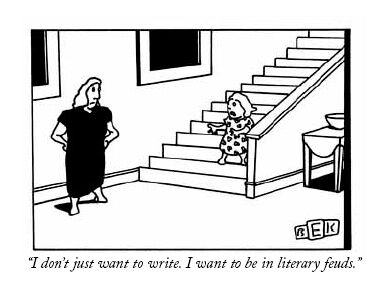
I Want Durga Bhagwat to be in Literary Feuds!

Today May 7 2013 is 11th Death Anniversary of Durga Bhagwat  (दुर्गा भागवत)

DWIGHT GARNER:

"The sad truth about the book world is that it doesn’t need more yes-saying novelists and certainly no more yes-saying critics. We are drowning in them. What we need more of, now that newspaper book sections are shrinking and vanishing like glaciers, are excellent and authoritative and punishing critics — perceptive enough to single out the voices that matter for legitimate praise, abusive enough to remind us that not everyone gets, or deserves, a gold star."


(The New York Times, August 15 2012)

RACHEL DONADIO:

‘To some, the paucity of feuds is connected to the larger state of literary culture. “It’s not because we no longer have feuds,” said Fran Lebowitz, the writer. “It’s because we no longer have literature.” ’

(“Art of the Feud”, The New York Times, November 19 2006)

On her 10th death anniversary,  I said: I have nothing new to write about her. I still haven't.

But I miss her.

Among other things, I miss her participation in Marathi literary feuds! What a passionate critic-cum-fighter she was- "excellent, authoritative and punishing".

I still remember the way she took on the late P L Deshpande ( पु ल देशपांडे) and Mr. Govind Talwalkar (गोविंद  तळवलकर)- both then Sumo wrestlers on Maharashtra's middle class cultural mat-  on the editorial pages of "Maharashtra Times" (महाराष्ट्र टाइम्स) in 1970's.

First my father read those articles aloud and laughed. Then I read them myself. I wish they never stopped feuding! [There is one puzzle still unsolved from those days. Ms. Bhagwat had accused Mr. Talwalkar on making a pun on the name of Amte (आमटे) in personal chats. I have never figured what it could be.]

Alas, now there are no big literary feuds in Marathi.

Literary feuds can end up in a real fight. Head butting for instance.

In India this year,  we almost had one when Mr. Girish Karnad attacked Mr. V S Naipaul but sadly there was no retaliation from Mr. Naipaul and hence no fight and fun.

The sixth episode of the The Simpsons' eighteenth season "Moe'n'a Lisa" has Jonathan Franzen fighting with Michael Chabon.

"Franzen and Chabon are hysterical. They get in heated fight, Franzen breaks a table over Chabon's head, Chabon accuses him of fighting like Anne Rice"

Look at the following picture of Mr. Kaplan. Little girl is telling her mom: I don't just want to write. I want to be in literary feuds.

What an ambition! "I want to be in literary feuds" Like Durga Bhagwat, I may add!

Artist : Bruce Eric Kaplan, The New Yorker, 27 June 1994