मेघदूत: "नीचैर्गच्छत्युपरि दशा चक्रनेमिक्रमेण"

समर्थ शिष्या अक्का : "स्वामीच्या कृपाप्रसादे हे सर्व नश्वर आहे असे समजले. पण या नश्वरात तमाशा बहुत आहे."

G C Lichtenberg: “It is as if our languages were confounded: when we want a thought, they bring us a word; when we ask for a word, they give us a dash; and when we expect a dash, there comes a piece of bawdy.”

C. P. Cavafy: "I’d rather look at things than speak about them."

Martin Amis: “Gogol is funny, Tolstoy in his merciless clarity is funny, and Dostoyevsky, funnily enough, is very funny indeed; moreover, the final generation of Russian literature, before it was destroyed by Lenin and Stalin, remained emphatically comic — Bunin, Bely, Bulgakov, Zamyatin. The novel is comic because life is comic (until the inevitable tragedy of the fifth act);...”

सदानंद रेगे: "... पण तुकारामाची गाथा ज्या धुंदीनं आजपर्यंत वाचली जात होती ती धुंदी माझ्याकडे नाहीय. ती मला येऊच शकत नाही याचं कारण स्वभावतःच मी नास्तिक आहे."

".. त्यामुळं आपण त्या दारिद्र्याच्या अनुभवापलीकडे जाऊच शकत नाही. तुम्ही जर अलीकडची सगळी पुस्तके पाहिलीत...तर त्यांच्यामध्ये त्याच्याखेरीज दुसरं काही नाहीच आहे. म्हणजे माणसांच्या नात्यानात्यांतील जी सूक्ष्मता आहे ती क्वचित चितारलेली तुम्हाला दिसेल. कारण हा जो अनुभव आहे... आपले जे अनुभव आहेत ते ढोबळ प्रकारचे आहेत....."

Kenneth Goldsmith: "In 1969 the conceptual artist Douglas Huebler wrote, “The world is full of objects, more or less interesting; I do not wish to add any more.”1 I’ve come to embrace Huebler’s ideas, though it might be retooled as “The world is full of texts, more or less interesting; I do not wish to add any more.” It seems an appropriate response to a new condition in writing today: faced with an unprecedented amount of available text, the problem is not needing to write more of it; instead, we must learn to negotiate the vast quantity that exists. How I make my way through this thicket of information—how I manage it, how I parse it, how I organize and distribute it—is what distinguishes my writing from yours."

Tom Wolfe: "The first line of the doctors’ Hippocratic oath is ‘First, do no harm.’ And I think for the writers it would be: ‘First, entertain.’"

विलास सारंग: "… . . 1000 नंतर ज्या प्रकारची संस्कृती रुढ झाली , त्यामध्ये साधारणत्व विश्वात्मकता हे गुण प्राय: लुप्त झाले...आपली संस्कृती अकाली विश्वात्मक साधारणतेला मुकली आहे."

Thursday, December 11, 2014

बहिणीचे प्रेम, गाय व टोड यांचे उल्लेख...G A's Cows, Orwell's Toads and Sentimentality in Literature


Today December 11 2014 is 27th Death Anniversary of G A Kulkarni (जी. ए. कुलकर्णी, "जीए")


Gregory Crewdson:

"When you continually do the same thing in a certain sort of way—the one thing artists do whether they’re filmmakers or writers—they create an iconography of themselves, even if they’re not aware of it. It’s not until later that you realize, Oh, I use a lot of medicine bottles or a lot of nondescript cars with doors open or a lot of pregnant women, or whatever it is. You can’t give a precise sort of reason why, but after a period of time that thing just becomes part of the world you create."


Back cover of  'Jee Enchi Nivadak Patre Khand 1, 1995 and Khand 2, 1998' ('जी.एं. ची निवडक पत्रे'; खंड 1 आणि खंड 2)
 courtesy: artist Bal Thakoor (बाळ ठाकूर) and owner of copyrights to the books

There are many references to cows- its anatomy, its food (smell of fresh grass), its milk, its tears, its death  etc- in G A Kulkarni's (जी ए कुलकर्णी) stories.

G A has explained its reasons in a Marathi letter:

"… माझ्या कथात बहिणीचे प्रेम व गाय यांचे उल्लेख जरुरीपेक्षा जास्त येतात, असे मला एक टीकाकाराने  इशारा दिला आहे…लहानपणी आमच्या घरी गाय नव्हती असा एक दिवस मला आठवत नाही. गायीच्या पाठीवर हात ठेवताच होणारी तिच्या कातडीची ओळख दाखवणारी थरथर, तिचा वास, रात्री गवत टाकायला जाताना हातातील कंदिलाचा प्रकाश तिच्या  डोळ्यावर पडताच चमकणारे गडद लालसर भिंग, या आठवणी आजदेखील इतक्या स्पष्ट आहेत की त्यांतील एक हाताने उचलून मी तुम्हास देवू शकेन… या सार्या बरोबर, गाय आडवी झालेली पहिली; तिचे डोळे सतत का पाझरू लागले या विचाराने रात्रीची जेवणे तशीच रहिली.  पाण्याचे पातेले व गवताची पेंडी घेऊन समोर तासंतास काढले व शेवटी चारसहा जणांनी तिला उचलून गाडीत ठेवलेले देखील मी पाहिले.  त्यानंतर घरात गाय आली नाही…घरातून  गाय गेली, व आमचे बालपण घेऊन गेली… "

[from the book pictured above]


("...A critic has warned me that there are too many references to sisterly love and cows in my stories...There was not a day, I remember, there was no cow at our home during childhood. Quivering of her skin that showed familiarity after being touched on the back, here smell, dark reddish lens when her eyes reflected the light of lantern in hand as one went to feed grass in the night, these memories are so clear that I can hand one of them over to you...with all this, one saw flattened cow; the dinners were never eaten by the thought of why her eyes were constantly sprinkling. Hours were spent holding a bowl of water and grass chunk and finally I also saw four or six people lifting and keeping her in a vehicle. Cow then never came to the house...The cow left the house, and took away our childhood...")


 Artist: Mort Gerberg, The New Yorker
 
 George Orwell's "Some Thoughts on the Common Toad" is one of the best essays I have read. I keep reading it.

"...I mention the spawning of the toads because it is one of the phenomena of spring which most deeply appeal to me, and because the toad, unlike the skylark and the primrose, has never had much of a boost from poets. But I am aware that many people do not like reptiles or amphibians, and I am not suggesting that in order to enjoy the spring you have to take an interest in toads. There are also the crocus, the Mistle-Thrush, the cuckoo, the blackthorn, etc. The point is that the pleasures of spring are available to everybody, and cost nothing...

...Is it wicked to take a pleasure in spring and other seasonal changes? To put it more precisely, is it politically reprehensible, while we are all groaning, or at any rate ought to be groaning, under the shackles of the capitalist system, to point out that life is frequently more worth living because of a blackbird's song, a yellow elm tree in October, or some other natural phenomenon which does not cost money and does not have what the editors of left-wing newspapers call a class angle? There is not doubt that many people think so. I know by experience that a favourable reference to ‘Nature’ in one of my articles is liable to bring me abusive letters, and though the key-word in these letters is usually ‘sentimental’...

...two ideas seem to be mixed up in them. One is that any pleasure in the actual process of life encourages a sort of political quietism. People, so the thought runs, ought to be discontented, and it is our job to multiply our wants and not simply to increase our enjoyment of the things we have already. The other idea is that this is the age of machines and that to dislike the machine, or even to want to limit its domination, is backward-looking, reactionary and slightly ridiculous. This is often backed up by the statement that a love of Nature is a foible of urbanized people who have no notion what Nature is really like. Those who really have to deal with the soil, so it is argued, do not love the soil, and do not take the faintest interest in birds or flowers, except from a strictly utilitarian point of view. To love the country one must live in the town, merely taking an occasional week-end ramble at the warmer times of year.

This last idea is demonstrably false. Medieval literature, for instance, including the popular ballads, is full of an almost Georgian enthusiasm for Nature, and the art of agricultural peoples such as the Chinese and Japanese centre always round trees, birds, flowers, rivers, mountains. The other idea seems to me to be wrong in a subtler way. Certainly we ought to be discontented, we ought not simply to find out ways of making the best of a bad job, and yet if we kill all pleasure in the actual process of life, what sort of future are we preparing for ourselves? If a man cannot enjoy the return of spring, why should he be happy in a labour-saving Utopia? What will he do with the leisure that the machine will give him? I have always suspected that if our economic and political problems are ever really solved, life will become simpler instead of more complex, and that the sort of pleasure one gets from finding the first primrose will loom larger than the sort of pleasure one gets from eating an ice to the tune of a Wurlitzer. I think that by retaining one's childhood love of such things as trees, fishes, butterflies and — to return to my first instance — toads, one makes a peaceful and decent future a little more probable, and that by preaching the doctrine that nothing is to be admired except steel and concrete, one merely makes it a little surer that human beings will have no outlet for their surplus energy except in hatred and leader worship.

At any rate, spring is here, even in London N. 1, and they can't stop you enjoying it. This is a satisfying reflection. How many a time have I stood watching the toads mating, or a pair of hares having a boxing match in the young corn, and thought of all the important persons who would stop me enjoying this if they could. But luckily they can't. So long as you are not actually ill, hungry, frightened or immured in a prison or a holiday camp, spring is still spring. The atom bombs are piling up in the factories, the police are prowling through the cities, the lies are streaming from the loudspeakers, but the earth is still going round the sun, and neither the dictators nor the bureaucrats, deeply as they disapprove of the process, are able to prevent it."


 Artist: Charles Addams, The New Yorker, December 19 1959

Sunday, December 07, 2014

Guide@50: Serpent Girls of Vijay Anand and Fritz Lang

Vijay Anand's 'Guide' was released in India on December 6 1965. So today, December 7 2014, is the start of its golden anniversary year.

The movies has appeared on this blog a couple of times earlier. I still remember its large colourful posters displayed  in front of the town hall, Miraj where it ran at Deval talkies some time in 1966. Aged 6, I wanted to watch the movie! My father flatly and quite rightly refused the permission. I would watch the film a decade or so later.

I consider the movie very significant because, I feel,  it marked the end of Hindi cinema's golden age that had started with Mehboob Khan's 'Andaz', 1949.

By the end of 1965. the best work of Hindi cinema's greats such as Mehboob Khan, Guru Dutt, Bimal Roy, Raj Kapoor, Dilip Kumar, Dev Anand, Balraj Sahni, Motilal, Nargis, Madhubala, Geeta Bali, Nutan, Meena Kumari, Shankar-Jaikishan, Naushad, Roshan, Madan Mohan, C Ramchandra, S D Burman etc. was largely behind them.

Those who like 'Guide' are often impressed with Waheeda Rehman's snake-dance, ahead of her even other wonderful dance numbers. I always feel that dance is a manifestation of suppressed sexual desires of Rosie played ably by Ms. Rehman. 

Google Doodle on October 10 2014 

courtesy: Google Inc.

R K Narayan's 'The Guide', 1958 on which the film is supposedly based, describes Rosie's snake-dance, on stage, in these words:


“…Two hours passed. She was doing her fifth item—a snake dance, unusually enough. I liked to watch it. This item always interested me. As the musicians tuned their instruments and played the famous snake song, Nalini came gliding onto the stage. She fanned out her fingers slowly, and the yellow spotlight, playing on her white upturned palms, gave them the appearance of a cobra hood; she wore a diadem for this act, and it sparkled. Lights changed, she gradually sank to the floor, the music became slower and slower, the refrain urged the snake to dance—the snake that resided on the locks of Shiva himself, on the wrist of his spouse, Parvathi, and in the ever-radiant home of the gods in Kailas. This was a song that elevated the serpent and brought out its mystic quality; the rhythm was hypnotic. It was her masterpiece. Every inch of her body from toe to head rippled and vibrated to the rhythm of this song which lifted the cobra out of its class of an underground reptile into a creature of grace and divinity and an ornament of the gods.
The dance took forty-five minutes in all; the audience watched in rapt silence. I was captivated by it. . . . She rarely chose to do it indeed. She always said that a special mood was needed, and always joked that so much wriggling twisted her up too much and she could not stand upright again for days. I sat gazing as if I were seeing it for the first time. There came to my mind my mother’s remark on the first day, “A serpent girl! Be careful.”…”


'Serpent girl' Waheeda Rehman

courtesy: Shemaroo and current copyright holder to the feature film 'Guide'

Apart from Mr. Narayan's vivid description,  was there any on-screen inspiration for Mr. Vijay Anand?

Probably yes.

I read a few books this year.

The best of them is 'A Strange Kind of Paradise: India Through Foreign Eyes', 2014 by Sam Miller. Mr. Miller is easily one of the interesting persons who ever visited India. He belongs with the likes of Hiuen Tsang, Ibn Battuta...

The book gave me so much and will continue to give. Every page of the book is a treasure trove.

One of the most interesting things I learned there was great Fritz Lang's 'India films': 'The Tiger of Eschnapur', 1959 and 'The Indian Tomb', 1959.


'Serpent girl' Debra Paget performing snake dance in Fritz Lang's 'The Indian Tomb', 1959

courtesy: current copyright owner to the feature 

Fritz Lang was a greater director than Vijay Anand but when it comes to the battle of serpent girls, the clear winner is Mr. Anand's fully clothed Ms. Rehman!

Thursday, December 04, 2014

Pouring Technical Knowledge of the Western World Over Bhopal!

B S Mardhekar (बा. सी. मर्ढेकर)

"...येइल का कधि सीतापति ग
चुकून तरि पण ह्या वाटेला?
घेइल का अन् रुजू करूनी
ह्या बोरांच्या नैवेद्याला?

कुठली सीता, कुठला राघव?
पुसे खडीचा रस्ता फक्कड़;
आंणि ठेविते गाल झोपडी
तळभिंतीवर फिरून खप्पड."


Eric Herschthal's review of Sven Beckert's 'Empire of Cotton: A Global History', Slate, December 2, 2014:

"...Beckert insists that many of the myths we tell ourselves about capitalism—how it functions best when government gets out of the way, how it broke clean from slavery—are as false today as they were during its 500-year history. In Beckert’s account, not only does slavery play a pivotal role in capitalism’s rise, but so does the state. Governments supplied the guns, built the roads, enacted the tariffs, and regulated the markets that made, and continue to make, capitalism thrive.
Beckert, a recently tenured history professor at Harvard, has also decided to bring back the elite. But they’re cast, now, in a far harsher light. Constantly hovering at the margins are the millions of people who they exploited to make their fortunes—to make, in other words, the capitalist world we live in today..."


Madhusree Mukerjee, Dissent Magazine, Fall 2014:

"...On the night of December 2, 1984, forty tons of methyl isocyanate (MIC), a substance more lethal than phosgene (used as a poison gas in the First World War), and other unknown gases burst out of a storage tank in a pesticide factory owned by the Union Carbide Corporation in Bhopal, India. The shimmering MIC fog, heavier than air, descended on fifteen square miles of the densely populated city, smothering the slums near the factory. People woke up coughing, choking, and blinded, and ran for air only to collapse on the streets. Days later, reporters found cranes removing corpses by the truckload, hordes of children with red teary eyes searching for family members, and gas victims still streaming into the local hospital.
MIC is so lethal that few scientists had dared to test its properties—even a whiff escaping from a test tube can kill. There is no known antidote...

Rajiv Gandhi effectively sacrificed the Bhopal survivors in order to signal that India was open for business, no matter the cost to ordinary people. The settlement was insufficient to provide life-long medical care (conservatively estimated at $600 million) for the more than half million Bhopalis who had filed injury claims, let alone to compensate those who had lost relatives..."

I still remember those couple of days in December 1984 very vividly. I had just joined a petrochemical company.

Recently when I saw the following picture, it looked so creepy. It was as if it was not an ad but a caricature: a  giant hand pouring MIC over Bhopal.  


courtesy: Scientific American and copyright holder of the advertisement

Monday, December 01, 2014

टपोरले पोट, जीवाची साखळी, माऊली...Sophie Starzenski's Mother In Progress

Today December 1 2014 is 105th Birth Anniversary of B S Mardhekar (बा.सी.मर्ढेकर)

I have named the following untitled (BSM never gave titles to any) beautiful Marathi poem of Mardhekar  as

 'A Hymn to Her Journey: Girl to Mother':

"पोरसवदा होतीस
कालपरवांपावेतों;
होता पायांतही वारा
कालपरवांपावेतों.

आज टपोरले पोट,
जैसी मोगरीची कळी;
पडे कुशीँतून पायीं
छोट्या जीवाची साखळी.

पोरसवदा होतीस
कालपरवांपावेतों;
थांब उद्याचे माऊली,
तीर्थ पायांचे घेईतों."

(courtesy: current copyright owner the late poet's family)

[Poem no 27 from 'Kanhee Kavita' (कांही कविता)]

("You're childlike
until yesterday or day-before;
there was wind beneath your feet
until yesterday or day-before.

Today belly has grown,
like a Jasmine bud,
from limbs falls at feet
a string of  tiny life.

You're childlike
until yesterday or day-before;
hold tomorrow's mother,
I drink holy water of washing of your feet.)

(My apologies for poor translation...)

Daily Mail, UK on October 9 2013: 

"Argentinian-born Sophie Starzenski documents her pregnancy in photos 

Pictured from week 4 through to week 40 and then finally with her two-month-old son, Simon"


 courtesy: Ms. Sophie Cetaceans and Daily Mail, UK

Thursday, November 27, 2014

Measuring Out Life (and Samadhi) with LEGO blocks...

On September 15 2014, I wrote लेगोत् लेगोम् उदच्यते!...But Ram in Hanuman

T S Eliot says: "....I have measured out my life with coffee spoons;..."

How about LEGO blocks instead of coffee spoons?

courtesy: Fox

from The Simpsons  'LEGO Spectacular' first aired on May 4 2014

 And even possible Samadhi....


Artist: Barbara Smaller, The New Yorker, February 17 2003

Sunday, November 23, 2014

नवगिरे-तांबट आणि ड्यूररचा गेंडा...Had Navgire-Tambat Seen Albrecht Dürer's Rhinoceros?


I wrote a post 'गंगाराम चिंतामण तांबट: The Hidden Marathi Artist In A British Archive' on August 31 2011.  


There I said: "I wish to reproduce two pictures of Mr. Navgire-Tambat courtesy Yale Center for British Art, Paul Mellon collection. These drawings on paper were commissioned by Malet and the British artist James Wales.
How many better drawn Rhinos have you seen? Me none."

One of the pictures is this: 


A Rhinoceros in the Peshwa’s Menagerie at Poona, November 1790, watercolor and gouache

current location: Yale Center for British Art, Paul Mellon Collection.

In February 2014, I saw the following:


'Albrecht Durer's (1471-1528)  woodcut of a rare and novel beast is a magnificent product of the curious, questioning Renaissance mind.'

Courtesy: The Guardian and The Trustees of the British Museum.  

Regardless of whether Mr. Navgire-Tambat has seen the Durer's picture or not, he had seen a real rhino in the collection of Peshwa's.  That was not the case with Pieter Paul Rubens (1577-1640) when he drew a hippopotamus in 1616.

Daniel Margocsy writes on Nov 12 2014:

"...Large and aggressive, live hippos were practically impossible to transport in those days. In modern times, the first two hippos arrived in Italy in 1601, when the Italian surgeon Federico Zerenghi brought their skins from Egypt first to Venice, where he had them stuffed, and then to Rome and Naples, where he exhibited them. As luck would have it, Rubens was traveling in Italy at that time, and circumstantial evidence indicates that he probably saw these exhibits with his own eyes. Exotic animals were a prized painterly object, and it is no wonder that Rubens decided to picture this animal in his series of Hunts that he painted for Maximilian I, ruler of Bavaria..."

Location : the Alte Pinakothek, Munich, Germany

courtesy: Wikimedia Commons


Thursday, November 20, 2014

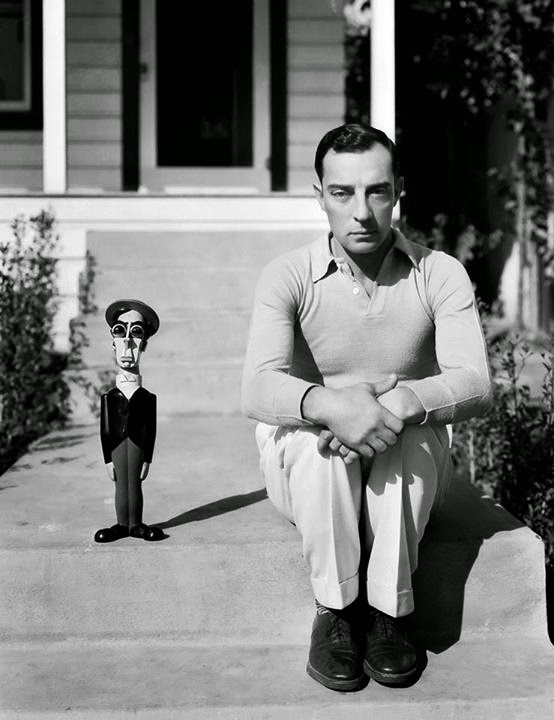
Dolls: Buster Keaton, Raj Kapoor

Raj Kapoor was influenced by Buster Keaton, he talks about it in the book-   'Raj Kapoor: Speaks' by Ritu Nanda in the chapter 'Making of Mera Naam Joker'. 

(This year I have watched quite a few pre-1950 American films and their influence on Hindi films is far more than I previously imagined. More on that in 2015.)


When I saw the picture above, on Facebook, of Buster Keaton along with his doll, I remembered unforgettable song from Mera Naam Joker, 1970: 'Jane Kahan Gaye Woh Din' (singer: Mukesh, Lyricist: Hasrat Jaipuri Music: Shankar Jaikishan)

That song alone demonstrates how talented Mr. Kapoor was, although I have always felt that the talent was not always harnessed fully cinematically. 


courtesy: Shemaroo and the current owner of the copyright to the feature

Saturday, November 15, 2014

वसंत वृक्ष...The Tree of Lalit

The following is the 50th cover designed and created by Vasant Sarwate ( वसंत सरवटे) for Marathi magazine Lalit (ललित).

(Magazine is priced Rs. 100.) 

Third row from the bottom, two covers on the left,  belong to Diwali   2007 and 2009 about which I have already written in the respective years.

The one on the bottom left is dated Diwali 1964.   Not just the plant has grown into a solid looking (guava?) tree but  even the kid has grown into a nattily dressed middle-aged man - no doubt feeling little proud- who is still smiling.

Today Sarwate himself is in autumn of his life but listen carefully, and you can hear his life force gushing through the tree of Lalit, 'वसंत वृक्ष'.


 (Magazine was priced Rs. 0.75)
 
If you wish to enjoy a few of the past covers of Lalit done by Sarwate, please visit the given links.

2013: Lalit, 2013

2012:  Lalit, 2012 

2011: Lalit, 2011

2010: Lalit, 2010

2009: Lalit, 2009 

2008:  Lalit, 2008 

2007:  Lalit, 2007