मेघदूत: "नीचैर्गच्छत्युपरि दशा चक्रनेमिक्रमेण"

समर्थ शिष्या अक्का : "स्वामीच्या कृपाप्रसादे हे सर्व नश्वर आहे असे समजले. पण या नश्वरात तमाशा बहुत आहे."

G C Lichtenberg: “It is as if our languages were confounded: when we want a thought, they bring us a word; when we ask for a word, they give us a dash; and when we expect a dash, there comes a piece of bawdy.”

C. P. Cavafy: "I’d rather look at things than speak about them."

Martin Amis: “Gogol is funny, Tolstoy in his merciless clarity is funny, and Dostoyevsky, funnily enough, is very funny indeed; moreover, the final generation of Russian literature, before it was destroyed by Lenin and Stalin, remained emphatically comic — Bunin, Bely, Bulgakov, Zamyatin. The novel is comic because life is comic (until the inevitable tragedy of the fifth act);...”

सदानंद रेगे: "... पण तुकारामाची गाथा ज्या धुंदीनं आजपर्यंत वाचली जात होती ती धुंदी माझ्याकडे नाहीय. ती मला येऊच शकत नाही याचं कारण स्वभावतःच मी नास्तिक आहे."

".. त्यामुळं आपण त्या दारिद्र्याच्या अनुभवापलीकडे जाऊच शकत नाही. तुम्ही जर अलीकडची सगळी पुस्तके पाहिलीत...तर त्यांच्यामध्ये त्याच्याखेरीज दुसरं काही नाहीच आहे. म्हणजे माणसांच्या नात्यानात्यांतील जी सूक्ष्मता आहे ती क्वचित चितारलेली तुम्हाला दिसेल. कारण हा जो अनुभव आहे... आपले जे अनुभव आहेत ते ढोबळ प्रकारचे आहेत....."

Kenneth Goldsmith: "In 1969 the conceptual artist Douglas Huebler wrote, “The world is full of objects, more or less interesting; I do not wish to add any more.”1 I’ve come to embrace Huebler’s ideas, though it might be retooled as “The world is full of texts, more or less interesting; I do not wish to add any more.” It seems an appropriate response to a new condition in writing today: faced with an unprecedented amount of available text, the problem is not needing to write more of it; instead, we must learn to negotiate the vast quantity that exists. How I make my way through this thicket of information—how I manage it, how I parse it, how I organize and distribute it—is what distinguishes my writing from yours."

Tom Wolfe: "The first line of the doctors’ Hippocratic oath is ‘First, do no harm.’ And I think for the writers it would be: ‘First, entertain.’"

विलास सारंग: "… . . 1000 नंतर ज्या प्रकारची संस्कृती रुढ झाली , त्यामध्ये साधारणत्व विश्वात्मकता हे गुण प्राय: लुप्त झाले...आपली संस्कृती अकाली विश्वात्मक साधारणतेला मुकली आहे."

Tuesday, December 14, 2010

Paresh Mokashi is Wrong. Very Wrong.

परेश मोकाशी (दिग्दर्शक, 'हरिश्चंद्राची फॅक्टरी'):"...भारत हा एक कथांचा देश आहे. इथे शब्दमाध्यम प्रभावी आहे. दृश्य संस्कृती पुरेशी विकसित झालेली नाही..."(ललित, 2010 दिवाळी)

Paresh Mokashi (Director, 'Harishchandrachi Factory'): "...India is a nation of stories. Here medium of word is very effective. Visual culture is not sufficiently developed here..." (Lalit, Diwali, 2010)

Who told this to Mr. Mokashi, a young promising talent from Maharashtra and grandson of a true great D B Mokashi (दि बा मोकाशी)?

This could be true of culture of most people he meets or hears or reads. But this is grossly misleading when he implies a subcontinent's culture over a period of almost 3000 years.

India's visual culture has been as rich as its "word culture". In fact, in a few centuries at least, it was probably richer.

To fully appreciate how developed visual culture in India was, read Frontline's majestic 25-part series on Indian art, starting with the issue Aug. 11-24 2007.

I have with me, all twenty five issues of Frontline and reading them has left no doubt in my mind that no other nation on this planet has had more developed visual culture than India for most part of the known history.

What about Maharashtra or the Western India?

“Does Maharashtra have its Own Distinct Culture?” was the title of an essay by Prof S M Mate (श्री म माटे) in 1954. A debate raged on the subject, joined by the likes of sculptor V P Karmarkar (विनायक पांडुरंग करमरकर), K Narayan Kale (के नारायण काळे), Irawati Karve (इरावती कर्वे), H.D Sankaliya (हंसमुख धीरजलाल सांकलिया).

D G Godse (द ग गोडसे) joined the battle err debate- any debate in Marathi sounds like a battle!- with his essay-‘Shilpi Maharashtra’ (शिल्पी महाराष्ट्र)- first published in ‘Chhand’ छंद (May-June 1955), now included in his book “Samande Talash”, 1981 (समंदे तलाश).

Godse’s verdict- Yes, natives largely created the art you see in Maharashtra. He asks “why 90% of all Indian carvings are in Maharashtra?” and explains this abundance ”…. this is not just because of the ruling dynasties of Maharashtra –Shalivahan, Vakatak, Chalukya, Rashtrakut-but also because of patronage of art by ordinary people”. (What Godse means by 'ordinary' is non royal: traders and businessmen.)

Frontline says: “In western India, the 2nd century B.C. ushered in one of the greatest periods of the art of India and the entire art of Buddhism. Over a period of about 1,000 years, more than 1,200 caves were hewn out of the mountains of the Western Ghats, not very far from the coast of present-day Maharashtra. They were profusely sculpted and painted in the Buddhist traditions. Leaving behind the cares and confusions of the material world, the devotee came to these splendid havens of contemplation…”

Sure, Mr. Mokashi, we may have turned picture-blind in recent centuries. But it doesn't mean that the disease is congenital!

And talking of visual culture, I haven’t seen more attractive woman than the almost 2000-year old beauty in the picture below:


MITHUNAS, CAVE 3, Kanheri, 2nd century A.D.

Saturday, December 11, 2010

वदनी कवळ घेता नाम घ्या अलेक्झांडरचे

When we lived in Assam, what we missed most was green coriander (कोथिंबीर).

When I see any Indian food item sans coriander, I always think it could taste great but is incomplete without coriander.

When I smell fresh green coriander, I smell life.

The other day I heard on TV channel TLC that it was Alexander the great who brought coriander to India.

Poor poet-saint Dnyaneshwar (ज्ञानेश्वर)!

He never knew potato because it was introduced in India in late 16th / early 17th century. He never knew chilli because it came to India in late 15th century. But lucky he, he surely ate green coriander.

We all have a lot to thank for: Coriander, Dnyaneshwar, Chilli, Potatao...


Persian bust of Alexander the Great.

Photograph courtesy: Ray Tang / Rex Features

Friday, December 10, 2010

Sportstar? No, India-Cricketstar.

I subscribe to Sportstar because it is the only 'sports' periodical in this country.

And I regret my decision every time a new issue arrives.

It should be called India-Cricketstar or better Tendulkarstar because there is very little quality coverage of sports other than cricket except international tennis and football.

And for my taste, SS's coverage of cricket too is poor. It's worse than 7:30 PM cricket shows Indian TV news channels beam every single day.

Other than occasional columns by Brian Glanville and Peter Roebuck, there is hardly an article worth reading.

Take the issue of SS dated December 9 2010. It is the first issue released after the conclusion of Guangzhou Asian games 2010 and contains very little and patchy coverage of the games. On the cover, clichéd slogan plastered over Rahul Dravid's picture: "The Great Wall of India".

Aren't people bored with this 'wall' and 'master blaster' stuff? How long will this go on?

This newspaper gets published from Chennai- hometown of the greatest sportsperson, along with Dhyan Chand, India produced-Viswanathan Anand. I thought SS would carry regular one page coverage of chess. Maybe a quiz and a small article. When a mega-event like Asian games is upon us, they would, in a special issue, print all the games' records...

This dumbing down of a sister publication of Frontline pains me.

In the past, I thought it was because of Mr. R Mohan's association with the paper because I have yet to like a single sentence written by him.

So when he stopped writing for SS, I was hoping for a better deal. No such luck.

Monday, December 06, 2010

Thank you Anonymous Sthapathi of Nataraja of Tiruvalangadu

ज्ञानेश्वर: सगुण निर्गुण दोन्ही विलक्षण

V.S. Ramachandran:

"It's the illusion that all of us scientific types suffer from, that there is nothing more to the Universe than the mindless gyration of atoms and molecules, that there is no deeper reality behind appearances. … It is the logical delusion that after death there is nothing but a timeless void. Shiva is telling us that if you destroy this illusion and seek solace under his raised left foot (which he points to with one of his right hands), you will realize that behind external appearances (Maya), there is a deeper truth."


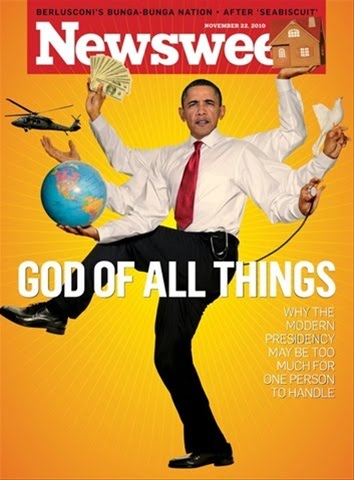
In one the great ironies of this year, when some Hindu organisations were protesting about the cover of Newsweek dated November 22 2010 , Frontline containing masterly essay "Masterpieces in metal" dated November 19 2010 was already on the newsstand.


Frontline: "The art historian the late C Sivaramamurti in his seminal work Nataraja in Art, Thought and Literature (first published by the National Museum, New Delhi in 1974) describes this bronze thus:

“To about 1000 A.D. should be assigned the famous Nataraja of Tiruvalangadu now in the Madras Museum [renamed Government Museum, Chennai]. It is a classical example and the best known image of its kind in any public museum in the world. The pose of this figure, its rhythmic movement, the flexion of the body and the limbs, the perfect smile, the physical proportions and the flowing contours are blended into a pose so amazing that it is no wonder that [Auguste] Rodin, the world famous sculptor, considered this to be the most perfect representation of rhythmic movement in the world.”

While Rodin described this metal icon as “perpetual beauty in bronze”, Ananda K. Coomaraswamy noted that “the grandeur” of the conception of Ananda tandava was “a synthesis of science and religion and art”. He called the sthapathis, who made such astonishing bronzes, “rishi-artists”."

How can one pretentious Newsweek cover hurt my religious sentiments? Why can't I just ignore it? Is my faith so fragile? Personally I don't find the cover offensive at all.

Further read description of the bronze from the same issue of Frontline:

"This bronze belongs to the period of Raja Raja Chola (regnal years 985-1014 CE). The hand at the top on his right side plays the damaru and the one below depicts the 'abhaya' (protection) mudra. On the left side, the hand at the top holds a flame of nine tongues, representing the continuum of energy, and the one below is in the 'gaja-hasta' pose (like an elephant's trunk). The pendant on the necklace has moved from its original position, a touch of realism. The 'tiruvasi' (arch) and the flying hair, so characteristic of Nataraja bronzes, are missing. They either broke off or were stolen."

Sure, it's sad but doesn't it enhance its mystique because of incompleteness? [Read D G Godse's (द ग गोडसे) must-read essay to appreciate the beauty of incomplete sculpture of bull sitting in front of one of the Ashtavinayak's.]

And in the larger scheme of things, does it matter?


No. I feel no action by man can damage the concept of Nataraja- nirguna Nataraja- imprinted on my consciousness.


Thank you unknown sthapathi and your team for giving me this confidence.


(p.s Skills that existed in Tamil Nadu more than a millennium ago in the field of metallurgy are intellectually overwhelming.)

Friday, December 03, 2010

Lots of little men and women have got somewhere

Siddharth Varadarajan: "Welcome to the Matrix of the Indian state: ...The Radia tapes reveal the networks and routers, the source codes and malware that bind the corporate and political establishments in India.


As squeamish schoolchildren know only too well, dissection is a messy business. Some instinctively turn away, others become nauseous or scared. Not everyone can stomach first hand the inner workings of an organic system. Ten days ago, a scalpel — in the form of a set of 104 intercepted telephone conversations — cut through the tiniest cross-section of a rotting cadaver known as the Indian Establishment. What got exposed is so unpleasant that several major newspapers and television channels that normally scramble to bring “breaking” and “exclusive” stories have chosen to look the other way. Their silence, though understandable, is unfortunate. Even unforgivable..."


The Supreme Court of India: "We have often talked about pollution of rivers, even the Ganga pollution. But this pollution (corruption) is mind-boggling."

A picture like the one below tells us why JT was one of the greatest.


Artist: James Thurber, The New Yorker, March 26 1938

Wednesday, December 01, 2010

You don't have to show navels to get medals!

Indian women athletes have done amazingly well at Guangzhou 2010 Asian Games. They made me cry with happiness.

What distinguished Indium women athletes from their co-athletes from other countries?

A: They didn't show their navels...And they still looked smart and attractive.

Way to go, ladies!

My wife often asks: Why can't women tennis player, on international circuit, dress more like their men counterparts? My answer: Sex sells, even at Wimbledon.


The Indian women’s 4x400m relay team, from left, Ashwini, Sini Jose, Mandeep Kaur and Manjeet Kaur after defending their gold medal.

Photo courtesy: AP

Monday, November 29, 2010

Have you lately followed Indian Radia..err Media?

John N Gray:
While the dominant trend in recent British art has toyed with nihilism, the mass media have done the opposite. Technology has been used to manufacture meaning. The camera gives us a snapshot of events and allows us to imagine we are seeing things clearly and plainly. By turning the chaos of sensation into a series of definite images, it enables us to find meaning when it may in fact be fugitive, or even absent. The truth is that we do not know why some people commit hideous crimes, but living in this knowledge is intolerable because it leaves the world a random place. The media cater to our need for order. When the camera is used to construct an icon of evil, it is not simply giving vent to punitive fantasies, but being used to maintain meaning in our lives.

William Leith:
And their (India’s) media is heading for ad-backed celebrity hell faster, and more comprehensively, than ours.


When I see India's superstar TV and newsprint personalities, I never think they bring any order or meaning to my life but I always feel they are smart, wealthy, sophisticated- like Avery Jessup of 30 Rock and totally unlike me- but I don't like what they do and I can always switch off the TV.

I never thought they were so corrupt.

The best comment on this has probably come from unsung Sudhir Tailang who according to me is the best political cartoonist drawing for a national newspaper in India today. If Mr. Tailang were to focus his attention on life beyond politics he might scale even greater artistic heights.


Artist: Sudhir Tailang, The Asian Age, November 28 2010

p.s After I posted the above, I came across this "Welcome to the Matrix of the Indian state" by Siddharth Varadarajan. Please read it to assess India's Who's Who.

Sunday, November 28, 2010

Even in neglect, Tolstoy looks majestic

AN Wilson: Is there a vanity, almost a frivolity in the anarchist-pacifist position? In view of the later excesses of Stalin and Hitler, the passing of Tolstoy in 1910 can seem like the sad death of a utopian dream. But the story of South Africa – to choose but one example – demonstrates the vigour and strength of the Tolstoyan idea. It was in South Africa that Gandhi first became enflamed by Tolstoy’s writings and began to put in practice the policy of passive resistance that would eventually defeat the British empire.

David Brooks: As a novelist, Tolstoy was an unsurpassed observer. But he found that life unfulfilling. As he set out to improve the world, his ability to perceive it deteriorated. Instead of conforming his ideas to the particularities of existence, he conformed his perception of reality to his vision for the world. He preached universal love but seemed oblivious to the violence he was doing to his family.


There is hardly anything original being done in India to mark the death centenary year of Leo Tolstoy.

That does not surprise me but I was shocked to read this:

"A century ago, all of Russia mourned Leo Tolstoy's death at a backwater train station. But today the novelist and pacifist, who abhorred any form of government, is more respected in the West than his home country.

The centennial of Tolstoy's death, 100 years ago Saturday, seems to be passing virtually unnoticed in Russia..." (AFP)

But I was very impressed see this monument.


Location: Yasnaya Polyana
courtesy: AFP

I bought 'War and Peace' long ago and I have yet to start reading it. I have read a lot about Tolstoy but not much by him.

Michael Dirda says: Tolstoy's main characters are all spiritual pilgrims.

A man from the land of Warkaris like me should be able to relate to them. Sure but only when he decides to take out the book from the bottom of the pile of unread books! Maybe a newspaper or TV strike will help.

Artist: Barney Tobey, The New Yorker, 20 Apr 1963

(Newspaper strike in US began on Dec 8, 1962 and lasted for 114 days. )

I was moved by A N Wilson's tribute to him: "From the first reading of War and Peace, it becomes clear that Tolstoy writes with the breadth and scope of Homer. Nowhere outside the Iliad do we find such a prodigious combination of artistic detachment from joy and suffering and yet at the same time such passionate engagement and sympathy. It is a paradoxical truth in these two European masterpieces, and Bartlett’s book gives us the sense of how both these godlike qualities, of indifference and empathy, were constantly present in Tolstoy’s soul." (FT, Nov 19 2010)

Vivian Gornick writes about Tolstoy's marriage:

"...It pained Sonya throughout her life that her only real hold on Tolstoy was sexual—neither her thoughts nor her desires kept his attention—and it pained her even more when that hold loosened. She herself never enjoyed making love, but when finally, in significant old age, he stopped coming to her, she was beside herself with shame, loss, longing. So often, throughout their years together, he had bolted, leaving her entirely alone—sometimes even when he was in the house—for days or weeks on end (her diary often reports an unspeakable loneliness). Yet she had gone on dreaming that ultimately she would have Tolstoy’s friendship and tender regard. When the sex went, and the friendship did not blossom, she grew desolate.

In the end the mixed nature of humanity itself proves the source of the great existential drama. To be mean and generous, depraved and decent, loving and murderous, not by turns but all at once—that, it seems, is the true burden of our existence. It is this humiliation that makes us rage at the heavens, this humiliation that has ever demanded of us some over-arching myth of redemption that will atone for the despair of our own self-divisions..."

In Marathi culture I have often heard people expressing satisfaction, even joy, after a person's passing, that his/her last days were spent well, perhaps in happiness.

I have never understood this focus on "last days".

Tolstoy's last days:

"...Fleeing from his home and wife of 48 years with just 50 rubles in his pocket, 82-year Tolstoy rushed from one monastery to another before catching a cold on a train and dying at a small train station in Astapovo, Lipetsk region..." (AFP)

Thursday, November 25, 2010

असेच होते गांधीजीही, येशु क्रिस्त अन् कृष्ण कदाचित् कालिदास अन टैकोब्राही

Jill Lepore: The life of Potter is the story of a man fated, at death, to be buried in a potter’s field. To the American Plutarch, it was rubbish. There is no humility in monumental biography. But there is humility in nature, in time, and in history. The same sun that shines on the Bunker Hill monument, Melville pointed out, shines on Potter’s unmarked grave. Come winter, the same snow falls, dusting us all. (The New Yorker, September 27 2010)

One of B S Mardhekar's (बा. सी. मर्ढेकर) poems: 'Mee Ek Mungi, Ha Ek Mungi' [मी एक मुंगी, हा एक मुंगी), poem 16 from 'Anakhi Kahi Kavita' (आणखी कांहीं कविता), has these lines:

'ह्या नच मुंग्या : हींच माणसे :
असेच होते गांधीजीही,
येशु क्रिस्त अन् कृष्ण कदाचित्
कालिदास अन टैकोब्राही.'

(They are not ants : they are humans :
Gandhiji was like this too
Jesus Christ and Krishna perhaps
Kalidas and Tycho Brahe too)

I have already written about this poem here.

After reading DAN BILEFSKY's article in The New York Times on November 19 2010, looking at Brahe's remains, I realised how human Brahe was!

In India, majority of Hindus are cremated and hence have no graves, and even if they had, we wouldn't allow opening of them. There would be riots even at the mention of it.

But if there were to be graves for Krishna or Gandhi, their remains wouldn't look very different from that of Brahe.

Niels Linnerup of the University of Copenhagen examines the remains of Tycho Brahe in Prague,

Pool photo by Jacob Christensen Ravn/Aarhus University, via European Pressphoto Agency courtsey: The New York Times, Published: November 19, 2010

Tuesday, November 23, 2010

Lin Dan, किस चक्की का आटा खाते हो?


I haven't seen a grander sporting spectacle than the Badminton gold medal match at Guangzhou between Lee Chong Wei vs Lin Dan. Watch it on YouTube here.

It was almost surreal. It was like watching artistic gymnastics being performed on badminton court.

I must thank DD that they did not bungle this one. Never mind their commentators.

In Indian mythology, one often reads that the Gandharvas shower flowers on earth at some special moments.

Were they present in Guangzhou skies on the evening of November 21st 2010?

p.s. The answer to my rhetorical question in the title is: None. Because he probably doesn't eat wheat flour (Aata)!