मेघदूत: "नीचैर्गच्छत्युपरि दशा चक्रनेमिक्रमेण"

समर्थ शिष्या अक्का : "स्वामीच्या कृपाप्रसादे हे सर्व नश्वर आहे असे समजले. पण या नश्वरात तमाशा बहुत आहे."

G C Lichtenberg: “It is as if our languages were confounded: when we want a thought, they bring us a word; when we ask for a word, they give us a dash; and when we expect a dash, there comes a piece of bawdy.”

C. P. Cavafy: "I’d rather look at things than speak about them."

Martin Amis: “Gogol is funny, Tolstoy in his merciless clarity is funny, and Dostoyevsky, funnily enough, is very funny indeed; moreover, the final generation of Russian literature, before it was destroyed by Lenin and Stalin, remained emphatically comic — Bunin, Bely, Bulgakov, Zamyatin. The novel is comic because life is comic (until the inevitable tragedy of the fifth act);...”

सदानंद रेगे: "... पण तुकारामाची गाथा ज्या धुंदीनं आजपर्यंत वाचली जात होती ती धुंदी माझ्याकडे नाहीय. ती मला येऊच शकत नाही याचं कारण स्वभावतःच मी नास्तिक आहे."

".. त्यामुळं आपण त्या दारिद्र्याच्या अनुभवापलीकडे जाऊच शकत नाही. तुम्ही जर अलीकडची सगळी पुस्तके पाहिलीत...तर त्यांच्यामध्ये त्याच्याखेरीज दुसरं काही नाहीच आहे. म्हणजे माणसांच्या नात्यानात्यांतील जी सूक्ष्मता आहे ती क्वचित चितारलेली तुम्हाला दिसेल. कारण हा जो अनुभव आहे... आपले जे अनुभव आहेत ते ढोबळ प्रकारचे आहेत....."

Kenneth Goldsmith: "In 1969 the conceptual artist Douglas Huebler wrote, “The world is full of objects, more or less interesting; I do not wish to add any more.”1 I’ve come to embrace Huebler’s ideas, though it might be retooled as “The world is full of texts, more or less interesting; I do not wish to add any more.” It seems an appropriate response to a new condition in writing today: faced with an unprecedented amount of available text, the problem is not needing to write more of it; instead, we must learn to negotiate the vast quantity that exists. How I make my way through this thicket of information—how I manage it, how I parse it, how I organize and distribute it—is what distinguishes my writing from yours."

Tom Wolfe: "The first line of the doctors’ Hippocratic oath is ‘First, do no harm.’ And I think for the writers it would be: ‘First, entertain.’"

विलास सारंग: "… . . 1000 नंतर ज्या प्रकारची संस्कृती रुढ झाली , त्यामध्ये साधारणत्व विश्वात्मकता हे गुण प्राय: लुप्त झाले...आपली संस्कृती अकाली विश्वात्मक साधारणतेला मुकली आहे."

Wednesday, January 26, 2022

पर्वत स्तनाकार...60 Years of Silicone Breast Implants

 विंदा करंदीकर, जातक, १९६८-१९८३: "स्तन्यसूक्त : स्तनाकार आकाश । पर्वत स्तनाकार ।..." (मूळ प्रसिद्धी : मौज, १९६०)

In January 2022, Witness History Podcast of BBC  had: "How a Texas woman became the first in the world to have the popular cosmetic procedure in 1962."

Kira Cochrane

"...The implanted breast is obviously sexual, but has often lost some, if not all, sexual sensation. It represents fertility, but can interfere with breastfeeding. Kimball sees it as an image of health, which is also often the case for women who have had mastectomies, whose breast implants allow them to look in the mirror without seeing their surgical scars, without being reminded of a horrible disease. But unfortunately the implanted breast isn't exactly synonymous with health. The function of the breast that's enhanced for cosmetic reasons is its sexual display. The implanted breast represents a "perfect, unused breast", says Marilyn Yalom, author of A History of the Breast, "and I say unused, because they're not there for nursing. And that attitude goes back at least to the Renaissance, where you have men not wanting their wives to breastfeed, because the breasts will be used by the babies, they'll change their shape, and so wet nurses come in. There have been times and places, historically, where it was uncommon for women of a certain class to breastfeed."

The popularity of cosmetic breast implants also reflects just how utterly in thrall we are, as a culture, to gender distinctions. The breasts are the biggest physical sign we have of difference, and perhaps, at base, that's why they're so enormously popular. "It's an external symbol of a woman's gender, and we need and want that affirmation," says Biggs...."


 Breast augmentation: Late-generation models of silicone-gel breast implants, a spherical model (left), a shaped model (center), and a hemispheric model (right).

courtesy: Wikipedia

Sunday, January 23, 2022

बंडखोर सेक्स ची जागा काफ्का यांच्या दी कॅस्टल मध्ये स्पर्श घेतो...But for Kafka, the Touchstone is the Tenderness

सुरवातीला या ब्लॉग वरची ऑगस्ट १६ २०१७ ची पोस्ट पहा.

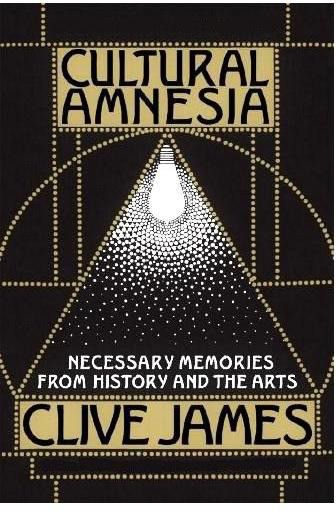
Clive James, 'Franz Kafka' from 'Cultural Amnesia: Necessary Memories From History and the Arts', 2007:
"...For the narrator of The Castle, the girl Frieda is his only connection with a sane order of events as he reluctantly but steadily realizes, in the opening section of the book, that the castle has a mind of its own, and the mind will marshal infinite resources to shut him out. In Frieda’s arms he can momentarily believe that she, at least, is not doing what the castle wants. The lovers soon find that they can’t go to sleep together without expecting to find spectators gathered around them when they wake up. Even during their first sexual encounter there are probably other people in the room: it is hard to tell, but one of the novel’s mechanisms is not to permit us to rule out such a possibility. Much later, in Nineteen Eighty-Four, Orwell reprised the same relationship of physical love to hopeless odds. Orwell wanted the tenderness reduced to raw sex: Winston Smith presses Julia to admit that the act itself is enough, as if Orwell was looking for a touchstone, an irreducible impulse that the totalitarian state cannot eliminate even by control. But for Kafka, the touchstone is the tenderness. Presciently, Kafka’s nightmare state is even more controlled than Orwell’s..."

ऑरवेल आणि जीए यांच्या वाङ्मयातील बंडखोर सेक्स ची जागा काफ्का यांच्या दी कॅस्टल मध्ये स्पर्श घेतो.... 
जेम्स ह्या विषयावर पुढे लिहतात:
"...Allegorical interpretations of Kafka’s major novels are no doubt valid – with the usual proviso that if they are all valid they might all be irrelevant – but for once the biographical element begs to be brought in. In real life, Kafka sent his imagination to rest in the minds of women. If he had not done so, his fiction would have been less different: more like ordinary fiction, and less like fact – the facts that were yet to happen. There are good reasons for believing that he could prophesy the nature of the totalitarian state because as a Jew he had already lived with its mechanisms of exclusion, the first parts of the totalitarian state to develop: he knew them so intimately, and thought them to be so pervasive, that he came to agree with them, providing one of our most tragic examples of self-directed Judenhass. But much of the prophetic element in Kafka comes from his extreme sensitivity to evanescence, and that sensitivity was centred squarely on what time could do to a woman’s life. Milena Jesenska, the woman worthy of his intellect, was wooed from the distance at which she was kept. Felice Bauer (on whom the Frieda of the book was probably based) never had a chance: even if a marriage had followed upon the repeated engagements, nothing would have happened. Kafka thought sex was a disease. But he also thought that it was a gift, or he would not have asked himself, only a short time before his death: ‘What have you done with the gift of sex?’ (Was hast du mit dem Geschenk des Geschlechtes getan? You can hear the integrative rhythmic force of his prose even at the moment of resignation.) We hope that Dora Dymant, with whom he shared a brief spell of happiness in Berlin, would have said that he had done at least something with it. And he would never have written to Milena with his desperate complaint about the certainty of their never living together Korper an Korper (body to body) if he had not wanted that above all things, even in his consuming fear of the wish coming true...."


Wednesday, January 19, 2022

Quoth the cat: 'Raven tastes like chicken.'...Poe@213

# एडगरअॅलनपो२१३
आज जानेवारी १९ २०२२: एडगर अॅलन पो यांची २१३वी जयंती 

पूर्वी पो ब्लॉगवर त्यांच्या नेव्हरमोअर रेवन सकट येऊन गेले आहेतच.


Quoth the Raven “Nevermore.”

त्या रेवन ला गट्ट करून, मांजर म्हणतय...."Quoth the cat: 'Raven tastes like chicken.'"

आर्टिस्ट: हॅरी ब्लीस

Monday, January 17, 2022

२०२२ साली जॉन विल्यम्स यांच्या अप्रतिम 'ऑगस्टस' ला ५० वर्षें पूर्ण झाली...John Williams's Augustus@50

Daniel Mendelsohn on John Williams's 'Augustus': “Like the best works of historical fiction about the classical world....Augustus suggests the past without presuming to re-create it.”

John Gray on John Williams: "... Happily Williams was not, in the end, a writer of ideas. His books are not edifying lectures dressed up as fiction. What he does is give access to the lives of others. This novel of an aged emperor will be intensely illuminating to anyone who is ready to put modern morality aside for a moment in order to acquire a little knowledge of himself or herself. Augustus and Julia inhabit a world that shared none of the grand hopes that nowadays are supposed to be definitively human. But the Roman emperor and his daughter were human all the same, facing conflicts between ambition and family, self-realisation and ideal commitment not greatly different from those with which many people struggle today. The genius of this astonishing American writer is that he shows how lives that seem utterly strange can be very like our own."

John Williams, Augustus:  VIII. Letter: Gaius Cilnius Maecenas to Titus Livius (13 B.c.): "...What you seem so unwilling to accept, even now, is this: that the ideals which supported the old Republic had no correspondence to the fact of the old Republic; that the glorious word concealed the deed of horror; that the appearance of tradition and order cloaked the reality of corruption and chaos; that the call to liberty and freedom closed the minds, even of those who called, to the facts of privation, suppression, and sanctioned murder. We had learned that we had to do what we did, and we would not be deterred by the forms that deceived the world...."


 courtesy: copyright holders of the cover