मेघदूत: "नीचैर्गच्छत्युपरि दशा चक्रनेमिक्रमेण"

समर्थ शिष्या अक्का : "स्वामीच्या कृपाप्रसादे हे सर्व नश्वर आहे असे समजले. पण या नश्वरात तमाशा बहुत आहे."

G C Lichtenberg: “It is as if our languages were confounded: when we want a thought, they bring us a word; when we ask for a word, they give us a dash; and when we expect a dash, there comes a piece of bawdy.”

C. P. Cavafy: "I’d rather look at things than speak about them."

Martin Amis: “Gogol is funny, Tolstoy in his merciless clarity is funny, and Dostoyevsky, funnily enough, is very funny indeed; moreover, the final generation of Russian literature, before it was destroyed by Lenin and Stalin, remained emphatically comic — Bunin, Bely, Bulgakov, Zamyatin. The novel is comic because life is comic (until the inevitable tragedy of the fifth act);...”

सदानंद रेगे: "... पण तुकारामाची गाथा ज्या धुंदीनं आजपर्यंत वाचली जात होती ती धुंदी माझ्याकडे नाहीय. ती मला येऊच शकत नाही याचं कारण स्वभावतःच मी नास्तिक आहे."

".. त्यामुळं आपण त्या दारिद्र्याच्या अनुभवापलीकडे जाऊच शकत नाही. तुम्ही जर अलीकडची सगळी पुस्तके पाहिलीत...तर त्यांच्यामध्ये त्याच्याखेरीज दुसरं काही नाहीच आहे. म्हणजे माणसांच्या नात्यानात्यांतील जी सूक्ष्मता आहे ती क्वचित चितारलेली तुम्हाला दिसेल. कारण हा जो अनुभव आहे... आपले जे अनुभव आहेत ते ढोबळ प्रकारचे आहेत....."

Kenneth Goldsmith: "In 1969 the conceptual artist Douglas Huebler wrote, “The world is full of objects, more or less interesting; I do not wish to add any more.”1 I’ve come to embrace Huebler’s ideas, though it might be retooled as “The world is full of texts, more or less interesting; I do not wish to add any more.” It seems an appropriate response to a new condition in writing today: faced with an unprecedented amount of available text, the problem is not needing to write more of it; instead, we must learn to negotiate the vast quantity that exists. How I make my way through this thicket of information—how I manage it, how I parse it, how I organize and distribute it—is what distinguishes my writing from yours."

Tom Wolfe: "The first line of the doctors’ Hippocratic oath is ‘First, do no harm.’ And I think for the writers it would be: ‘First, entertain.’"

विलास सारंग: "… . . 1000 नंतर ज्या प्रकारची संस्कृती रुढ झाली , त्यामध्ये साधारणत्व विश्वात्मकता हे गुण प्राय: लुप्त झाले...आपली संस्कृती अकाली विश्वात्मक साधारणतेला मुकली आहे."

Sunday, March 10, 2024

Used to get it at Poona! VENCAT thats the flavah!...a Dalit Family Once Ruled the Global Condiment Industry

 On Feb 29 2024, I saw a tweet of William Dalrymple on the subject of curry. 

It had following picture, an ad c1955.
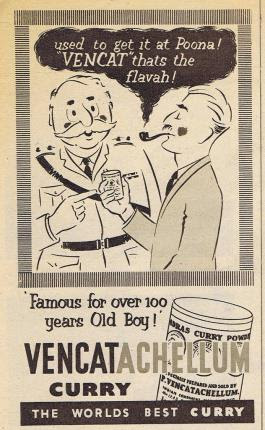

I started wondering what Vencat was. After some googling, I found this article dated August 2023 in The Hindu written byA.B. RAJASEKARAN. . 

Vencat is "Vencatachellum Madras Curry Powder", "the preferred brand of spice at Buckingham Palace over a century ago."

"Long before Indian companies ventured out to foreign shores, one Indian brand was already truly a global brand. It ruled the global curry powder and pickles industry for close to 100 years. The brand, Vencatachellum Madras Curry Powder, is owned by a company founded by an Adi Dravidar, a scheduled caste, from Madras.

The brand name was synonymous with Madras Curry Powder the world over and continues to be fondly remembered in many countries including the UK and Australia long after its heyday."

"P. Vencatachellum Condiments registered their name, ‘Vencatachellum Madras Curry Powder’ along with distinctive label with peacock as a trademark in the UK and Australia in 1894. P. Venkatachellum’s products were made from the finest ingredients sourced from India and abroad using proprietary recipes. Curry powder was made of red chilies from Odisha, turmeric from Chittagong, coriander from Kerala, and couple of secret ingredients."

"It is an incredible feat that such a large global company was built by a Dalit family in the 19th Century. This is an example of the entrepreneurial spirit of Dalits. The fact that the trademark Vencatachellum is still recalled around the world speaks volumes about the goodwill the company created."

Thursday, March 07, 2024

श्रावण शुक्रवारची कहाणी...The Folktale That Thrives


माझ्या लहानपणी मी "संपूर्ण चातुर्मास" ह्या मराठीतील एका सर्वाधिक खपाच्या पुस्तकातील कहाण्या वारंवार वाचत असे, कारण मला सतत वाचायला काहीतरी लागत असे. 
 
त्या काळात त्या सर्व मला पाठ होत्या. आजही सर्व लक्षात आहे. मराठीचा तो एक मोठा सांस्कृतिक ठेवा आहे. त्या किती प्राचीन आहेत याची मला , भोंडल्याच्या गाण्यांसारखीच कल्पना नाही. 
 
त्यातील माझी सर्वात आवडती कहाणी होती/ आहे "शुक्रवारची कहाणी". ती कहाणी मला इतकी आवडत असे की मी तिचा उस्फुर्तपणे वाक्प्रचार म्हणून किंवा दाखला द्यायला वापरत करत असे. 
 
मला माहित नव्हते की जसा भारतात काळ जाईल, तसे ती कहाणी भारताच्या मध्यमवर्गीयांचे रूपक म्हणून सर्वात जास्त लागू ठरेल. सध्या माझ्या सर्वत्र "श्रावण शुक्रवारची कहाणी" सुरु असते. पैसा आणि रूप हे बहुतेक मराठी मध्यमवर्गीय समाजाचे दोनच यशाचे आणि सुखाचे मानदंड होऊन बसले आहेत.
 
त्या कहाणीचा छोटा भाग वाचा:
 
"... इतक्यांत जेवायचीं पानं वाढलीं. ताईचं पान आपल्या शेजारीं मांडलं. भाऊ जेवायला बसला. ताईनं आपली शालजोडी काढून बसल्यापाटीं ठेवली. भाऊ पाहूं लागला. मनांत कल्पना केली, शालजोडीनं उकडत असेल म्हणून काढीत असेल. नंतर ताई आपले दागिने काढू लागली. बसल्यापाटीं ठेवूं लागली. भावानं विचार केला, जड झाले, म्हणून काढीत असेल, नंतर ताईनं भात कालवला, मोठासा घांस केला, तो उचलून सरीवर ठेवला, भाजी उचलून ठुशीवर ठेवली. लाडू उचलून चिंचपेटीवर ठेवला. जिलबी उचलून मोत्यांच्या पेंद्यावर ठेवली.
 
भावानं विचारलं, “ताई ताई, हें काय करतेस?” ती म्हणाली, “दादा, मी करतें हेंच बरोबर आहे. जिला तूं जेवायला बोलावलंस तिला भरवतें आहे.” भाऊ कांहीं हें समजेना. त्यानं तिला पुन्हां सांगितलं, “अग ताई, तूं आतां जेवू तरी.” तिनं सांगितलं, “बाबा, हें माझे जेवण नाहीं, हें या लक्ष्मीचं जेवण आहे...."
 
रावबहादुर माधव विश्वनाथ धुरंधर ( १८ मार्च १८६७ - १ जून १९४४ ) यांनी ती कहाणी चित्रबद्ध (सोबतचे चित्र) केली होती, C. A. Kincaid यांच्या 'Deccan Nursery Tales; or, Fairy Tales from the South' १९१४ साली प्रसिद्ध झालेल्या पुस्तकासाठी.


Monday, March 04, 2024

बन बांबूंचें पिवळ्या गातें, आकाशांतिल बिनाकागीतमाला;...Unparalleled Success Called Binaca Geetmala

माझ्या लहानपणी लांब कोळीष्टकासारखी दिसणारी एरियल रेडिओ साठी घरात लावली जात असे, तत्पूर्वी काही वर्षे रेडिओ साठी घराच्या बाहेर पिवळ्या, बांबू पासून बनवलेल्या एरियल  लावल्या जात असत... म्हणून मर्ढेकर म्हणतात बन बांबूंचें पिवळ्या गातें...

बा सी मर्ढेकर: 

"बन बांबूंचें पिवळ्या गातें 

आकाशांतिल अधोरेखितें;

..." (२, पृष्ठ ७४, मर्ढेकरांची कविता, १९५९-१९७७)

मी:

"बन बांबूंचें पिवळ्या गातें 

आकाशांतिल गीतमाला;

..."

फेब्रुवारी २० २०२४ रोजी अमीन सयानी वारले आणि माझ्या मिरज येथील लहानपणाच्या अनेक गोष्टी समोर आल्या.... 
 
बिनाका गीतमाला (१९५२-१९८८) काय गगनचुंबी प्रकार होता हे आज बऱ्याच लोकांना समजणार नाही...आम्ही मिरजेला रहात असताना, जवळजवळ १९८५ साल पर्यंत, तो दर बुधवारी रात्री 8 ते 9 मध्ये होणारा रेडिओ सिलोन वरील कार्यक्रम, आयुष्याचा अविभाज्य भाग होता...
 
बहुतेक प्रत्येक घरात-दारात तो कार्यक्रम चालू असल्यामुळे, त्याचा एक प्रतिध्वनी तयार होऊन सबंध अंतराळात त्याचा आवाज घुमत असे (म्हणून गगनचुंबी)....दूरदर्शन वरती नंतर अनेक लोकप्रिय कार्यक्रम झाले पण बिनकाची लोकप्रियता (भारतातील किती टक्के लोक तो ऐकत असत ह्या आधारावर) त्यांनी कदाचित गाठली नसावी...
 
बिनाका हे हिरव्या रंगाच्या, किंचित महाग टूथपेस्ट चे नाव होते...गाण्याच्या मधून येणाऱ्या बिनाका च्या जाहिराती (जिंगल्स) मला खूप आवडतं असत....एक होती "हे-हे- बिनाका ग्रीन, बिनाका ग्रीन... हे-हे- बिनाका ग्रीन, बिनाका ग्रीन"...त्याच्या आठवणीने सुद्धा बरे वाटते...बिनाका महाग असल्यामुळे आम्ही ती क्वचितच विकत आणली, आम्ही कोलगेट टूथपेस्ट आणि टूथ पावडर वापरत असू..
 
माझी तत्कालीन हिंदी गाण्यांची आवड १९७७ नंतर कमी होऊ लागली पण धाकटा भाऊ आणि बहीण मात्र जेवणाचे ताट घेऊन आमच्या माडीवर जाऊन तिथे ठेवलेल्या आमच्या रेडिओ पाय (ब्रँडचे नाव) वर तो कार्यक्रम लक्ष देवून ऐकत असत....
 
अमीन सयानी अतिशय उत्तम समालोचक होते पण कधी कधी जरा ते जास्तच भाऊक होऊन नाटकी बोलत असतं...त्यांच्या काळात काही वादग्रस्त गोष्टी सुद्धा झालेल्या आहेत... त्यांच्यावर आरोप झाले होते की काही संगीतकारांना आणि त्यांच्या गाण्यांना प्रमोट करत असत... इसाक मुजावर या माझ्या आवडत्या लेखकाचा  लेख आठवतो... ( I wrote on Feb 27 2015 on FB after Mr. Mujawar had died: I remember his longish article in one Diwali number of 'Rasrang': 'Victims of Hammer music' (हॅमर म्यूज़िकचे बळी) where he rued how the 'old' music directors like Anil Vishwas, Roshan, Madan Mahan etc fell prey to Binaca style publicity verging on propaganda....for him, it was big time fixing....).  
 
सयानी एक पूर्णतः व्यावसायिक होते आणि राहिले, त्यांच्या मुळे हिंदी सिनेसंगीताचे भले झाले, त्याचा दर्जा वाढला असे मी म्हणणार नाही...
 
बिनाका गीतमाला हे पर्व सगळ्या पर्वांसारखे आता सर्वार्थाने संपले..
 
दीनानाथ दलालांची सोबतच्या चित्रातील नायिका सुद्धा बिनाका ऐकत आहे असे वाटते पण ते चित्र जानेवारी १९४७ चे आहे!
 
कृतज्ञता: श्री दलाल यांच्या कलाकार्याचे कॉपीराईट होल्डर्स
 

Friday, March 01, 2024

Opium, British Occupation of India, Indian Farmers and World’s First Drug Cartel


प्लासी च्या लढाई नंतर काय काय झाले ते पहा... 
 
Amitav Ghosh, 'Smoke and Ashes: A Writer's Journey Through Opium's Hidden Histories', 2023:
 
"... Equipped with English weaponry, the army of the Bengal Presidency marched steadily westward, at the expense of the increasingly enfeebled remnants of the Mughal Empire. In 1757 and 1764 the East India Company defeated the tottering indigenous powers in two decisive battles. The territories that came with those victories were quickly incorporated into the Company’s Bengal Presidency, which from then on extended deep into the Gangetic plain, well past the city of Patna. This meant that much of the hinterland of the military labour market, as well as most of the opium-producing region of Bihar, was now in English hands; both would prove strategically crucial to the fortunes of the East India Company.
 
The English, like the Dutch and the French, had long maintained a ‘factory’ or trading station in Patna, so its officials were intimately familiar with the workings of the opium business. For a few years after the British conquest, the Europeans competed against each other in procuring opium, with the result that the acreage under poppy cultivation in the region soared from 283,000 hectares to 303,500 hectares in just one year. ‘This large-scale conversion of paddy fields into poppy cultivation,’ writes the historian Emdad-ul Haq, ‘contributed to a famine in Bengal in 1770. This famine caused the death of 10 million people in an area that had been traditionally known as the “Golden Bengal” due to its natural resources...."
 
इंग्रज आणि इतर युरोपियन सत्तांमुळे भाताऐवजी अफू चे पीक घेणे वाढले आणि त्याचे पर्यवसान १७७० च्या बंगालच्या दुष्काळात होऊन १ कोटी लोक मृत्यमुखी पडले ( त्या दुष्काळाची इतर कारणे पण दिली जातात)... आणि तरी १९व्या शतकातील काही भारतीय इंग्रजांचे कौतुक करत होते!
 
घोष यांचे पुस्तक वाचताना लक्षात येते की १८व्या शतकापासून आपण अफू हा भारतीय इतिहासातील फार मोठा घटक मानला पाहिजे... भारतात गांजाचा प्रसार सर्वदूर असला तरी बहुतेक भारतीय लोक युरोपियन लोक येई पर्यंत अफू पासून दूर होते (त्यांना जवळजवळ अफू माहितीच नव्हती)... पण ते झपाट्याने बदलले...
 
अलीकडे अनेक कारणांमुळे आपण भारतातील शेतकऱ्यांचे महत्व जाणतो किंवा जाणायला लागलो आहोत. अलीकडे त्यांच्या जीवनातील अनेक गोष्टी आपल्या समोर येतात- भाजीमालाचे भाव, पिकाची निवड, निसर्गात झालेल्या उलथापालथीचा त्यांना बसलेला फटका ... वगैरे. 
 
शिवाजी महाराजांनी लिहलेली, शेतकऱ्यांच्या संबंधातील त्यांची अपार संवेदना दाखवणारी, पत्रे आपण वाचली असतात... बाकीच्या राज्यकर्त्यांचे काय? 
 
मागच्या पोस्ट मध्ये बंगालमधील १७७०च्या दुष्काळाबद्दल लिहले, आता वाचा दुष्काळ नसताना इंग्रजांचा बिहार मधील शेतकऱ्यांच्या संबंधातील कारभार... इंग्रजांनी त्यांच्यावर अफूचे पीक लावायची आणि आलेली अफू त्यांना इंग्रजांना उत्पादन शुल्काच्या कमी किमतीत विकायची सक्ती केली होती... 
 
"... So, far from making any money by growing this hugely valuable commodity, the poppy farmers of eastern India actually made significant losses on their harvest. Why, then, did they grow this crop? The reason was succinctly explained in a petition signed by hundreds of farmers: ‘We cultivate the poppy under pressure from Government, otherwise we would not do it, and our prayer is that we may be released from this trouble.’
 
The system was, therefore, coercive to its core: not only did farmers have to deal with the ever-looming threat of violence, but they also had no choice other than to plant poppies because the Opium Department stipulated that nothing else could be grown on land that had been earmarked for that purpose. Farmers could be evicted if they planted any other crop, and since most poppy growers were ‘tenants at will’, they were in constant danger of losing their land. So strict and punitive were the laws of the Opium Department that farmers were essentially trapped within a net of legal obligations and debt bondage. Even in times of famine, they had no recourse but to grow poppies in order to slake the British Empire’s inexhaustible appetite for opium."
 
दुष्काळात सुद्धा त्यांना अफू लावणे सक्तीचे होते!
 
"Through the first half of the eighteenth century exports of opium to China had seldom exceeded 200 chests, but by 1767 the number had increased to 1,000.49 With the setting up of the Opium Department, the figure grew to 4,570 chests in 1800, and was stable at around 4,800 for a while. But after 1830 exports grew rapidly, and opium soon became the keystone of the colonial economy: ‘like the yeast in bread dough’ it was the substance ‘upon which the entire structure depended’. Or, as an article in a journal published by the US National Defense University notes: ‘English merchants, led by the British East India Company, from 1772 to 1850, established extensive opium supply chains … creating the world’s first drug cartel.’..."
 
१७७२-१८५० काळात इंग्रज सरकार जगातील पहिले ड्रग कार्टेल होते, जे भारतीय शेतकऱ्यांचे रक्त पित होते.... 
 
"... This system was, therefore, on its own terms, one of the most successful commercial ventures in human history, producing immense profits for the British Empire for well over a hundred years. The opium trade was thus an essential element of an emerging capitalist system that was then spreading rapidly across the globe. Yet, far from being a free market, this system was firmly founded on colonialism and race; in that sense it was an instance of what Cedric J. Robinson called ‘racial capitalism’..."
 
जवळजवळ १०० वर्षे, इंग्रजांचा मुख्य धंदा आणि उद्दिष्ट होते भारतात अफू बनवून चीनला विकणे आणि त्या बदल्यात तिथे चहा विकत घेऊन तो ब्रिटन ला पाठवणे....
 
(Amitav Ghosh, 'Smoke and Ashes: A Writer's Journey Through Opium's Hidden Histories', 2023 वर आधारित)
 
सोबत - अफूचे शेत


Tuesday, February 27, 2024

आपले साहित्यिक भाषणं झोडत का असतात?...V S Khandekar Answers Jaywant Dalvi


Artist: Saul Steinberg 

मराठीतील प्रथम ज्ञानपीठ पुरस्कार विजेते, पदमभूषण, आणीबाणीचा निषेध न करणाऱ्या वि. स. खांडेकरांवर दुर्गाबाई आणि अनेकांनी तुफान टीका केली असली आणि मला ही त्यांची 'ययाती' सकट अनेक पुस्तके आवडली नसली तरी, त्यांच्या आणि ना सी फडके यांच्या समीक्षेबद्दल मला आदर वाटत आला आहे. 
 
समीक्षा फक्त कलेचीच नाहीच तर कधी समाजाची सुद्धा.

जयवंत दळवींनी (१९२५-१९९४) घेतलेल्या खांडेकरांच्या १९७० सालच्या दोन मुलाखती वाचून तर मला याची खात्री पटली. त्यातील बरेच भाग मला उद्धृत करावेसे वाटतात. 
 
मी मिरजेला रहात असताना (१९६१-१९८१), मिरज विद्यार्थी संघाचे आणि तेथील वसंत व्याख्यान मालेचे सर्वेसर्वा आणि आमचे सर वसंतराव आगाशे व आमचे कौटुंबिक स्नेही पंडितराव खाडिलकर जमेल त्यावेळी कोल्हापूरला जाऊन खांडेकरांचे मार्गदर्शन घेत असत. ते किती मौल्यवान असेल याची मला आज ४०-५० वर्षांनंतर खात्री पटते आहे. 
 
जी ए कुलकर्णी खांडेकरांचे फॅन आहेत असे कधीच वाचनात येत नाही पण ते त्यांचे प्रत्येक पुस्तक खांडेकरांना पाठवत. खांडेकर जीएंना लिहलेल्या एका पत्रात लिहतात - "आज मास्टर विनायक असते तर त्यांनी तुमच्या कथेवर उत्तम चित्रपट काढला असता"... (हे अगदी माझेच शब्द मला वाटतात).... ह्या वाक्यावरून खांडेकरांचे साहित्य आणि सिनेमा ह्या दोन्ही कलांचे ज्ञान आपल्याला कळते. 
 
दळवींच्या मुलाखतीत खांडेकरांनी सखाराम बाइंडरची केलेली समीक्षा आणि १९-२०व्या शतकातील मराठी साहित्याचा जागतिक साहित्यासमोरचा थोटकेपणा याचे खांडेकरांनी केलेले कारणासहित विश्लेषण वाचण्यासारखे आहे आणि मला ते पटले. 
 
दळवींनी त्यांना साहित्यिक सध्या (आणि ते २०२३ साली जास्त लागू आहे) इतकी सगळ्या विषयांवर भाषणे का ठोकत असतात, हे विचारले... पुढचे सोबतच्या फोटोत वाचा...


कृतज्ञता: श्री गिरीश जयवंत दळवी (पृष्ठ ३०-३१, 'साहित्यिक गप्पा: दहा साहित्यिकांशी', जयवंत दळवी, १९८६-२०१३)

Saturday, February 24, 2024

Dr. Anantaraman of IIT, Madras always Noticed Pythagoras!

At IIT Madras 1981-1983, we had a great teacher Dr. V. Anantaraman for Organizational Behaviour. He was tall, dark, on fatter side, shirt always tucked in and had booming voice. Commanding presence in a classroom. 

He was an alumnus of Cornell University, US. (some other notable teachers then were - R K Gupta, L V L N Sarma, Dipak Chaudhuri, R Rajagopalan, T T Narendran, Rita Ghatak, Smt. S Kalpakam)

He made every lecture very interesting by illustrating all the theory with examples from real life , of which there was no shortage because he had huge experience as a consultant and sharp observational skills of life around him. 

 For instance he was helping then Madras local bus transport company called PTC and had helped them make many changes to their organizational structure successfully. He also was involved with a few student activities and was very popular among students. Therefore, illustrations for the theory also came from the campus.

Sprawling and beautiful  IIT Madras campus then had every major department named as a block and housed in a separate building. Typically students, faculty and other staff during a day walked or cycled around from one block to another for various reasons. 

The formal paths from one block to another were marked using tiles etc but people almost always took shorter paths, not using formal, marked roads in the process.  Anantaraman gave that example to us while teaching OB. 

This cartoon reminded me of my Professor...Anantaraman would be smilingly tell us - I-told-you...he always anticipated Pythagoras

artist: Not known to me

Wednesday, February 21, 2024

Knowing only Life until they are on the Brink of Dying....John Gray and Amy Hwang on Cats

 John Gray, 'Feline Philosophy: Cats and the Meaning of Life', 2020 :

"...Cats were many things in ancient Egypt: sometimes companions of human beings as they passed on to another life, at other times manifestations of gods, at still others protectors of the gods. That they could be all of these at once testifies to the subtlety of the archaic Egyptian mind. But it also speaks to the presence of cats themselves. Cats symbolized an affirmation of life in a world preoccupied with the dead. Egyptian religion responded to the prospect of death by preparing for life in another world, but it needed cats to preserve a sensation of being alive in the realm beyond the grave. Knowing only life until they are on the brink of dying, cats are not ruled by death. The Egyptians had good reason for wanting cats to join them in the journey through the underworld.

When it came to death, humans and cats were in the same boat. No one in ancient Egypt believed that humans have souls while cats do not. But if the soul is untouched by death, the feline soul is closer to immortality than the human soul can ever be."

 <Knowing only life until they are on the brink of dying, cats are not ruled by death.>...how true...Cat on the deathbed is thinking only of napping...that is soul untouched by death!


 Artist: Amy Hwang, The New Yorker, August 2023