मेघदूत: "नीचैर्गच्छत्युपरि च दशा चक्रनेमिक्रमेण"

समर्थ शिष्या अक्का : "स्वामीच्या कृपाप्रसादे हे सर्व नश्वर आहे असे समजले. पण या नश्वरात तमाशा बहुत आहे."

G C Lichtenberg: “It is as if our languages were confounded: when we want a thought, they bring us a word; when we ask for a word, they give us a dash; and when we expect a dash, there comes a piece of bawdy.”

C. P. Cavafy: "I’d rather look at things than speak about them."

Martin Amis: “Gogol is funny, Tolstoy in his merciless clarity is funny, and Dostoyevsky, funnily enough, is very funny indeed; moreover, the final generation of Russian literature, before it was destroyed by Lenin and Stalin, remained emphatically comic — Bunin, Bely, Bulgakov, Zamyatin. The novel is comic because life is comic (until the inevitable tragedy of the fifth act);...”

सदानंद रेगे: "... पण तुकारामाची गाथा ज्या धुंदीनं आजपर्यंत वाचली जात होती ती धुंदी माझ्याकडे नाहीय. ती मला येऊच शकत नाही याचं कारण स्वभावतःच मी नास्तिक आहे."

".. त्यामुळं आपण त्या दारिद्र्याच्या अनुभवापलीकडे जाऊच शकत नाही. तुम्ही जर अलीकडची सगळी पुस्तके पाहिलीत...तर त्यांच्यामध्ये त्याच्याखेरीज दुसरं काही नाहीच आहे. म्हणजे माणसांच्या नात्यानात्यांतील जी सूक्ष्मता आहे ती क्वचित चितारलेली तुम्हाला दिसेल. कारण हा जो अनुभव आहे... आपले जे अनुभव आहेत ते ढोबळ प्रकारचे आहेत....."

Kenneth Goldsmith: "In 1969 the conceptual artist Douglas Huebler wrote, “The world is full of objects, more or less interesting; I do not wish to add any more.”1 I’ve come to embrace Huebler’s ideas, though it might be retooled as “The world is full of texts, more or less interesting; I do not wish to add any more.” It seems an appropriate response to a new condition in writing today: faced with an unprecedented amount of available text, the problem is not needing to write more of it; instead, we must learn to negotiate the vast quantity that exists. How I make my way through this thicket of information—how I manage it, how I parse it, how I organize and distribute it—is what distinguishes my writing from yours."

Tom Wolfe: "The first line of the doctors’ Hippocratic oath is ‘First, do no harm.’ And I think for the writers it would be: ‘First, entertain.’"

विलास सारंग: "… इ. स. 1000 नंतर ज्या प्रकारची संस्कृती रुढ झाली , त्यामध्ये साधारणत्व व विश्वात्मकता हे गुण प्राय: लुप्त झाले...आपली संस्कृती अकाली विश्वात्मक साधारणतेला मुकली आहे."

Sunday, May 03, 2015

आम्ही नेटकेची ना लिहू...There Is No Such Thing as ‘Proper Marathi’

विलास सारंग: "… मराठी साहित्यात समुद्राच वास्तव किती सातत्याने दुर्लक्षित केलं आहे, हे माझ्या विवेचनाच सार होतं… आपण वास्तवाच्या -वाङमयीन सामग्रीच्या- केवढ्या मोठ्या भांडाराला मुकतो आहोत, हे माझ्या लेखात निर्देशित केलं आहे...मराठी वाङमयातील समुद्राची अनुपस्थिती मराठी समाजाच्या संरचनेशी कशी निगडीत आहे, हे माझ्या लेखात स्पष्ट केलेलं आहे."
 ("वाङमयीन संस्कृती व सामाजिक वास्तव", 2011, पृष्ठ 66-67)

विलास सारंग: "… एक आश्चर्याची गोष्ट म्हणजे 'महाभारता'वर आधारलेली सोफिस्टिकेटेड सांस्कृतिक मूल्यावर उभी राहिलेली एकही प्रभावी नाट्यकृती (इतक्या शतकांत) निर्माण झाली नाही, जिने जनमानसावर सर्वकष मोहिनी टाकली आहे. इ. स. 1000 नंतर ज्या प्रकारची संस्कृती रुढ झाली , त्यामध्ये साधारणत्व व विश्वात्मकता हे गुण प्राय: लुप्त झाले...आपली संस्कृती अकाली विश्वात्मक साधारणतेला मुकली आहे."
('वाङ्‌मयीन संस्कृती व सामाजिक वास्तव', 2011)

विलास सारंग: "…मला कधी वाटतं, १८९० साली हरिभाऊनी जरा विचार केला असता: 'आपण कशाला ब्रिटीश वाङमयाचं शेपूट पकडून राहायचं?' आपलं कथाकथन विकसित करायचं. एवढं काही कठीण नाही. काफ्काच्या 'मॅटॅमॉर्फसिसचं पहिल वाक्य घ्या. 'पंचतंत्रातल्या एखाद्या गोष्टीत ते फिट बसलं असतं. एवढी फँट्सी झाली. उरलेल्या कथेत वास्तववाद आहेच…इ. स. १९०० पासून आजवर पाश्च्यात्यांनी  आपल्या  वाङमयाकडे ढुंकून  बघितलेलं  आहे का? त्यांना आपल्या कथासाहित्यात  वेगळ, नवीन काही आढळल  नाही … " 
  ('लिहित्या लेखकाचं वाचन', 2011)

विलास सारंग, सदानंद रेग्यांच्या मृत्यू नंतरचा लेख, 1982: "...मराठी कवितेच्या कोंदट, कोत्या, ‘इनब्रीडिंग’ने कोळपलेल्या वातावरणात सदानंद रेग्यांची कविता हा एक मोकळा वारा होता. हा वारा आता वाहायचा थांबला आहे."


"...And so now every night, the last thing we do, me from my bedroom and Luke from his, is to send each other an instant message, and we always end it “LOL.”

“LOL, Dad!”

“LOL, Luke!”

And it doesn’t matter what it means. It means laughter or love, or whatever it might mean at that moment to us."


 “Essay-level writing as a basic skill is no longer the norm. Speaking is, however, and that style has influenced our writing. Get over it, grammarians...”
 
भालचंद्र नेमाडे, लोकसत्ता, August 14 2015:

"...मराठीच्या व्याकरणातील क्लिष्टता काढली तर मराठी माणसाचा मेंदू किती तरी हलका होईल, असे सांगत त्यांनी मराठीत शुद्धलेखनासाठी केल्या जाणाऱ्या आग्रहावरच आपला टीकेचा आसूड ओढला. ऱ्हस्व-दीर्घ असे वेगवेगळे प्रकार ठेवण्याऐवजी ते एकच का असू नये, असा विचार त्यांनी मांडला..."


George Orwell wrote a famous essay 'Politics and the English Language' in April 1946. It's probably one of the most quoted document on the subject of language.

Will Self says about it:

"...Orwell's essay, Politics and the English Language, is frequently cited as a manifesto of plainspoken common sense - a principled assault upon all the jargon, obfuscation, and pretentiously Frenchified folderol that deforms our noble tongue. Orwell - it's said by these disciples - established once and for all in this essay that anything worth saying in English can be set down with perfect clarity such that it's comprehensible to all averagely intelligent English readers.The only problem with this is that it's not true - and furthermore, Orwell was plain wrong...

As for most people who bother with the matter admitting that English is in a bad way - hardly. Since 1946, when Orwell's essay was published, English has continued to grow and mutate, a great voracious beast of a tongue, snaffling up vocabulary, locutions and syntactical forms from the other languages it feeds on. There are more ways of saying more things in English than ever, and it follows perfectly logically that more people are shaping this versatile instrument for their purposes.

The trouble for the George Orwells of this world is that they don't like the ways in which our tongue is being shaped. In this respect they're indeed small "c" conservatives, who would rather peer at meaning by the guttering candlelight of a Standard English frozen in time, than have it brightly illumined by the high-wattage of the living, changing language.

Orwell and his supporters may say they're objecting to jargon and pretension, but underlying this are good old-fashioned prejudices against difference itself. Only homogenous groups of people all speak and write identically. People from different heritages, ethnicities, classes and regions speak the same language differently, duh!..."
 

Ms. Madhuri Purandare (माधुरी पुरंदरे)'s set of two books 'Lihave Netake' (लिहावे नेटके )  was published in c 2010. 

(according to  J.T. Molesworth's dictionary: नेटके= Neat, handsome and according to Google Translate it means compact.)

Bookganga.com says: "नेटके लिहिणे, नेमके बोलणे ही भाषेची मूलभूत कौशल्ये आहेत. अनेकदा तीच दुर्लक्षित राहतात आणि मग भाषा फार सैलपणे वापरली जाते. शालेय मुलांना लहानपणीच मराठी भाषेची लज्जत चाखत ती अचूकपणे आत्मसात करता यावी, या उद्देशाने माधुरी पुरंदरे यांनी ‘लिहावे नेटके’ हा पुस्तकसंच विकसित केला आहे."

( Compact/ neat/ handsome/precise writing and speaking are the fundamental skills of a language. Often they are ignored and the language gets used loosely. To facilitate school going kids to appreciate and accurately  learn Marathi, Madhuri Purandare has developed the 'Lihave Netake' book-set.)

 Ms. Purandare elaborates her experience of  how a class of school teachers studied these books here. 

"...आता शिक्षिकांचा आत्मविश्‍वास वाढताना स्पष्ट दिसू लागला होता...त्यांचे साप्ताहिक अभ्यासवर्ग नेमाने आणि उत्साहाने सुरू होते. पुस्तकांच्या आकाराचे दडपण आता उरले नव्हते. ‘अभ्यास करताना थांबूच नये, पुढे पुढे जात राहावं असं वाटतं’; ‘दुकानांच्या अशुद्ध पाट्या, वर्तमानपत्रांमधला चुकीचा मजकूर, टीव्हीच्या बातम्यांमधल्या चुका पूर्वी दिसायच्या नाहीत. आता सारख्याच दिसतात आणि त्रास होतो,’ अशा प्रतिक्रिया यायला लागल्या होत्या..."

The key sentence there is what teachers felt as they studied the books :

"...दुकानांच्या अशुद्ध पाट्या, वर्तमानपत्रांमधला चुकीचा मजकूर, टीव्हीच्या बातम्यांमधल्या चुका पूर्वी दिसायच्या नाहीत. आता सारख्याच दिसतात आणि त्रास होतो..."
(...incorrect nameplates of shops, erroneous content in newspapers, errors in TV news were not noticed earlier. But now they were always noticed and were annoying...)

 How can nameplates of shops be incorrect? A shop keeper is running a business and as long as she is achieving her business goals, her nameplate is OK.

Personally I haven't seen a single incorrect nameplate on a shop in Maharashtra. However, occasionally, I have felt and experienced the arrogance, stupidity and the absence of mercantile mentality behind those nameplates.  

If TV news is 'erroneous', most likely it is MEANT to mislead or misinform or not give the complete picture. That is the problem of the medium and not the language. Most of the time Marathi TV news is 'bad' and not because of the language they use but because what they choose as news and the way they report it.

In short, Ms. Purandare's books sound like pedantry and Orwellian conservatism to me.

I wish to quote Oliver Kamm on the subject. 

"There Is No ‘Proper English’...Pedantry is poor manners, certainly, but also poor scholarship. If someone tells you that you “can’t” write something, ask them why not. Rarely will they have an answer that makes grammatical sense; it is probably just a superstition that they have carried around with them for years."

"Language sticklers typically depict themselves as defenders of tradition against the insidious forces of cultural relativism. This is nonsense. In fact, the pedantic urge is a modern invention of rather dubious lineage. Prescriptive style guides like Strunk and White’s “Elements of Style” are the direct descendants of 18th-century grammarians who first defined what it was to speak “proper English.” In fact, these grammarians really just meant the dialect that grew up in and around London; their manuals were intended to teach propriety to an emerging merchant class."

I feel the most important issues facing Marathi are summed up in the quotes of the late Vilas Sarang at the top of this post and, maybe, just maybe, excessive pedantry among Marathi speaking people is partly responsible for them.


Emoji are the ideograms or smileys used in Japanese electronic messages and Web pages, the use of which is spreading outside Japan. What if they start appearing in Marathi texts? Will they annoy students of Ms. Purandare's book?


Artist: Cameron Harvey, The New Yorker, April 2015

p.s.

After I published the post, I learned on May 5 2015 that "Microsoft plans to introduce a range of new emoji with Windows 10 including a controversial 'middle finger' hand sign.". 

I wonder where this will fit in 'neat Marathi'.

courtesy: Daily Mail
 

Wednesday, April 29, 2015

Amrapali of History and Vaijayantimala's

Today April 29 2015 is International Dance Day

विलास सारंग, 'अमर्याद आहे बुद्ध', 2011, पृष्ठ  85:
 "....अशा तऱ्हेने आम्रपाली स्वतःचे  नाक, कान, भिवया,  दात, हात अगदी स्तनही  वर्णन करते:

'पहले कभी मेरे स्तन जीन (पुष्ट) एवं वर्तुल (गोल)  होने के कारण अतिसुन्दर दिखते थे। आज वेणा दुर्बल एवं नीचे तक लटक गये है।' …"


Art from the ACK title 'Amrapali' by C.M. Vitankar

I have not seen more sensuous dance in a Hindi film than the one by Vaijayantimala in Lekh Tandon's Amrapali, 1966.

When I first read the late Mr. Sarang's book, quoted above, I felt Amrapali was not just describing her own breasts- 'मेरे स्तन जीन (पुष्ट) एवं वर्तुल (गोल)  होने के कारण अतिसुन्दर दिखते थे'- but also of Ms. Bali's.


courtesy: Ultra, India

Sunday, April 26, 2015

ओ हो हो ! काय अद्भुत सौंदर्य हो !... The Sun on the Ganges...Avalanche on Everest

Of  hundreds of  Vasant Sarwate (वसंत सरवटे) cartoons I have seen and loved, this probably is the most moving....


This is from Sarwate's book 'Sawdhan! Pudhe Valan Aahe!' (सावधान! पुढे वळण आहे!), 1990.

It is the second picture from a series of three but for me it stands on its own.

The guy (with a kind of skates) has missed the turn, is airborne and is heading towards a crash. All that is there to save him is the umbrella. In the earlier picture, he has started opening it and in those few seconds has managed to open it.

We (and probably Sarwate) hope he will be able use it like a parachute to land safely. But it's just a hope. Most likely we know how it's going to end.

But meanwhile look at what the guy is saying:

 "ओ हो हो ! काय अद्भुत सौंदर्य हो !" (oh...oh! What an awesome beauty!)

That's the wonder of life on Earth that doesn't end not just in air but even in space.

When I was watching 'Gravity', 2013, I remembered this picture.

The most moving scene for me in the film is when Matt Kowalsky (George Clooney) drifts away in the space towards a certain death. 

His final words are:

 "Oh, my God... Wow. Hey, Ryan?...You should see the sun on the Ganges. It's amazing". 

(Watch it on YouTube here.) 


courtesy: Warner Bros

p.s. 

After I finished writing the post, earthquake struck  in Himalayas. The avalanche that resulted. from the quake killed people at Everest. I am sure seconds, minutes, hours before they died, they too would have exclaimed: 'oh...oh! What an awesome beauty!' ('ओ हो हो ! काय अद्भुत सौंदर्य हो !')

Thursday, April 23, 2015

Soaked in Books

Today April 23 2015 is a World Book Day

Arts & Letters Daily, April 2015: 

"In Victorian London, intellectuals looked for love in the British Museum’s reading room."


Alejandro Zambra, Chile:  

“My books would be very different if I had written them in another room, looking out another window.”


Photograph by Bill Waldman. Body paint by Adam DuShole.

courtesy: Dangerous Minds

Saturday, April 18, 2015

Relativity in Bed

Today April 18 2015 is 60th Death Anniversary of Albert Einstein

Matthew Francis:
 "...But Einstein was no saint. He cheated on his first wife Mileva Marić with his cousin Elsa Einstein, whom he later married and cheated on in turn. He was known to write sexist doggerel in letters to his friends...In other words, Einstein was – like all of us – a bundle of contradictions..."


Artist: Eric Lewis, The New Yorker, 13 November 2000

Wednesday, April 15, 2015

विलास सारंग भवसागर पार...The Greatest Marathi Prose Writer Crosses The Sea of Life

विलास सारंग:
"… मराठी साहित्यात समुद्राच वास्तव किती सातत्याने दुर्लक्षित केलं आहे, हे माझ्या विवेचनाच सार होतं… आपण वास्तवाच्या -वाङमयीन सामग्रीच्या- केवढ्या मोठ्या भांडाराला मुकतो आहोत, हे माझ्या लेखात निर्देशित केलं आहे...मराठी वाङमयातील समुद्राची अनुपस्थिती मराठी समाजाच्या संरचनेशी कशी निगडीत आहे, हे माझ्या लेखात स्पष्ट केलेलं आहे."
("वाङमयीन संस्कृती व सामाजिक वास्तव", 2011, पृष्ठ 66-67)


B S Mardhekar / Vilas Sarang: 

"...Living is obligatory;
so, too, is dying..."

विलास सारंग:
 "…मला कधी वाटतं, १८९० साली हरिभाऊनी जरा विचार केला असता: 'आपण कशाला ब्रिटीश वाङमयाचं शेपूट पकडून राहायचं?' आपलं कथाकथन विकसित करायचं. एवढं काही कठीण नाही. काफ्काच्या 'मॅटॅमॉर्फसिसचं पहिल वाक्य घ्या. 'पंचतंत्रातल्या एखाद्या गोष्टीत ते फिट बसलं असतं. एवढी फँट्सी झाली. उरलेल्या कथेत वास्तववाद आहेच…इ. स. १९०० पासून आजवर पाश्च्यात्यांनी  आपल्या  वाङमयाकडे ढुंकून  बघितलेलं  आहे का? त्यांना आपल्या कथासाहित्यात  वेगळ, नवीन काही आढळल  नाही … " 
  ('लिहित्या लेखकाचं वाचन', 2011)

विलास सारंग:

"… एक आश्चर्याची गोष्ट म्हणजे 'महाभारता'वर आधारलेली सोफिस्टिकेटेड सांस्कृतिक मूल्यावर उभी राहिलेली एकही प्रभावी नाट्यकृती (इतक्या शतकांत) निर्माण झाली नाही, जिने जनमानसावर सर्वकष मोहिनी टाकली आहे. इ. स. 1000 नंतर ज्या प्रकारची संस्कृती रुढ झाली , त्यामध्ये साधारणत्व व विश्वात्मकता हे गुण प्राय: लुप्त झाले...आपली संस्कृती अकाली विश्वात्मक साधारणतेला मुकली आहे."
('वाङ्‌मयीन संस्कृती व सामाजिक वास्तव', 2011)

विलास सारंग:

"...खरे तर या 'नव' भासणाऱ्या तत्वज्ञानामागे कादंबरीचा जो गाभा आहे तो नवतेला शोभणारा नाही. कादंबरीचा बहुतांश भाग स्त्रीविषयक आकर्षण आणि तदनुषंगाने येणाऱ्या घटना यांनी व्यापलेला आहे. हा सर्व खरे तर ना. सी. फडके परंपरेतला  आहे. त्याला नवतेचा थोडा मुलामा दिला आहे एवढेच...."
 [किरण नगरकर कृत 'सात सक्कं त्रेचाळीस' (1974), 'मराठी नवकादंबरी', अक्षरांचा श्रम केला, 2000]
Mr. Sarang died on April 14 2015.


I read about his death only a few minutes ago and there is a lot that is not going to come out before I hit the 'publish' button. I will keep coming back to him.

There are dozens of posts on this blog in which I have mentioned him. He was one of the inspirations for this blog.

I said in the very first entry on this blog dated November 29 2006:

 "...Vilas Sarang (विलास सारंग), the most under-rated writer/critic in Marathi ever, told: '…..seriousness does not mean solemnity….. Just learn from the poetry of Sadanand Rege (सदानंद रेगे) and Arun Kolatkar (अरुण कोलटकर)'..."


There are two Marathi writers quoted at the top of this blog- one is Tukaram (तुकाराम), the other is Sarang.

For me,  he was the greatest Marathi prose-writer ever. [The two close contenders for this honor are Vinoba Bhave (विनोबा भावे) and Durga Bhagwat (दुर्गा भागवत). But I chose Sarang for the sheer range of subjects on which he wrote.]

I have almost all his books, two of them- unpublished, for private circulation- gifted by him to me.

Only on April 4, 2015, hailing him the greatest living Marathi writer, I posted his views on Durga Bhagwat (दुर्गा भागवत), on the Facebook page I maintain.


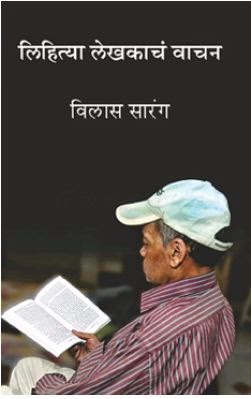
 from 'Lihitya Lekhakachan Vachan' ('लिहित्या लेखकाचं वाचन)


 One of the greatest essays in Marathi I have read is his on W H Auden. I just keep reading it.
 
Here is his translation of one of Mardhekar's poems.

बा. सी. मर्ढेकर, # २१ , "मर्ढेकरांची कविता"

पिपांत मेले ओल्या उंदिर;
माना पडल्या, मुरगळल्याविण;
ओठांवरती ओठ मिळाले;
माना पडल्या, आसक्तीविण.
गरिब बिचारे बिळांत जगले,
पिपांत मेले उचकी देउन;
दिवस सांडला घाऱ्या डोळीं
गात्रलिंग अन् धुवून घेउन.

जगायची पण सक्ती आहे;
मरायची पण सक्ती आहे.

उदासतेला जहरी डोळे,
काचेचे पण;

मधाळ पोळें
ओठांवरती जमलें तेंही
बेकलाइटी, बेकलाइटी!
ओठांवरती ओठ लागले;
पिपांत उंदिर न्हाले ! न्हाले !

Mice Died in the Wet Barrel

Inside the waterlogged drum, the mice are dead,
Their necks hang, wrung by nobody.

The necks hang, and lips meet lips
Without desire.

Poor bastards lived in holes,
And, with a hiccup, died in the drum.

Day spilled into gray eyes,
rinsed their limbs and genitals.

Living is obligatory;
so, too, is dying.

Melancholy has disquieting eyes;
they are glass ones, though.

Even the honeycomb
brimming on their lips
is merely foam rubber!

Lips nuzzling lips:
O the mice are douched in the drum!
the mice are douched!

Monday, April 13, 2015

औंधचा राजा...The Pushpak Aircraft by Balasaheb Pandit Pant Pratinidhi

Today April 13 2015 is 64th Death Anniversary of Bhavanrao Shrinivas alias Balasaheb Pandit Pant Pratinidhi (भवानराव श्रीनिवास उर्फ बाळासाहेब पंडित पंत प्रतिनिधी), ex-ruler of Aundh

My father, born 1936, was brought up in Aundh. My siblings and I have been brought up on the stories of Aundh. Aundh is as much our Malgudi as Miraj (मिरज) is.

My son, as a part of his curriculum, visited Kirloskar Brothers factory at  Kirloskarwadi on April 9 2015 where he was told how that industrial plant came about in year 1910 because of the then ruler of Aundh.

The Caravan January 25 2015 has an essay titled : TheStrange Library: A visit to the Academy of Sanskrit Research in Melkote 

This post is not about the words in that essay but the picture- reproduced below- it carries.


courtesy: Kamat's Potpourri

My grudge with the essay is that it's NOT attributed to the artist who created it. It simply mentions Wikimedia Commons at the bottom of it.

This is sad.

The artist who created it is  Balasaheb Pandit Pant Pratinidhi.

As I have mentioned on this blog a few times, we were lucky to have a copy of this pictorial Ramayana at home when we grew up and I always imagined Ramayana in those pictures.

Friday, April 10, 2015

Vision of a Great Cartoonist: Where Will It Ever End?

Bloomberg Business reported on February 18 2015:

"Robots Could Make Even High-Tech Workers Worse Off...Have you ever worried that robots would one day be the ruin of humanity? According to a newly published paper, you might not be too far off base...

While there can be several of these so-called “boom-bust” tech cycles, over time robots “can leave all future high-tech workers and, potentially, all future low-tech workers worse off,” the paper states. “In short, when smart machines replace people, they eventually bite the hands of those that finance them.”

The model also predicts a long-run decline in labor’s share of income, which has been underway in the U.S. since the 2000s, as well as “a growing dependency of current output on past software investment.”..."

Artist: Charles Addams (1912-1988), The New Yorker, 9 February 1946

Robots making more robots?

Almost seventy years ago, Mr. Addams was onto something

Monday, April 06, 2015

बन्सीधरा, आता तू कोठे रे जाशील?...In Assam, Noah on a Raft

The Hindu reported on March 25 2015 how a photo taken by The Hindu's Guwahati-based Special News Photographer Ritu Raj Konwar, was an inspiration for the Malayalam film 'Ottal' , which won two National awards on Tuesday March 24 2015.


courtesy: The Hindu and Ritu Raj Konwar

The power of the photograph does not surprise me.

But this is not the only such picture that has moved me in recent years.

Here is a recycled post of mine  dated 27 October 2008:

"This year I have received a Diwali greeting card from Madhukar Dharmapurikar (मधुकर धर्मापुरीकर) that speaks volumes about his sensitive eye and his panache...

See the picture below.


Dharmapurikar calls the boy in the picture ‘Balkrishna' (बाळकृष्ण). 

It reminded me of S M Mate (श्री. म. माटे) calling his child  protagonist- an orphan- ‘Banseedhar' (बन्सीधर). A title of one of his stories reads "बन्सीधरा, आता तू कोठे रे जाशील?" (Banseedhara, Where will you go now?)

But there is no trace of sentimentality, implicit in Mate’s rhetoric question,  in the posture of Balkrishna, above. He is not wasting any time in crying or playing. He is busy rescuing his mom and navigating his own destiny.

He perhaps is telling his mother:

"तू आणि मी मिळून अजूनही त्या भडव्या नशिबाला टांग मारू" [G A Kulkarni, 'Pingalavel', 'Kairee', 1977 (जी ए कुलकर्णी ’पिंगळावेळ’ कैरी १९७७ )]

Or is it even one better, the way Balkrishna has anchored himself?  "तू आणि मी मिळून अजूनही त्या भडव्या नशिबाला पोलवाँल्ट करू."..."

Friday, April 03, 2015

मराठी साहित्य संमेलन: Have Your Cake And Eat It Too!

88th edition of  All-India Marathi Literary Conference (अखिल भारतीय मराठी साहित्य संमेलन) starts today April 3 2015


श्रीपाद कृष्ण कोल्हटकर, 'चोरांचे संमेलन', 'सुदाम्याचे पोहे', (essays written from late 19th century to 1923):

"…या चळवळींना  अलीकडे इतका उत येण्याचे कारण काय? आमचा लोकांच्या मनात दिवसेंदिवस जुटीचे खरे महत्व चांगल्या रीतीने बिंबू लागले आहे की  काय ? किंवा आमची वृत्ती उस्सवप्रिय आणि या सभाही उस्सवांच्याच  नमुन्यावर होत असल्यामुळे  आम्ही त्याकडे वारंवार आकर्षिले जात  आहोत अथवा आमच्यातील  तीर्थाटनेच्छू किंवा नावीन्यप्रिय मंडळींना आपली तलफ या सभांच्या निमित्ताने पुरी करता येत असल्यामुळे त्यांना इतकी गर्दी जमत असते अगर निरुद्योगी माणसांना आपला अमोलिक (म्हणजे ज्यांचे मोल कवडीच्याही किमतीचे नसते!) वेळ दवडण्याला या सभा उत्कृष्ट साधने असल्यामुळे त्यांच्या कडे इतका समूह लोटत असतो? या सभांपासून  लभ्यांश  पाहू गेले तर आगगाड्यांचे उत्पन्न  अतोनात  वाढण्यापलीकडे फारसा दिसणार नाही…"
"मराठी साहित्य संमेलनवाले हे फुकट द्या आणि ते फुकट द्या म्हणून जी याचना करतात, ही बाब क्लेशदायक आहे. त्यामुळे ही फुकटेगिरी पहिल्यांदा बंद करा, असा परखड सल्ला राज्याचे सांस्कृतिक कार्यमंत्री विनोद तावडे यांनी दिला आहे..."

लोकसत्ता, March 25 2015:
"पंजाब येथील घुमान येथे ३ ते ५ एप्रिल या कालावधीत होणाऱ्या ८८ व्या अखिल भारतीय मराठी साहित्य संमेलनात जेवण आणि नाश्ता यामध्ये खास गोड पदार्थ साहित्यप्रेमी आणि रसिकांना चाखायला मिळणार आहेत. तीन दिवसांच्या संमेलनात रवा आणि बेसन लाडू, बालुशाही, खोबरा पाक, सोनपापडी, दुधी हलवा, मोहनथाळ, काजूकतली, अशा गोड पदार्थाची मेजवानी आहे. तसेच मधुमेहींसाठी खास साखरविरहित गोड पदार्थही ठेवण्यात येणार आहेत..."

लोकसत्ता, March 29 2015:

"सरकारचा निधी:नाटय़ परिषद उपाशी; साहित्य महामंडळ तुपाशी!...राज्य सरकारने जाहीर केलेला निधी पदरामध्ये पाडून घेण्यामध्ये अखिल भारतीय मराठी साहित्य महामंडळाला यश आले आहे. तर, नाटय़संमेलन होऊन दीड महिन्यांचा कालावधी लोटूनही अखिल भारतीय मराठी नाटय़ परिषद उपाशी राहिली आहे..."

(The rest of this post has already appeared on this blog in the past.)

I have never understood why these conferences are held. But, as I have said elsewhere, they always put together a great Marathi books exhibition on this occasion and in the past I have been able to pick up some great books there.

What connects following Marathi authors- not listed in any order- of 20th century?

V K Rajwade, Bhalchandra Nemade, Sane Guruji, Bhau Padhye, C V Joshi, Baburao Arnalkar, Vilas Sarang, D G Godse, Vasant Sarwate, Vijay Tendulkar, Natyachhatakar Diwakar, G A Kulkarni, Arun Kolatkar, Dilip Chitre, B S Mardhekar, M V Dhond, T S Shejwalkar, Vinda Karandikar, Balkavi, Keshavsut, Jayant Narlikar, Laxmibai Tilak, Vinoba Bhave, Setu Madhavrao Pagdi, D B Mokashi, Sadanand Rege, Ram Ganesh Gadkari, Namdeo Dhasal, Govindrao Tembe, C T Khanolkar, S N Pendse, R V Dighe, Jaywant Dalvi, Prabodhankar Thackeray, Mahatma Phule, Anil Awachat, Indira Sant, S D Phadnis, Sharad Joshi...

(वि का राजवाडे, भालचंद्र नेमाडे, साने गुरूजी, भाऊ पाध्ये, चिं. वि. जोशी, बाबूराव अर्नाळकर, विलास सारंग, द ग गोडसे, वसंत सरवटे, विजय तेंडुलकर, नाट्यछटाकार दिवाकर, जी ए कुलकर्णी, अरुण कोलटकर, दिलीप चित्रे, बा. सी. मर्ढेकर, म वा धोंड, त्र्यं शं शेजवलकर, विंदा करंदीकर, बालकवी, केशवसुत, जयंत नारळीकर, लक्ष्मीबाई टिळक, विनोबा भावे, सेतु माधवराव पगडी, दि. बा. मोकाशी, सदानंद रेगे, राम गणेश गडकरी, नामदेव ढसाळ, गोविंदराव टेंबे, चिं त्र्यं खानोलकर, श्री. ना. पेंडसे, र. वा. दिघे, जयवंत दळवी, प्रबोधनकार ठाकरे , महात्मा फुले, अनिल अवचट, इंदिरा संत, शि द फडणीस, शरद जोशी...)

They never became the president of All-India Marathi literary conference.

See this for the list of those who did.


'I sometimes wonder who all this is really for.'


courtesy: The Spectator

p.s. Those present at the birth-day function above, of Emily turning 6, are not free-loaders. They will eat their cake but have bought a present. Still the question remains: what is stripper doing there?

p.s.

लोकसत्ता, April 5 2015: "…पत्रकार विमानाने आणि साहित्यिक मात्र रेल्वेने, या संयोजकांच्या धोरणामुळे राज्यातील अनेक नामवंत साहित्यिक घुमानला गेलेच नसल्याचे आता स्पष्ट झाले आहे. पत्रकारांच्या हवाई प्रवासासाठी तत्परतेने प्रायोजक शोधणाऱ्या संयोजकांनी हीच तडफ साहित्यिकांसाठी का दाखवली नाही, असा प्रश्न उपस्थित झाला आहे.…"

लोकसत्ता, April 5 2015: "साहित्य संमेलनाच्या आयोजनाच्या संदर्भात बोलताना आम्ही वाचूपण, नाचूपण अशी भूमिका संमेलनाध्यक्ष डॉ. सदानंद मोरे यांनी घेतली असली, तरी या संमेलनात नाचण्याचेच काय, वाचण्याचे कामही राजकीय नेत्यांकडेच असल्याचे दिसत असल्याची कडवट प्रतिक्रिया आता संमेलन नगरीतून उमटत आहे. घुमान साहित्य संमेलनाच्या व्यासपीठाचा वापर राजकीय नेत्यांनी आपली प्रतिमा उंचावण्यासाठी करून घेतल्याचे बोलले जात असून, त्याच्या पुष्टय़र्थ उद्घाटन सोहळ्याच्या वेळी व्यासपीठावर झालेली राजकारण्यांची गर्दी, त्यांची राजकीय स्वरूपाची भाषणे, एवढेच नव्हे तर संमेलनस्थळी वाटण्यात आलेली महाराष्ट्राचे मुख्यमंत्री देवेंद्र फडणवीस यांच्या कामांची पंजाबी कौतुकपुस्तिका यांचे दाखले दिले जात आहेत..."