मेघदूत: "नीचैर्गच्छत्युपरि दशा चक्रनेमिक्रमेण"

समर्थ शिष्या अक्का : "स्वामीच्या कृपाप्रसादे हे सर्व नश्वर आहे असे समजले. पण या नश्वरात तमाशा बहुत आहे."

G C Lichtenberg: “It is as if our languages were confounded: when we want a thought, they bring us a word; when we ask for a word, they give us a dash; and when we expect a dash, there comes a piece of bawdy.”

C. P. Cavafy: "I’d rather look at things than speak about them."

Martin Amis: “Gogol is funny, Tolstoy in his merciless clarity is funny, and Dostoyevsky, funnily enough, is very funny indeed; moreover, the final generation of Russian literature, before it was destroyed by Lenin and Stalin, remained emphatically comic — Bunin, Bely, Bulgakov, Zamyatin. The novel is comic because life is comic (until the inevitable tragedy of the fifth act);...”

सदानंद रेगे: "... पण तुकारामाची गाथा ज्या धुंदीनं आजपर्यंत वाचली जात होती ती धुंदी माझ्याकडे नाहीय. ती मला येऊच शकत नाही याचं कारण स्वभावतःच मी नास्तिक आहे."

".. त्यामुळं आपण त्या दारिद्र्याच्या अनुभवापलीकडे जाऊच शकत नाही. तुम्ही जर अलीकडची सगळी पुस्तके पाहिलीत...तर त्यांच्यामध्ये त्याच्याखेरीज दुसरं काही नाहीच आहे. म्हणजे माणसांच्या नात्यानात्यांतील जी सूक्ष्मता आहे ती क्वचित चितारलेली तुम्हाला दिसेल. कारण हा जो अनुभव आहे... आपले जे अनुभव आहेत ते ढोबळ प्रकारचे आहेत....."

Kenneth Goldsmith: "In 1969 the conceptual artist Douglas Huebler wrote, “The world is full of objects, more or less interesting; I do not wish to add any more.”1 I’ve come to embrace Huebler’s ideas, though it might be retooled as “The world is full of texts, more or less interesting; I do not wish to add any more.” It seems an appropriate response to a new condition in writing today: faced with an unprecedented amount of available text, the problem is not needing to write more of it; instead, we must learn to negotiate the vast quantity that exists. How I make my way through this thicket of information—how I manage it, how I parse it, how I organize and distribute it—is what distinguishes my writing from yours."

Tom Wolfe: "The first line of the doctors’ Hippocratic oath is ‘First, do no harm.’ And I think for the writers it would be: ‘First, entertain.’"

विलास सारंग: "… . . 1000 नंतर ज्या प्रकारची संस्कृती रुढ झाली , त्यामध्ये साधारणत्व विश्वात्मकता हे गुण प्राय: लुप्त झाले...आपली संस्कृती अकाली विश्वात्मक साधारणतेला मुकली आहे."

Sunday, October 11, 2015

A Head Can Go on Living After It Has Been Severed


Lewis Jones, A review of Severed: A History of Heads Lost and Heads Found, by Frances Lanson, The Spectator, UK, November 15 2014:


"A severed head, argues Frances Larson in her sprightly new book, is ‘simultaneously a person and a thing… an apparently impossible duality… an intense incongruity’. History is ‘littered’ with such heads. Pilgrims visit them: the heads of St Peter and St Paul, for example, are thought to be in the high altar of the Basilica of St John Lateran. Artists are inspired by them, especially the erotically charged ones in the stories of Salome and Judith. Medical students dissect them, thereby acquiring the ‘necessary inhumanity’ of their profession. And Americans pay $50,000 to have their own heads cut off — cryonicists prefer the term ‘cephalic isolation’ — and preserved in thermos flasks of liquid nitrogen. ‘Could decapitation,’ asks Larson, ‘be just another stage in a person’s life?’..."
 
'David with the Head of Goliath', 1609–1610

Artist:  Michelangelo Merisi da Caravaggio

Loksatta (लोकसत्ता), October 10 2015:

"पत्नीचा खून करून शिर हातात घेऊन निघालेल्या नराधमाला कात्रजमध्ये अटक...चारित्र्याच्या संशयावरून पत्नीचा कुऱ्हाडीने खून करून तिचे शिर वेगळे करून ते रस्त्यावरून घेऊन निघालेल्या एका नराधमाला पुणे पोलीसांनी शुक्रवारी सकाळी अटक केली..."

The Times of India, October 10 2015:


"Security guard severs wife's head, walks with it on the road...A dhoti-kurta clad Chavan walked with the axe and the severed head for 500 metres on the busy road in full view of horror-struck residents of housing societies and passers-by near Rajas Society in the Katraj area. Some people took photographs and posted video clips, which soon went viral...”


The place this happened is right behind the residential complex I live. I have seen some gruesome pictures and even video allegedly related to this incident.

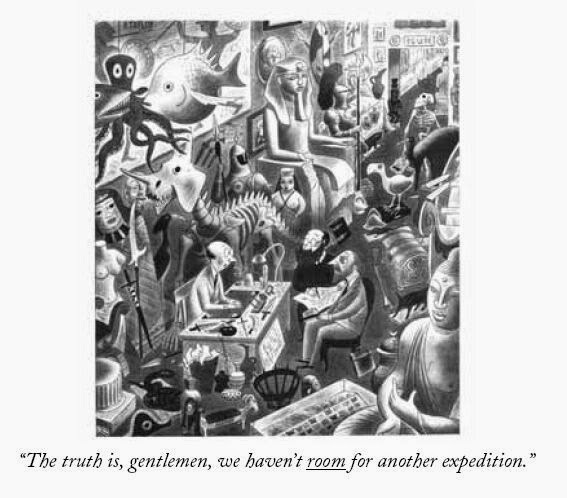
It reminded me of the following devastating picture included and commentated upon by Vasant Sarwate (वसंत सरवटे) in his book "Samvad Reshalekhakashi" (संवाद रेखालेखकाशी), 2012.


Artist: Adolf Born 
  

commentary by Vasant Sarwate

Thursday, October 08, 2015

Love of Geometry or Food?...Achilles Eats Hector's Moussaka!

Martin Amis, The New York Times, April 27 2015:

"...In “Deep Readers of the World, Beware!” (1959) he (Saul Bellow) imagines a classroom conversation:

 “Why, sir,” the student wonders, “does Achilles drag the body of Hector around the walls of Troy? . . . Well, you see, sir, the ‘Iliad’ is full of circles — shields, chariot wheels and other round figures. And you know what Plato said about circles. The Greeks were all made for geometry.”

“Bless your crew-cut head,” the professor replies, “for such a beautiful thought. . . . Your approach is both deep and serious. Still, I always believed that Achilles did it because he was so angry.”

Critics should cleave to the human element, and not just laminate the text with additional obscurities. The essential didactic task, Bellow implies, is to instill the readerly habits of enthusiasm, gratitude and awe..."

(Review of  'THERE IS SIMPLY TOO MUCH TO THINK ABOUT', Collected Nonfiction By Saul Bellow)


Artist: J. B. Handelsman (1922-2007), The New Yorker, 19 March 1990

Sunday, October 04, 2015

Can We Trust the Inscriptions on Sulptures?


Ramesses II lived from 1303 BC to 1213 BC- that is more than 3000 years ago....read the following and decide if much has changed in politics under the name of "the requirements of the kingship"...

"Ramesses was a consummate self-publicist, and a completely unscrupulous one. To save time and money he simply changed the inscriptions on pre-existing sculptures so that they bore his name and glorified his achievements."

Can you trust even the inscriptions in stone by the rulers?

Egyptologist Dr Karen Exell, on Ramesses the propagandist:

"...He very much understood that being visible was central to the success of the kingship, so he put up as many colossal statues as he could, very quickly. He built temples to the traditional gods of Egypt, and this kind of activity has been interpreted as being bombastic – showing off and so on – but we really need to see it in the context of the requirements of the kingship. People needed a strong leader, and they understood a strong leader to be a king who was out there campaigning on behalf of Egypt and was very visible within Egypt. We can even look at what we can regard as the ‘spin’ of the records of the battle of Qadesh in his year five, which was a draw. He came back to Egypt and had the record of this battle inscribed on seven temples, and it was presented as an extraordinary success, that he alone had defeated the Hittites. So it was all spin, and he completely understood how to use that..."

('A History of the World in 100 Objects' by Neil MacGregor)
Artist: Richard Taylor, The New Yorker, September 10 1938

Tuesday, September 29, 2015

Thursday, September 24, 2015

"स चाशीर्वादमर्हति":महंमद सर्वांचा आशीर्वाद इच्छितात...Love of QUR’AN- Jefferson & Vinoba


Today September 24 2015 is Eid al-Adha / Bakr-Eid
 
विनोबा भावे:

"स चाशीर्वादमर्हति-  महंमद सर्वांचा आशीर्वाद इच्छितात. म्हणतात की श्रद्धावंत हो, महंमदाला शांती आणि शरणता प्राप्त होण्यासाठी आशीर्वाद द्या. ही नम्रता आहे. ज्यांच्यापाशी लोक आशीर्वादासाठी जातात तेच सर्वांच्या  आशीर्वादाची  याचना करीत आहेत. ही फार मोठी गोष्ट आहे."
(कुराण-सार, c 1962) 


Denise A. Spellberg:

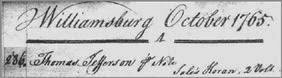
"At a time when most Americans were uninformed, misinformed, or simply afraid of Islam, Thomas Jefferson imagined Muslims as future citizens of his new nation. His engagement with the faith began with the purchase of a Qur’an eleven years before he wrote the Declaration of Independence. Jefferson’s Qur’an survives still in the Library of Congress, serving as a symbol of his and early America’s complex relationship with Islam and its adherents. That relationship remains of signal importance to this day..."


The title page of Jefferson’s Qur’an, now in the Library of Congress

courtesy: 'Thomas Jefferson's Qur'an: Islam and the Founders' by Denise A. Spellberg, 2013

Monday, September 21, 2015

Putting Living Organism in Two Places at Once...Schrödinger's Affair with Twin Young Women

The Guardian reported on September 16 2015

"Schrödinger's microbe: physicists plan to put living organism in two places at once- A radical demonstration of quantum theory could see a bacterium suspended in an uncertain state similar to that famously endured by Schrödinger’s cat...


Erwin Schrödinger, one of the founding fathers of quantum theory, proposed his thought experiment in 1935. In it, a cat found itself in a closed box with a small radioactive source, a Geiger counter, a hammer and a small bottle of poison.

Schrodinger explained that if an atom of the radioactive source decayed, the Geiger counter would trigger a device to release the poison. In quantum mechanics, the state of the cat would then be “entangled” with the state of the radioactive material. In due course, the cat would be in a superposition of both alive and dead states.."
Stephen G. Brush, 'Should the History of Science Be Rated X?':

" My concern in this article is with the possible dangers of using the history of science in science education. I will examine arguments that young and impressionable students at the start of a
scientific career should be shielded from the writings of contemporary science historians for reasons similar to the one mentioned above-namely, that these writings do violence to the professional ideal and public image of scientists as rational, open-minded investigators,
proceeding methodically, grounded incontrovertibly in the outcome of controlled experiments, and
seeking objectively for the truth, let the chips fall where they may..."


John Gray:

"Science can advance human knowledge, it cannot make humanity cherish truth. Like the Christians of former times, scientists are caught up in the web of power; they struggle for survival and success; their view of the world is a patchwork of conventional beliefs. Science cannot bring ‘miracle, mystery and authority’ to humankind, if only because – like those who served the Church in the past – its servants are all too human."


Neil Gussman with Sarah Reisert:

"...Of course there has been a trend recently in scientific biographies to talk about lust in the lives of their subjects. We all know now that Einstein would not be named husband of the century.
Erwin Schrödinger, known for the thought experiment "Schrödinger's Cat," created the Schrödinger equation, central to quantum mechanics, on a winter semester break. At the time he was having an affair with twin young women in one of his classes. He took one twin to the Alps and came back with the equation..."


...He took twin to the Alps.....

now my caption to the cartoon below would be:

"oh! Like in the previous room, he too is Erwin Schrödinger...One of them got the Nobel prize..."
 
Artist: Michael Ffolkes (1925-1988), The New Yorker, June 9 1980

Friday, September 18, 2015

जी ए कुलकर्णी...Did GA know Ingrid Bergman's Admiration of Eugene O’Neill?

As I have said on this blog earlier, G A Kulkarni (जी ए कुलकर्णी) was an admirer of Eugene O’Neill. In the only letter he sent to me, he prods 22-year-old me to read Dostoyevsky and O’Neill.

Robert Dowling has written a book 'Eugene O’Neill: A Life in Four Acts', 2014. It has been much reviewed.

In February 2015, John Lahr- author of much lauded 'Tennessee Williams', 2014- has reviewed it for London Review of Books.

Mr. Lahr writes:

"...O’Neill was a rangy handsome man who looked out at his bleak world with large haunted eyes. ‘They were the most beautiful eyes I have ever seen in my whole life. They were like wells; you fell into them,’ the 26-year-old Ingrid Bergman said, who had had a success in a San Francisco production of Anna Christie but wouldn’t let O’Neill lure her away from her film ambitions..."


Now, by some coincidence, GA too was an admirer of Ms. Bergman! GA mentions her a few times in his  letters.

In a letter dated April 12 1980 to Ms. Sunita Deshpande (सुनिता देशपांडे ),  he writes:

"...मी Garboचा एकच, 'Ninotechka' हा  चित्रपट पाहिला, पण अनेक stills पाहिले आहेत. Ingrid Bergman देखील अविस्मरणीय आहे…."

[...I have see just one feature of (Greta) Garbo- Ninotechka (1939) but have seen her many snaps. Ingrid Bergman too is unforgettable...]

Elsewhere he recalls a Marathi article (by Mr. Deshpande?), on Ms. Bergman, he had loved. 

Did GA know this Bergman's admiration of O’Neill? Would he have felt jealous of O’Neill if he knew it?


Monday, September 14, 2015

I Will Not Fight the Future, the Offspring of Accident and Wilfulness


Tom Stoppard:
"....What he (Alexander Herzen) detested above all was the conceit that future bliss justified present sacrifice and bloodshed. The future, said Herzen, was the offspring of accident and wilfulness. There was no libretto or destination, and there was always as much in front as behind..."


courtesy: The Simpsons