मेघदूत: "नीचैर्गच्छत्युपरि दशा चक्रनेमिक्रमेण"

समर्थ शिष्या अक्का : "स्वामीच्या कृपाप्रसादे हे सर्व नश्वर आहे असे समजले. पण या नश्वरात तमाशा बहुत आहे."

G C Lichtenberg: “It is as if our languages were confounded: when we want a thought, they bring us a word; when we ask for a word, they give us a dash; and when we expect a dash, there comes a piece of bawdy.”

C. P. Cavafy: "I’d rather look at things than speak about them."

Martin Amis: “Gogol is funny, Tolstoy in his merciless clarity is funny, and Dostoyevsky, funnily enough, is very funny indeed; moreover, the final generation of Russian literature, before it was destroyed by Lenin and Stalin, remained emphatically comic — Bunin, Bely, Bulgakov, Zamyatin. The novel is comic because life is comic (until the inevitable tragedy of the fifth act);...”

सदानंद रेगे: "... पण तुकारामाची गाथा ज्या धुंदीनं आजपर्यंत वाचली जात होती ती धुंदी माझ्याकडे नाहीय. ती मला येऊच शकत नाही याचं कारण स्वभावतःच मी नास्तिक आहे."

".. त्यामुळं आपण त्या दारिद्र्याच्या अनुभवापलीकडे जाऊच शकत नाही. तुम्ही जर अलीकडची सगळी पुस्तके पाहिलीत...तर त्यांच्यामध्ये त्याच्याखेरीज दुसरं काही नाहीच आहे. म्हणजे माणसांच्या नात्यानात्यांतील जी सूक्ष्मता आहे ती क्वचित चितारलेली तुम्हाला दिसेल. कारण हा जो अनुभव आहे... आपले जे अनुभव आहेत ते ढोबळ प्रकारचे आहेत....."

Kenneth Goldsmith: "In 1969 the conceptual artist Douglas Huebler wrote, “The world is full of objects, more or less interesting; I do not wish to add any more.”1 I’ve come to embrace Huebler’s ideas, though it might be retooled as “The world is full of texts, more or less interesting; I do not wish to add any more.” It seems an appropriate response to a new condition in writing today: faced with an unprecedented amount of available text, the problem is not needing to write more of it; instead, we must learn to negotiate the vast quantity that exists. How I make my way through this thicket of information—how I manage it, how I parse it, how I organize and distribute it—is what distinguishes my writing from yours."

Tom Wolfe: "The first line of the doctors’ Hippocratic oath is ‘First, do no harm.’ And I think for the writers it would be: ‘First, entertain.’"

विलास सारंग: "… . . 1000 नंतर ज्या प्रकारची संस्कृती रुढ झाली , त्यामध्ये साधारणत्व विश्वात्मकता हे गुण प्राय: लुप्त झाले...आपली संस्कृती अकाली विश्वात्मक साधारणतेला मुकली आहे."

Showing posts with label Amitav Ghosh. Show all posts

Sunday, October 06, 2024

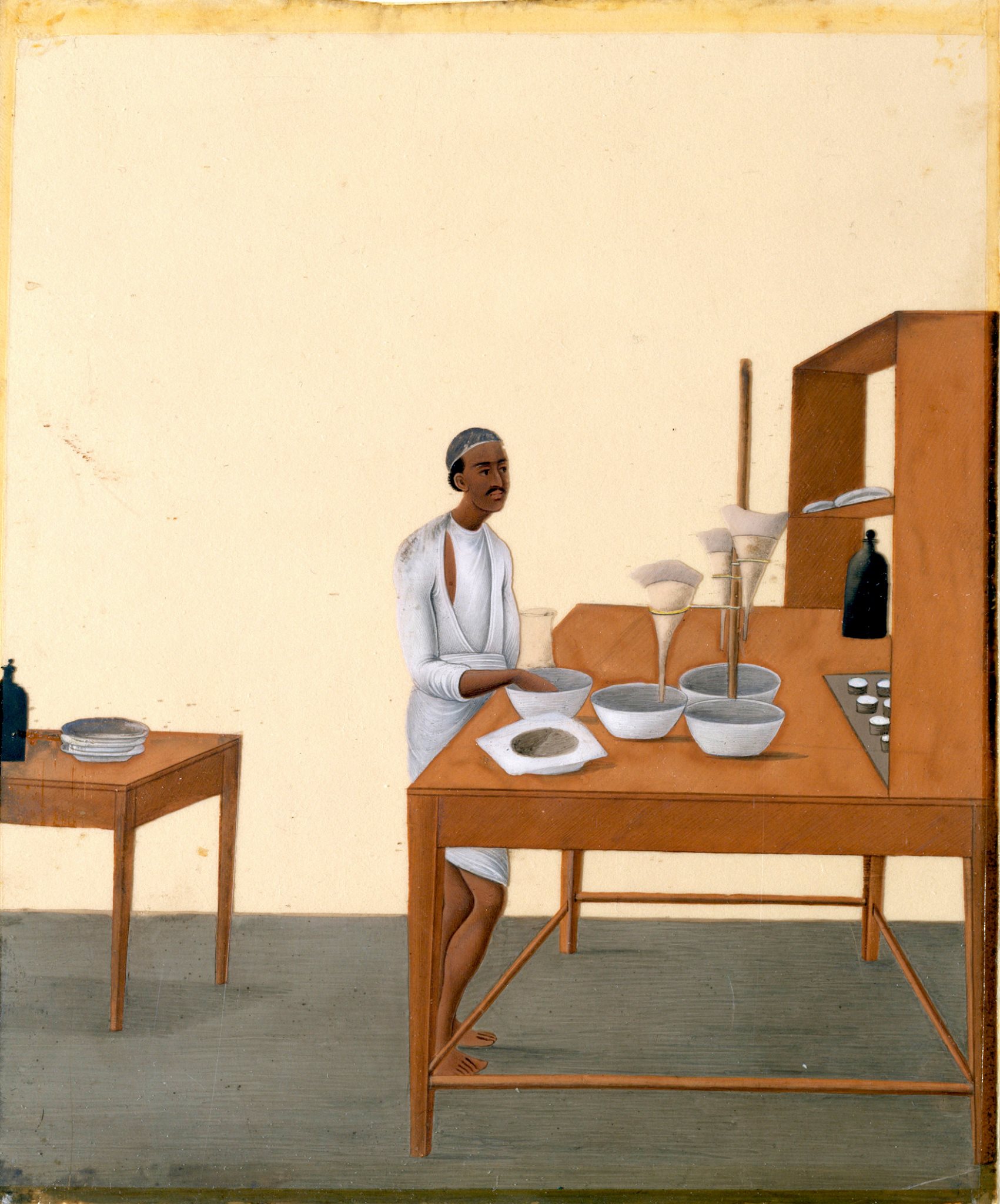
१९व्या शतकातील महान चित्रकार शिवलाल यांची राष्ट्रभक्तीने प्रेरित कला ...Great Painter and Patriot Shiva Lal

पटण्यातील अफूच्या कारखान्याची, शिवलाल (साधारण  १८१७-१८८७) यांची १८५७ च्या सुमारास काढलेली  १९चित्रे आहेत. 

अमिताव घोष त्यांच्या कलेबद्दल लिहतात:

"... The war may also have played a part in imparting something else to Shiva Lal’s images: a subtle, almost involuntary, subversiveness that is strangely incongruent with the intense colonial loyalties that he is said to have displayed in 1857. Whereas both Sherwill and Sita Ram had, each in their own way, portrayed the Opium Factory as a testament to Empire, highlighting the buildings and their monumentality, Shiva Lal’s focus is almost exclusively on the workers and the tasks they perform. The built environment seems scarcely to exist, apart from a few walls and doorways in the background. Much of the factory’s work seems to be happening out of doors, in conditions that are all too grimily familiar in India.

Unlike Sherwill and Sita Ram, Shiva Lal is also attentive to the surveillance that was ever-present in the factory: one of his paintings shows workers being checked as they leave the factory. Even more subversive, perhaps, are his depictions of Indians working in the factory’s chemical laboratories. As Childers points out in her insightful article, to portray Indians as skilled technicians working in a laboratory was to flout colonial conventions, which typically represented natives as technologically inept. This was even more pointedly true of opium factories, where chemical tests had a specifically racial dimension in that they were intended to prevent underpaid Indians from adulterating the product. The success of the tests was thus held to be entirely dependent on ‘strict European superintendence’ because Indians ‘could not altogether be relied upon’.

In their simplicity Shiva Lal’s compositions are representative of the firqa genre; in no sense do they aspire to the perspectival grandeur or pictorial complexity of Sherwill’s and Sita Ram’s paintings, even though the artist was by no means lacking in technical proficiency. Yet, it is instructive to compare Shiva Lal’s pictures with later images of the Patna and Ghazipur opium factories

There are several such photographs dating from the late nineteenth century to the 1970s. They mainly show the workers labouring outdoors in grimy, crowded conditions, bare-bodied and clad in dhotis, just as they are in Shiva Lal’s pictures. The buildings that are visible in the background are by no means monumental: they look like low sheds, of the kind that can be seen in any workshop or mill in India. Stranger still, even in the most recent photographs, the processes of production seem to be much like they were back when Shiva Lal painted them.

In short, Shiva Lal’s images may have been exceedingly simple but they were more true to their subject than the highly sophisticated pictures produced by Sherwill and Sita Ram." 

('Smoke and Ashes: A Writer's Journey Through Opium's Hidden Histories')


Monday, April 22, 2024

Implications of Marathas’ Protracted Resistance to the British Onslaught...A Tale of Two Cities- Mumbai and Kolkata

१९व्या शतकाच्या सुरवातीस पेशव्यांनी आणि त्यांच्या अनेक सरदारांनी इंग्रजांशी लढा चालू ठेवल्याचे किती चांगले परिणाम भविष्यात झाले, त्याबद्दल अमिताव घोष काय म्हणतातते पहा:

"...But even though Calcutta and Bombay were both hubs of the opium trade, the ways in which business was conducted in the two cities were completely different. Calcutta was the capital of British India throughout the nineteenth century, and it had the largest number of white residents of any city in the country. Being the seat of British power its economy was largely controlled by the white business community, which was closely networked with colonial officials in India, many of whom invested their savings with them. There were further circles of exclusion even within the white business community, with a group of interconnected merchants of Scottish origin playing a dominant role. Race and community were thus central features of Calcutta’s economic life, with a few Scottish firms exercising oligopolistic control over some parts of the business world. The Marwaris were their only significant competitors.

In Bombay, on the other hand, businessmen from many different backgrounds were able to operate on more equal terms. This was not a chance outcome: it was, rather, yet another legacy of the Marathas’ protracted resistance to the British onslaught because of which ‘Western India was conquered by the British at a later stage than Eastern India, thus escaping the period of unabashed exploitation which cost so dearly to indigenous merchants in Bengal’. As a result,

[T]he ethnic and communal diversity of Bombay’s business world was striking: it included merchants belonging to many communities of Gujarat, including the Parsis, the Hindu Vanias and Bhatias, the Muslim Bohras, Khojas and Memons as well as businessmen from other provinces of India (Sind, Marwar), Baghdadi Jews (the different branches of the famous Sassoon family), non-British Europeans (the Swiss firm of Volkarts), Japanese (Toyo Menka Kaisha) and Britishers of various origins. The contrast was clear with the increasingly polarized and oligopolistic world of Calcutta where only two communities mattered: the Scots and the Marwaris.

The fact that the indigenous merchants of Bombay participated directly in the export trade, spending long spells in China, also meant that they had much more exposure to the outside world, so when the explosive growth of the drug trade slowed down towards the end of the nineteenth century, they were able to transition into other industries, like textiles, yarn manufacturing, steel, cement, hotels and so on. ‘British Bombay, unlike Calcutta, was never essentially a colonial city,’ writes Gillian Tindall. ‘The real life of Bombay was always lived in … a more cosmopolitan and egalitarian setting; in warehouses … in counting houses, in places where samples of raw cotton or opium or silk or ivory or inlay-work were passed from hand to hand.’

 (Chapter 10, 'East and West', 'Smoke and Ashes: A Writer's Journey Through Opium's Hidden Histories', 2023, Amitav Ghosh)

So while Bombay prospered, Calcutta’s economy remained quintessentially colonial, structured around racial and communal hierarchies, and dependent on agricultural products like opium, jute and tea, all wrung out of the soil by underpaid and ill-used workers.

These legacies have lived on...."

त्यात ते मराठी व्यापाऱ्यांचा उल्लेख करत नाहीत पण जगन्नाथ शंकरशेठ (१८०३-१८६५)  यांच्या सारखे यशस्वी व्यापारी तर होतेच. 


Friday, March 01, 2024

Opium, British Occupation of India, Indian Farmers and World’s First Drug Cartel


प्लासी च्या लढाई नंतर काय काय झाले ते पहा... 
 
Amitav Ghosh, 'Smoke and Ashes: A Writer's Journey Through Opium's Hidden Histories', 2023:
 
"... Equipped with English weaponry, the army of the Bengal Presidency marched steadily westward, at the expense of the increasingly enfeebled remnants of the Mughal Empire. In 1757 and 1764 the East India Company defeated the tottering indigenous powers in two decisive battles. The territories that came with those victories were quickly incorporated into the Company’s Bengal Presidency, which from then on extended deep into the Gangetic plain, well past the city of Patna. This meant that much of the hinterland of the military labour market, as well as most of the opium-producing region of Bihar, was now in English hands; both would prove strategically crucial to the fortunes of the East India Company.
 
The English, like the Dutch and the French, had long maintained a ‘factory’ or trading station in Patna, so its officials were intimately familiar with the workings of the opium business. For a few years after the British conquest, the Europeans competed against each other in procuring opium, with the result that the acreage under poppy cultivation in the region soared from 283,000 hectares to 303,500 hectares in just one year. ‘This large-scale conversion of paddy fields into poppy cultivation,’ writes the historian Emdad-ul Haq, ‘contributed to a famine in Bengal in 1770. This famine caused the death of 10 million people in an area that had been traditionally known as the “Golden Bengal” due to its natural resources...."
 
इंग्रज आणि इतर युरोपियन सत्तांमुळे भाताऐवजी अफू चे पीक घेणे वाढले आणि त्याचे पर्यवसान १७७० च्या बंगालच्या दुष्काळात होऊन १ कोटी लोक मृत्यमुखी पडले ( त्या दुष्काळाची इतर कारणे पण दिली जातात)... आणि तरी १९व्या शतकातील काही भारतीय इंग्रजांचे कौतुक करत होते!
 
घोष यांचे पुस्तक वाचताना लक्षात येते की १८व्या शतकापासून आपण अफू हा भारतीय इतिहासातील फार मोठा घटक मानला पाहिजे... भारतात गांजाचा प्रसार सर्वदूर असला तरी बहुतेक भारतीय लोक युरोपियन लोक येई पर्यंत अफू पासून दूर होते (त्यांना जवळजवळ अफू माहितीच नव्हती)... पण ते झपाट्याने बदलले...
 
अलीकडे अनेक कारणांमुळे आपण भारतातील शेतकऱ्यांचे महत्व जाणतो किंवा जाणायला लागलो आहोत. अलीकडे त्यांच्या जीवनातील अनेक गोष्टी आपल्या समोर येतात- भाजीमालाचे भाव, पिकाची निवड, निसर्गात झालेल्या उलथापालथीचा त्यांना बसलेला फटका ... वगैरे. 
 
शिवाजी महाराजांनी लिहलेली, शेतकऱ्यांच्या संबंधातील त्यांची अपार संवेदना दाखवणारी, पत्रे आपण वाचली असतात... बाकीच्या राज्यकर्त्यांचे काय? 
 
मागच्या पोस्ट मध्ये बंगालमधील १७७०च्या दुष्काळाबद्दल लिहले, आता वाचा दुष्काळ नसताना इंग्रजांचा बिहार मधील शेतकऱ्यांच्या संबंधातील कारभार... इंग्रजांनी त्यांच्यावर अफूचे पीक लावायची आणि आलेली अफू त्यांना इंग्रजांना उत्पादन शुल्काच्या कमी किमतीत विकायची सक्ती केली होती... 
 
"... So, far from making any money by growing this hugely valuable commodity, the poppy farmers of eastern India actually made significant losses on their harvest. Why, then, did they grow this crop? The reason was succinctly explained in a petition signed by hundreds of farmers: ‘We cultivate the poppy under pressure from Government, otherwise we would not do it, and our prayer is that we may be released from this trouble.’
 
The system was, therefore, coercive to its core: not only did farmers have to deal with the ever-looming threat of violence, but they also had no choice other than to plant poppies because the Opium Department stipulated that nothing else could be grown on land that had been earmarked for that purpose. Farmers could be evicted if they planted any other crop, and since most poppy growers were ‘tenants at will’, they were in constant danger of losing their land. So strict and punitive were the laws of the Opium Department that farmers were essentially trapped within a net of legal obligations and debt bondage. Even in times of famine, they had no recourse but to grow poppies in order to slake the British Empire’s inexhaustible appetite for opium."
 
दुष्काळात सुद्धा त्यांना अफू लावणे सक्तीचे होते!
 
"Through the first half of the eighteenth century exports of opium to China had seldom exceeded 200 chests, but by 1767 the number had increased to 1,000.49 With the setting up of the Opium Department, the figure grew to 4,570 chests in 1800, and was stable at around 4,800 for a while. But after 1830 exports grew rapidly, and opium soon became the keystone of the colonial economy: ‘like the yeast in bread dough’ it was the substance ‘upon which the entire structure depended’. Or, as an article in a journal published by the US National Defense University notes: ‘English merchants, led by the British East India Company, from 1772 to 1850, established extensive opium supply chains … creating the world’s first drug cartel.’..."
 
१७७२-१८५० काळात इंग्रज सरकार जगातील पहिले ड्रग कार्टेल होते, जे भारतीय शेतकऱ्यांचे रक्त पित होते.... 
 
"... This system was, therefore, on its own terms, one of the most successful commercial ventures in human history, producing immense profits for the British Empire for well over a hundred years. The opium trade was thus an essential element of an emerging capitalist system that was then spreading rapidly across the globe. Yet, far from being a free market, this system was firmly founded on colonialism and race; in that sense it was an instance of what Cedric J. Robinson called ‘racial capitalism’..."
 
जवळजवळ १०० वर्षे, इंग्रजांचा मुख्य धंदा आणि उद्दिष्ट होते भारतात अफू बनवून चीनला विकणे आणि त्या बदल्यात तिथे चहा विकत घेऊन तो ब्रिटन ला पाठवणे....
 
(Amitav Ghosh, 'Smoke and Ashes: A Writer's Journey Through Opium's Hidden Histories', 2023 वर आधारित)
 
सोबत - अफूचे शेत


Friday, May 14, 2021

ब्रह्मदेश हा भारताचा भाग होता....Burma Was a Province of India

George Orwell, 'Burmese Days', 1934:  
‘For an average Englishman in India [Burma was then ruled as part of the Indian empire] the basic fact, more important even than the loneliness or the heat of the sun, is the strangeness of the scenery. In the beginning the foreign landscape bores him, later he hates it, in the end he comes to love it, but it is never quite out of his consciousness and all his beliefs are in a mysterious way affected by it.’
 
Amitav Ghosh, The Glass Palace, 2000: "...The British occupation had changed everything: Burma had been quickly integrated into the Empire, forcibly converted into a province of British India....Baburao welcomed everyone to the shade of the tree. Once the crowd was thick and deep he began to talk, his voice slowing to a chant in the reverential manner of a reciter of the Ramayana. He spoke of a land of gold, Burma, which the British Sarkar had declared to be a part of India...."
 
Richard Eaton, ‘India in the Persianate Age: 1000-1765’, 2019 : “…In this way values and sensibilities embedded in works of the Persian canon were absorbed by Indian populations having no facility in the Persian language.

The case of Burma’s Arakan coastal region illustrates this process. Between the mid fifteenth and early seventeenth centuries the region’s Buddhist kings, seeking to integrate themselves with a maritime world saturated with Persian culture, adopted Persian royal titles and issued coins in the Perso-Arabic script, as well as those of Sanskrit and Arakanese. By the mid seventeenth century Arakanese was used as the language of the ruling elite, Sanskrit that of the court’s Brahmins, Pali that of the Buddhist canon, Bengali that of the kingdom’s sizeable Muslim population (the ancestors of today’s Rohingya community) and Persian that of administration and diplomacy….”

Jon Wilson, The Chaos of Empire: The British Raj and the Conquest of India, 2016: “…The English ruled territory in India from the 1650s. Britain was the supreme political force in the subcontinent that stretches from Iran to Thailand, from the Himalayas to the sea, from at least 1800 until 1947. These years of conquest and empire left remains that survived in South Asia’s soil, sometimes until today. Perhaps a quarter of a million Europeans are still buried in more than a thousand ‘cities of the dead’, as the British explorer Richard Burton called them in 1847, scattered through the countries that once made up British-ruled India – India, Bangladesh, Pakistan and Burma….”

 १८२६ ते १९३७ पर्यंत ब्रह्मदेश हा भारताचा अधिकृतपणे भाग होता (Division of the Bengal Presidency 1826–1862 ; Province of British India 1862–1937; https://en.wikipedia.org/wiki/British_rule_in_Burma)... ज्यावेळी लोकमान्यांना आणि थिबा राजांना मंडाले आणि रत्नागिरीत कोंडण्यात आले , ते त्यांच्या देशात, भारतातच. 

 वाङ्मय शोभाच्या एप्रिल १९४९ चे मुखपृष्ठ पहा :


 त्यावर जाहिरात आहे व्ही शांताराम दिग्दर्शित सिनेमाची - "अपना देश", त्यातील भारताचा नकाशा पहा. 
 
त्याच अंकातील पा. म. के. या लेखकाचा लेख पहा , 'आमचें राजकारण'. 

त्यातील एक छोटासा भाग :
 

 "परवां  परवां  पर्यंत आमच्यांतच तो सामावलेला होता"
 
अशी अनेक उदाहरणे देता येतील...