मेघदूत: "नीचैर्गच्छत्युपरि दशा चक्रनेमिक्रमेण"

समर्थ शिष्या अक्का : "स्वामीच्या कृपाप्रसादे हे सर्व नश्वर आहे असे समजले. पण या नश्वरात तमाशा बहुत आहे."

G C Lichtenberg: “It is as if our languages were confounded: when we want a thought, they bring us a word; when we ask for a word, they give us a dash; and when we expect a dash, there comes a piece of bawdy.”

C. P. Cavafy: "I’d rather look at things than speak about them."

Martin Amis: “Gogol is funny, Tolstoy in his merciless clarity is funny, and Dostoyevsky, funnily enough, is very funny indeed; moreover, the final generation of Russian literature, before it was destroyed by Lenin and Stalin, remained emphatically comic — Bunin, Bely, Bulgakov, Zamyatin. The novel is comic because life is comic (until the inevitable tragedy of the fifth act);...”

सदानंद रेगे: "... पण तुकारामाची गाथा ज्या धुंदीनं आजपर्यंत वाचली जात होती ती धुंदी माझ्याकडे नाहीय. ती मला येऊच शकत नाही याचं कारण स्वभावतःच मी नास्तिक आहे."

".. त्यामुळं आपण त्या दारिद्र्याच्या अनुभवापलीकडे जाऊच शकत नाही. तुम्ही जर अलीकडची सगळी पुस्तके पाहिलीत...तर त्यांच्यामध्ये त्याच्याखेरीज दुसरं काही नाहीच आहे. म्हणजे माणसांच्या नात्यानात्यांतील जी सूक्ष्मता आहे ती क्वचित चितारलेली तुम्हाला दिसेल. कारण हा जो अनुभव आहे... आपले जे अनुभव आहेत ते ढोबळ प्रकारचे आहेत....."

Kenneth Goldsmith: "In 1969 the conceptual artist Douglas Huebler wrote, “The world is full of objects, more or less interesting; I do not wish to add any more.”1 I’ve come to embrace Huebler’s ideas, though it might be retooled as “The world is full of texts, more or less interesting; I do not wish to add any more.” It seems an appropriate response to a new condition in writing today: faced with an unprecedented amount of available text, the problem is not needing to write more of it; instead, we must learn to negotiate the vast quantity that exists. How I make my way through this thicket of information—how I manage it, how I parse it, how I organize and distribute it—is what distinguishes my writing from yours."

Tom Wolfe: "The first line of the doctors’ Hippocratic oath is ‘First, do no harm.’ And I think for the writers it would be: ‘First, entertain.’"

विलास सारंग: "… . . 1000 नंतर ज्या प्रकारची संस्कृती रुढ झाली , त्यामध्ये साधारणत्व विश्वात्मकता हे गुण प्राय: लुप्त झाले...आपली संस्कृती अकाली विश्वात्मक साधारणतेला मुकली आहे."

Thursday, February 21, 2019

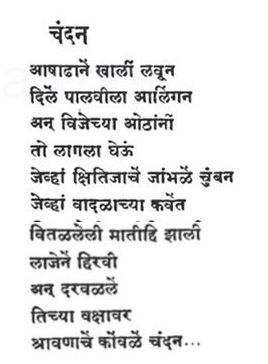
तिच्या वक्षावर श्रावणाचें कोंवळें चंदन....Sadanand Rege and Robert McGinnis


 कवी: सदानंद रेगे, वाङ्मय शोभा, सप्टेंबर १९५६

(काहीप्रमाणात रेगे जरी मर्ढेकरांचे समकालीन असले आणि त्यांच्या इतकेच (किंचित जास्तच!) प्रतिभाशाली असले तरी मर्ढेकरांच्या नव्या आणि 'स्वच्छ'  "दवात आलीस" किंवा "माझ्या ढिलाश्या बोटांचे / तळ तुझ्या स्तनावर." ची छाप या कवितेवर मला  दिसते)

p.s खालील चित्रातील तिच्या टॉपचा रंग कुठेतरी चंदनाच्या जवळचा आहे....  

आर्टिस्ट: Robert McGinnis

Mr. McGinnis has been hailed 'Pop culture Rembrandt'....


J. Kingston Pierce, Feb 1 2019: 
“Yes, there have been other painters who painted beautiful women—but there’s nothing like a McGinnis woman,” raves Charles Ardai, the editor at New York publishing house Hard Case Crime, which specializes in vintage-style paperback fronts and has made plentiful use of this artist’s output over the last decade and a half. “Leggy, serene, aloof, unruffled, coiled, and deadly or enigmatic and sensuous, Bob’s women are like otherworldly creatures, breathtaking and perfect.”
However, the appeal of McGinnis’s female subjects goes beyond their conspicuous corporeal attributes, insists Art Scott, who co-authored—with the painter himself—a handsome 2014 book, The Art of Robert E. McGinnis. “To me,” Scott says, “his exceptional talent for depicting physical beauty and sensuality is secondary to his gift for imbuing his women with personality: intelligence, competence, spunkiness, danger—as called for in their portrayal in the text. Other top paperback artists had this gift as well, but pre-McGinnis especially, the Calendar Girl/Starlet (or Calendar Girl/Starlet Menaced by Bad Guy) look and pose was what was usually on the covers.”

Sunday, February 17, 2019

मला आशा होती महाबली वेताळ मला सोडवेल... The Phantom@83

#महाबलीवेताळवाढदिवस
#ThePhantom83


Artist : Lee Falk (Leon Harrison Gross)  1911-1999

मला महाबली वेताळ इतका आवडतो की त्याचे एक उदाहरण पहा.

Artist: Drew Dernavich, The New Yorker, March 2018

मी त्या पडणाऱ्या माणसाच्या जागी असतो तर म्हणालो असतो: "मला आशा होती महाबली वेताळ मला सोडवेल."

Friday, February 15, 2019

...ते 'पोस्ट-अपोकॅलिप्टिक' जग माझ्या भविष्यात नाही तर शेजारात आहे...Namdev Dhasal@70

 #NamdevDhasal70  #नामदेवढसाळ७०

श्रीपाद कृष्ण कोल्हटकरांनी त्यांच्या ह ना आपटे यांच्या 'पण लक्षात कोण घेतो?", १८९० कादंबरीच्या परीक्षणात अस लिहल होत:  
 "रा. आपट्यांनी स्त्रियांच्या दुःखाची कहाणी सांगितली आहे तशी मागासलेल्या जातीच्या दुःखाची सांगितल्यास ती मिसेस स्टौच्या 'टॉम काकाची कोठडी' या कादंबरीच्या खालोखाल क्रांतिकारक होईल अशी खात्री वाटते. "

 विजय तेंडुलकर:
"...पांढरपेशा जगाच्या सीमा संपवून पांढरपेशा हिशेबांनी 'नो मॅन्स लँड'- निर्मनुष्य प्रदेश- जेथून सुरु होतो तेथून नामदेव ढसाळ याच्या कवितेचे मुंबईतील, 'गोलपिठा'  नावाने ओळखले जाणारे जग सुरु होते..."
('गोलपिठा'च्या पहिल्या आवृत्तीची प्रस्तावना)

दिलीप पुरषोत्तम चित्रे:
"... समकालीन कवींमध्ये मर्ढेकर, अरुण कोलटकर, नारायण सुर्वे, नामदेव ढसाळ अशा काही कवींमध्ये तुकारामी परंपरेच्या काही छटा आल्या..."
(पृष्ठ बारा, 'पुन्हा तुकाराम', १९९०/ १९९५)

John Gray, New Statesman, June 2010:
"....John Wyndham's The Day of the Triffids (1951) is full of terrifying images of human life under siege from ambulatory plants, but concludes with a handful of survivors emerging from their ordeal essentially unchanged to renew civilisation in the comically improbable environs of the Isle of Wight...
...Even at its most pessimistic, science fiction has always been a humanist genre. The consoling assumption has been that while civilisation may be flawed and fragile, it can always be rebuilt, perhaps on a better model, if only humans have the will to do it. The possibility that it is the species that is flawed has rarely been explored..."
 
Katherine Boo,  'Behind the Beautiful Forevers: Life, Death, and Hope in a Mumbai Undercity', 2012: “...The dream of Raja Kamble, a sickly toilet-cleaner who lived on the lane behind Abdul’s, was of medical rebirth. A new valve to fix his heart and he’d survive to finish raising his children. Fifteen-year-old Meena, whose hut was around the corner, craved a taste of the freedom and adventure she’d seen on TV serials, instead of an arranged marriage and domestic submission. Sunil, an undersized twelve-year-old scavenger, wanted to eat enough to start growing. Asha, a fighter-cock of a woman who lived by the public toilet, was differently ambitious. She longed to be Annawadi’s first female slumlord, then ride the city’s inexorable corruption into the middle class. Her teenaged daughter, Manju, considered her own aim more noble: to become Annawadi’s first female college graduate.

The most preposterous of these dreamers was the One Leg. Everyone thought so. Her abiding interest was in extramarital sex, though not for pocket change alone. That, her neighbors would have understood. But the One Leg also wanted to transcend the affliction by which others had named her. She wanted to be respected and reckoned attractive. Annawadians considered such desires inappropriate for a cripple.

What Abdul wanted was this: a wife, innocent of words like pimp and sisterfucker, who didn’t much mind how he smelled; and eventually a home somewhere, anywhere, that was not Annawadi. Like most people in the slum, and in the world, for that matter, he believed his own dreams properly aligned to his capacities....”
 
Ursula K. Le Guin, 1977:
“...but science fiction is a natural medium for social satire.”

तेंडुलकर त्यांच्या प्रस्तावनेत म्हणतात की ढसाळांची कविता मला शब्दशः समजत नाही. बरोबरच आहे, पण तेंडुलकर म्हणतात तसा तो निर्मनुष्य प्रदेश नाही तर, एका पांढरपेशा माणसासाठी, एखाद्या  विज्ञान कथेत वर्णन केल्यासारखा आहे- a post-apocalyptic, आणि ते जग वर्णन केलेली भाषा समजायला ते जग आधी थोडेतरी समजले पाहिजे, किमान त्याची कल्पना तरी करता आली पाहिजे.

 गरिबी मी आयुष्यात भोगली जरी नसली तरी पुष्कळ आणि जवळून पहिली आहे. कित्येक वर्षे पाहिलीय. पण ढसाळांनी मला पहिल्यांदा जाणीव करून दिली की गोलपिठाचे जग मात्र मी अजिबात पाहिलेले नाहीये आणि ते माझ्या भविष्यात नाही तर शेजारातच  आहे....  

(अलीकडील काही वर्षात पुण्यातील संध्याकाळच्या वेळात स्वारगेट चौक पाहून सुद्धा पोस्ट-अपोकॅलिप्टिक भविष्याची थोडी कल्पना यायला लागलीय.)


कृतज्ञता: कलाकार : संदेश भंडारे
Thursday, February 14, 2019

Sunday, February 10, 2019

...मला ती मोलकरीण राजकन्येसारखी वाटली...Maritornes, the Princess


जी. ए. कुलकर्णी : 
"... मला ती मोलकरीण राजकन्येसारखी वाटली, मद्याच्या पखाली दबा धरून बसलेल्या शिपायांसारख्या वाटल्या, आता तूच सांग, तुझे वाटणे माझ्या वाटण्यापेक्षा जास्त महत्वाचे का आहे ? ..."
(पृष्ठ २२१, "यात्रिक", पिंगळावेळ , १९७७)


Miguel De Cervantes Saavedra , translator Edith Grossman, ‘Don Quixote’, Chapter XVI:

“...And holding her close, in a low, amorous voice he began to say:

“Would that I were able, O beauteous and exalted lady, to repay the great boon thou hast granted me with the sight of thy sublime beauty, but Fortune, which never wearies of pursuing the virtuous, hath chosen to place me in this bed, where I lie so bruised and broken that even if I, with all my heart, desired to satisfy thine own desires, I could not. Further, added to this impossibility is another even greater, which is the promise of faithfulness that I have sworn to the incomparable Dulcinea of Toboso, the sole mistress of my most hidden thoughts; if this great obstacle did not loom between us, I would not be so foolish a knight as to turn away from so gladsome an opportunity as this that thy great kindness affords me.”

Maritornes, extremely agitated and perspiring freely at finding herself held so firmly by Don Quixote, and not understanding or paying much attention to what he was saying, attempted, without saying a word, to break free....” 

btw- तुम्ही वाचला नसल्यास हा सोळावा चॅप्टर वाचा...

 'Duck Soup', १९३३ पासून,  'जाने भी दो यारों', १९८३ पासून 'The Simpsons' (१९८९-) अशा अनेक महान कलाकृतींची जननी कोण हे तुम्हाला लक्षात येईल....

from 'The History of Don Quixote of De La Mancha', 1922

Artist: Jean de Bosschère ( 1878 - 1953)

आज योगायोगाने मोलीये यांच्यावरती गुगल डुडल आहे Known as the greatest of all writers of French comedy today, Moliere premiered his final play, Le Malade Imaginaire (The Imaginary Invalid) on February 10  in 1673. 

Thursday, February 07, 2019

प्रतिमेचे दहन!....Book Burning: Mankind's Old Habit


 'प्रतिमा' या भासाच्या नाटकाबद्दल (Pratima-nataka: The statues) द ग गोडसे ( 'नांगी असलेले फुलपाखरू', १९८९ ) लिहतात:


त्याच पुस्तकाबद्दल दुर्गा भागवत लिहतात :
"... पण भास हा वास्तव दाखवणारा होता, त्यानं प्रत्येक व्यक्तीकडे मानवी दृष्टिकोनातूनच पाहिलं. त्यांना देवत्व दिल नाही. 'प्रतिमा' नाटकात त्याने रामायणातील वेगळंच नाट्य दाखविलं आहे.....
...., पण ते लोकांना आवडलं नाही. त्यांनी ते नाटक जाळून टाकलं होतं. पुढे मग शेकडो वर्ष गेल्यानंतर कोणीतरी हे 'प्रातिमा' नाटक परत शोधून काढलं. म्हणून ते आपल्याला मिळालं..."

(पृष्ठ ४८, "ऐसपैस गप्पा: दुर्गाबाईंशी", लेखक : प्रतिभा रानडे, १९९८)


 "The Philistine; Books to Burn!!" poster (c 1890s) 

कलाकार:  W. W. Denslow (1856-1915)  (modified by me)

Image source: The New York Public Library


Sunday, February 03, 2019

Also Practising Art for Art's Sake....Norman Rockwell@125

#NormanRockwell125  आज नॉर्मन रॉकवेल (जन्म १८९४) आणि वसंत सरवटे (जन्म १९२७) या दोघांची जन्मतिथी आहे.


John Updike, ‘Always Looking: Essays on Art’: 
“...this (Norman Rockwell) most successful of twentieth-century commercial artists also practiced art for art’s sake....”

अगदी हेच वर्णन दीनानाथ दलालांना लागू होत....महाराष्ट्रातील most successful of twentieth-century commercial artists also practiced art for art’s sake....

शि फडणीसांवरती मला रॉकवेल यांचा खूप प्रभाव जाणवतो... माझ्या मते भारतातील सामान्य जीवनाचे चित्रण करणारी, त्यात विनोद शोधणारी अशी फडणीसांची अनेक चित्रे  रॉकवेल यांच्या उत्तम चित्रांच्या दर्जाची आहेत...

पण ,फडणीसांची अद्भुतता रॉकवेल यांच्या चित्रात जवळपास नाहीच... फडणीसांची चित्रकारिता सुद्धा बरीच वेगळी आहे...

Deborah Solomon:
Rockwell had celebrated the small and local, not the global and cinematic. But the emphasis on the common man that was central to America’s sense of self in 20th-century America gave way, in the television-centered 1960s, to the worship of celebrities, whose life stories and marital crises replaced those of the proverbial next-door neighbor as subjects of interest and gossip.”

आणि जे अमेरिकेत झाल, तेच भारतात झाल ... "the worship of celebrities, whose life stories and marital crises replaced those of the proverbial next-door neighbor as subjects of interest and gossip"...

Marriage License, June 11, 1955


Christopher Finch, 1988:
"There can be little doubt that this is one of Rockwell's finest  works. The idea behind it is simple enough: The artist contrasts the young couple applying for a marriage license with the elderly clerk who has seen it all a thousand times before. But the scene is evoked with such affection that it becomes suffused with complex resonances. The old clerk occupies an office that, like him, seems to belong to the past. It contains rows of dusty volumes and an ornate potbellied stove. Paint is peeling from the dingy walls and cigarette butts are scattered on the floor. But the tall sash window lets in the early-summer light, which falls on the young couple, bathing them in its glow and causing them to stand out from their surroundings. Their concentration on the task at hand is such that the surroundings have no meaning for them anyway. In this composition the play ofdarkness and light is used both to create the architecture of the painting and to produce an emotional effect on the viewer. Everything about this painting seems just right. Artists are notoriously critical of their own work, but in this instance it is impossible to think that Rockwell cannot have been satisfied with the result of his labors."

The Grocer’s Shop: a Woman Selling Grapes, 1672, 

Artist:  Gerrit Dou  (1613-1675)