मेघदूत: "नीचैर्गच्छत्युपरि च दशा चक्रनेमिक्रमेण"

समर्थ शिष्या अक्का : "स्वामीच्या कृपाप्रसादे हे सर्व नश्वर आहे असे समजले. पण या नश्वरात तमाशा बहुत आहे."

G C Lichtenberg: “It is as if our languages were confounded: when we want a thought, they bring us a word; when we ask for a word, they give us a dash; and when we expect a dash, there comes a piece of bawdy.”

C. P. Cavafy: "I’d rather look at things than speak about them."

Martin Amis: “Gogol is funny, Tolstoy in his merciless clarity is funny, and Dostoyevsky, funnily enough, is very funny indeed; moreover, the final generation of Russian literature, before it was destroyed by Lenin and Stalin, remained emphatically comic — Bunin, Bely, Bulgakov, Zamyatin. The novel is comic because life is comic (until the inevitable tragedy of the fifth act);...”

सदानंद रेगे: "... पण तुकारामाची गाथा ज्या धुंदीनं आजपर्यंत वाचली जात होती ती धुंदी माझ्याकडे नाहीय. ती मला येऊच शकत नाही याचं कारण स्वभावतःच मी नास्तिक आहे."

".. त्यामुळं आपण त्या दारिद्र्याच्या अनुभवापलीकडे जाऊच शकत नाही. तुम्ही जर अलीकडची सगळी पुस्तके पाहिलीत...तर त्यांच्यामध्ये त्याच्याखेरीज दुसरं काही नाहीच आहे. म्हणजे माणसांच्या नात्यानात्यांतील जी सूक्ष्मता आहे ती क्वचित चितारलेली तुम्हाला दिसेल. कारण हा जो अनुभव आहे... आपले जे अनुभव आहेत ते ढोबळ प्रकारचे आहेत....."

Kenneth Goldsmith: "In 1969 the conceptual artist Douglas Huebler wrote, “The world is full of objects, more or less interesting; I do not wish to add any more.”1 I’ve come to embrace Huebler’s ideas, though it might be retooled as “The world is full of texts, more or less interesting; I do not wish to add any more.” It seems an appropriate response to a new condition in writing today: faced with an unprecedented amount of available text, the problem is not needing to write more of it; instead, we must learn to negotiate the vast quantity that exists. How I make my way through this thicket of information—how I manage it, how I parse it, how I organize and distribute it—is what distinguishes my writing from yours."

Tom Wolfe: "The first line of the doctors’ Hippocratic oath is ‘First, do no harm.’ And I think for the writers it would be: ‘First, entertain.’"

विलास सारंग: "… इ. स. 1000 नंतर ज्या प्रकारची संस्कृती रुढ झाली , त्यामध्ये साधारणत्व व विश्वात्मकता हे गुण प्राय: लुप्त झाले...आपली संस्कृती अकाली विश्वात्मक साधारणतेला मुकली आहे."

Tuesday, May 22, 2018

It's Your Husband, Mrs. Kulkarni. He's Come Unravelled Again

Today May 22 2018 is our 31st wedding anniversary


Artist: Charle Barsotti (1933-2014), The New Yorker, April 2008

Saturday, May 19, 2018

डी डी टी चा वास येत असलेला उंदीर आणि नऊ लाख सव्वीस हजार पाचशे साठावे बीळ....Municipality and Mice

The Times of India, March 23 2018:

“Former state minister Eknath Khadse on Thursday said he smelt a rat in the government’s claim that nearly 3.2 lakh rodents were killed in a week in Mantralaya by a contractor in 2016.

“If the contractor is to be believed, he killed 45,628 rats in a day or 31 rats per minute,” the senior BJP leader said during a discussion on budgetary allocations in the assembly. He pointed out that BMC had killed 6 lakh rats across the city in 2015 and 2016. "The contractor was paid Rs 1.5 for every rat,” he told reporters outside the assembly later....”

Financial Times, UK, May 9 2018:
"Victory has been declared in the world's largest rodent eradication programme. The campaign to clear millions of rats and mice from the remote South Atlantic island of South Georgia involved dropping 300 tonnes of poison from helicopters at a cost £10m."

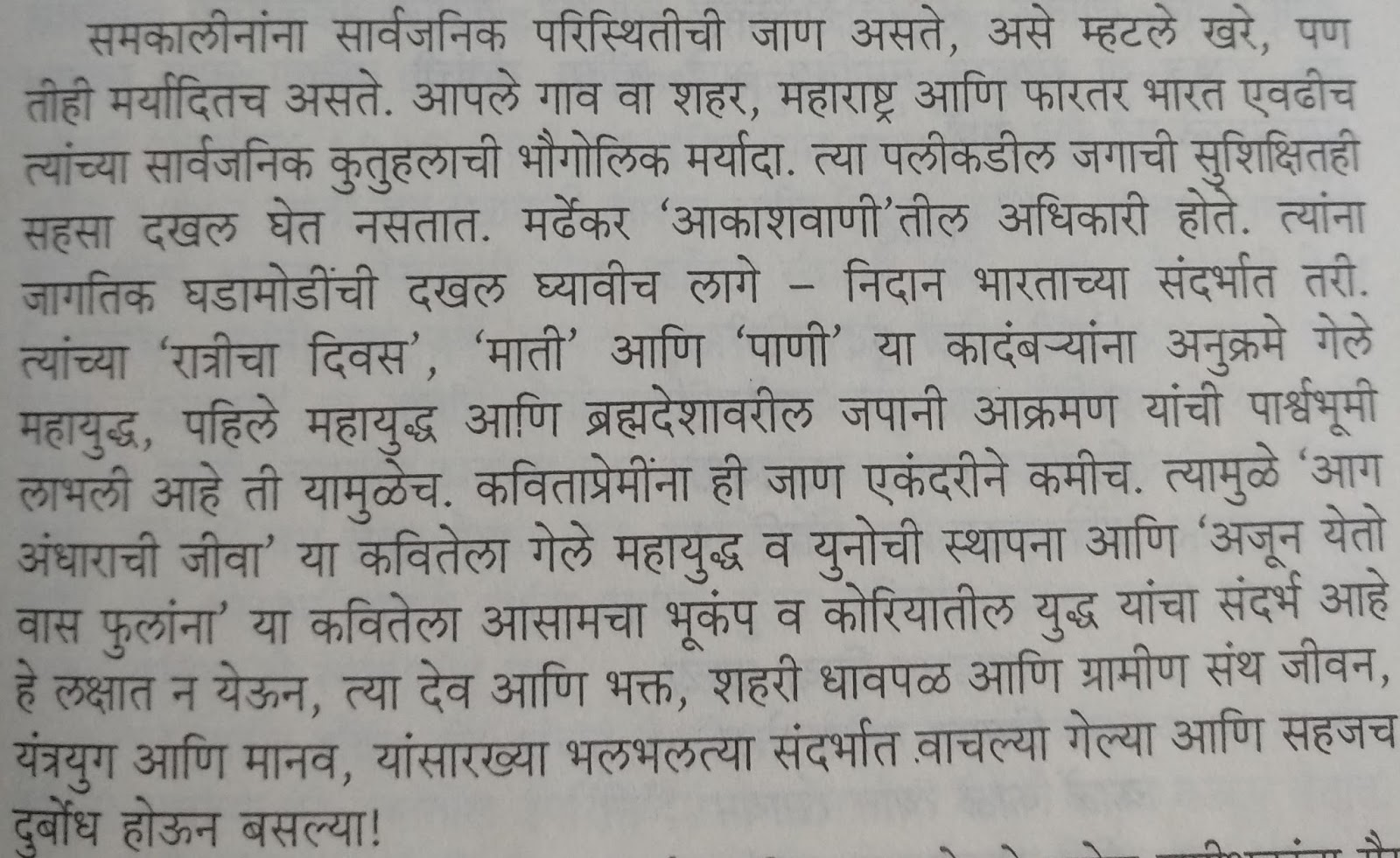
खालील कात्रण हे 'वाङ्मय शोभा' ऑगस्ट १९५१ च्या अंकातील 'पुण्याचे आरोग्यखाते' या डॉक्टर द नि मुळे यांच्या माहितीपर  लेखातील आहे.

कितीतरी गोष्टी लिहण्यासारख्या आहेत पण सध्या ही एक.


 ९,२६,५५९ हा नेमका आकडा वाचून मला हसू आले आणि खालील चित्राची पुन्हा एकदा आठवण झाली

कलावंत : सॅम ग्रॉस, दि न्यू यॉर्कर 

दोन मांजर एक बीळ वॉच करत आहेत , घरची लोक डिनर आणि सिनेमा बघायला गेली आहेत...

मी थोडी वेगळी कॅप्शन तयार केली...

"हे नऊ लाख सव्वीस हजार पाचशे साठावे बीळ आहे...मला डी डी टी चा वास येत असलेला उंदीर अजिबात आवडत नाहीत... तसही भविष्यात  पर्यावरणाला चांगल नाही म्हणून डी डी टी  बॅन होणारच आहे म्हणा..."

Wednesday, May 16, 2018

आजही अनेक मास्टर ऑफ द युनिव्हर्स दिसतात....Tom Wolfe, Thank You

#TomWolfe 
#MasteroftheUniverse
त्यांच्या लेखनातील कित्येक गोष्टी समजत नसल्यातरी मी टॉम वूल्फ यांना गेली जवळ जवळ २५वर्षे फॉलो केले होते. त्यांचे जे लेखन वाचायला मिळायचे ते वाचायचो. विशेषतः त्यांचे लेख.

त्यांची कादंबरी मात्र फक्त एकच वाचली आहे "The Bonfire of the Vanities", १९८७....मी कधीच त्यांचा मास्टर ऑफ द युनिव्हर्स होऊ शकणार नव्हतो, ना माझे ते कधी ध्येय होते.

माझ्या २०-२५वर्षाच्या कॉर्पोरेट करिअर मध्ये अशी अनेक पुरुष , क्वचित स्त्री, ज्यांच्या कडे बघून मास्टर ऑफ द युनिव्हर्स आठवायचे....आजही अनेक मास्टर ऑफ द युनिव्हर्स दिसतात.... 

"....The world was upside down. What was he, a Master of the Universe, doing down here on the floor, reduced to ransacking his brain for white lies to circumvent the sweet logic of his wife? The Masters of the Universe were a set of lurid, rapacious plastic dolls that his otherwise perfect daughter liked to play with. They looked like Norse gods who lifted weights, and they had names such as Dracon, Ahor, Mangelred, and Blutong. They were unusually vulgar, even for plastic toys. Yet one fine day, in a fit of euphoria, after he had picked up the telephone and taken an order for zero-coupon bonds that had brought him a $50,000 commission, just like that, this very phrase had bubbled up into his brain. On Wall Street he and a few others—how many?—three hundred, four hundred, five hundred?—had become precisely that…Masters of the Universe. There was…no limit whatsoever! Naturally he had never so much as whispered this phrase to a living soul. He was no fool. Yet he couldn’t get it out of his head. And here was the Master of the Universe, on the floor with a dog, hog-tied by sweetness, guilt, and logic…Why couldn’t he (being a Master of the Universe) simply explain it to her? Look, Judy, I still love you and I love our daughter and I love our home and I love our life, and I don’t want to change any of it—it’s just that I, a Master of the Universe, a young man still in the season of the rising sap, deserve more from time to time, when the spirit moves me—...."

त्यांचा आवडता विषय होता दुसऱ्या महायुद्धानंतर सुबत्ता आलेला अमेरिकन समाज... भारतात अशी सुबत्ता मध्यमवर्गाकडे १९९० नंतर आली आहे पण दुर्दैवाने भारतात टॉम वूल्फ नाहीत. 

त्यांची माझी आवडती एक दोन अवतरणे वाचा:

"In Democracy in America, Tocqueville (the inevitable and ubiquitous Tocqueville) saw the American sense of equality itself as disrupting the stream, which he called “time’s pattern”: “Not only does democracy make each man forget his ancestors, it hides his descendants from him, and divides him from his contemporaries; it continually turns him back into himself, and threatens, at last, to enclose him entirely in the solitude of his own heart.” A grim prospect to the good Alexis de T.—but what did he know about . . . Let’s talk about Me!
Tocqueville’s idea of modern man lost “in the solitude of his own heart” has been brought forward into our time in such terminology as alienation (Marx), anomie (Durkheim), the mass man (Ortega y Gasset), and the lonely crowd (Riesman). The picture is always of a creature uprooted by industrialism, packed together in cities with people he doesn’t know, helpless against massive economic and political shifts—in short, a creature like Charlie Chaplin in Modern Times, a helpless, bewildered, and dispirited slave to the machinery. This victim of modern times has always been a most appealing figure to intellectuals, artists, and architects. The poor devil so obviously needs us to be his Engineers of the Soul, to use a term popular in the Soviet Union in the 1920s. We will pygmalionize this sad lump of clay into a homo novus, a New Man, with a new philosophy, a new aesthetics, not to mention new Bauhaus housing and furniture.

But once the dreary little bastards started getting money in the 1940s, they did an astonishing thing—they took their money and ran. They did something only aristocrats (and intellectuals and artists) were supposed to do—they discovered and started doting on Me! They’ve created the greatest age of individualism in American history! All rules are broken! The prophets are out of business! Where the Third Great Awakening will lead—who can presume to say? One only knows that the great religious waves have a momentum all their own. Neither arguments nor policies nor acts of the legislature have been any match for them in the past. And this one has the mightiest, holiest roll of all, the beat that goes . . . Me . . . Me . . . . Me . . . Me . . ."

अमेरिकन लोकशाही 
 "“I have never wanted to cover politics, except in Caribbean countries. The United States is so stable that political victories consist of minor variations. Our government is like a train on a track, and there are people on the right-hand side and on the left screaming at the train. But the train has no choice: it’s on a track! It just keeps going. And it’s really quite marvellous how stable that situation is. You can’t suddenly have parliament deciding there has to be an election.

And when the most unbelievable things happen, there’s no backlash. For example, when Richard Nixon was forced out of office, he really had no choice. Now did a junta rise up? No. Were there any demonstrations by Republicans? No. I don’t even know of anybody throwing a brick through a saloon window – [even] a drunk Republican. Everybody, like me, sat back and watched it on TV. It was an event on television...nothing really.”"

"Our government is like a train on a track, and there are people on the right-hand side and on the left screaming at the train. But the train has no choice: it’s on a track! It just keeps going. And it’s really quite marvellous how stable that situation is."... तुम्ही ठरवा आपल्या लोकशाहीचे गेल्या सत्तर वर्षात काय झालय ते... 

Artist : Kathryn Rathke, 1843 Magazine, May 2018
 

Monday, May 14, 2018

नळींतलें जग नळींत जगतें ....Korea: War and Peace, B S Mardhekar and M V Dhond

Wikipedia:
"The 2018 inter-Korean summit took place on 27 April, on the South Korean side of the Joint Security Area, between Moon Jae-in, President of South Korea, and Kim Jong-un, Chairman of the Workers' Party of Korea, and Supreme Leader of North Korea. It was the third inter-Korean summit – and the first in eleven years. It was also the first time since the end of the Korean War in 1953 that a North Korean leader entered the South's territory; President Moon also briefly crossed into the North's territory...."

म वा धोंड, 'तरीहि येतो वास फुलांना', १९९९:
 
२०१८साली दक्षिण आणि उत्तर कोरिया यांच्या संबंधांमध्ये क्रांतिकारक अशी प्रगती झाली आहे. काय सांगावे,  हे दोन देश भविष्यात एक सुद्धा होतील.

सौजन्य : विकिपीडिया

Korean leaders Kim Jong Un and Moon Jae-In shakes each other's hands during the 2018 inter-Korean summit

'अजून येतो वास फुलांना', ३२, पृष्ठ १०२, ' मर्ढेकरांची कविता', १९५९/१९७७ ही कविता मर्ढेकरांनी कोरिया युद्धाच्या पार्श्वभूमीवर लिहली आहे असे धोंड म्हणतात.

त्याच्या पाठोपाठची कविता क्रमांक ३५, पृष्ठ १०५ आहे 
"..... 
देवासाठीं दगड पूजिला
मानवतेची अतां आरती,
संस्कृत झाला शब्द म्हणुनि का
देव्हाऱ्यावर नवीन कांति!

दगड गाडला, गाडा हाडें;
शेंदुर गेला, रक्त जाउं द्या;
अज्ञानाच्या गळफांसांतच
जरा जगा अन् जरा जगूं द्या.

नळींतलें जग नळींत जगतें
उगाच रुसवा रसायनाचा;
उगाच दावा मानवतेचा
आणिक डंका सामर्थ्याचा!
"
वरील कविता एकूण ६ कडव्यांची आहे, त्यापैकी तीन इथे दिली.

ती लिहली गेलीय १९५१साली आणि पहिल्यांदा प्रकाशित झाली सत्यकथा, मे , १९५१च्या अंकात. म वा धोंडांच्या मते ही कविता सुद्धा कोरिया युद्धावरच (जून १९५०- जुलै १९५३) आहे.

धोंडांनी या कवितेबद्दल 'दैवज्ञश्री", दिवाळी २००० च्या अंकात लेख लिहला. तो अजूनतरी कोणत्याही पुस्तकात नाहीये. स्वतः मला त्यांनी तो पाठवला म्हणून आज माझ्या संग्रही आहे. त्यातला काही भाग (वरील तीन कडव्यांचे आकलन करणारा) खाली पहा. मधली attachment डाउनलोड करून मोठी  करून वाचा.


धोंडांचे रसग्रहण उत्कृष्ट आहे पण माझ्या मते ही कविता कोरिया युद्धाशिवाय उभी राहू शकते. इतकच नाही तर, जसा काळ जाईल तसे नवनवीन तत्कालीन संदर्भ या कवितेला चिकटू शकतात आणि त्यातच ह्या कवितेचे सामर्थ्य आहे. अशानेच ही कविता कायम 'नवीन' राहील.

एकूणच मला धोंडांचा रसग्रहणाचा सूर अलिकडे थोडा कर्कश्य वाटायला लागलाय. का आपल्याला माहित करून घ्यायला पाहिजे की मर्ढेकरांना प्रत्येक शब्दात नेमके (exact) काय अभिप्रेत होते ते? स्वतः कलावंताचीच मत स्वतःच्या कलाकृतीबद्दल प्रत्येक वेळी ठाम नसतात.

 मर्ढेकर न्यायालयाच्या बाहेर (आणि न्यायालयात सुटायचे असेल तर फार अभिनिवेश आणि भावना दाखवून काम कदाचित होणार नाही!) आपल्या कोणत्याही कवितेबद्दल विस्ताराने कधी बोलत नाहीत. ते टीपा देत नाहीत, शीर्षक देत नाहीत, केंव्हा/ कुठे  लिहली ते (पुस्तकाद्वारे तरी) सांगत नाहीत, ते श्री पु भागवतांना तोंडावर सांगतात: "एखादी कविता समजली नाही याचा अर्थ ती तुमच्यासाठी नाही". तेंव्हा त्यांच्या कवितेतील अर्थ शोधून काढणे हा  बऱ्याच वेळा speculation चा खेळ आहे. त्यांच्या कित्येक कविता मला पूर्ण दुर्बोध वाटतात आणि तरी त्यांच्या शब्दकळेमुळे आवडतात,  वाचकाने अशा परिस्थितीत speculation करावे आणि तीला काय वाटते ते समजून घ्यावे.

'ह्या गंगेमधिं  गगन वितळलें ' सत्यकथेच्या १९४८च्या गांधी विशेषांकात प्रसिद्ध झाली. सगळ्यांना म. गांधींवरची जबरदस्त कविता म्हणून फार भावली. नंतर मर्ढेकरांनी पत्राने  कळवले की गांधींचा आणि त्या कवितेचा काही संबंध नाही म्हणून!

मला तीच्या प्रथम दर्शनी प्रेमात पडणारी कविता गांधींबद्दल केंव्हाच वाटली नाही तर देवाबद्दल/ पंचमहाभूतांबद्दल   (असशील जेथे तेथे राहा तू ) वाटली आहे*.  मला स्वतःला भारावून टाकणाऱ्या निसर्गाच्या सानिध्यात ती कायम आठवली आहे. आसामला ब्रह्मपुत्रेचे दर्शन पहिल्यांदा (१९८९) दिब्रुगढला  झाल्यावर ती जिभेवर आली आहे.

मला समजणाऱ्या मर्ढेकरांच्या सर्व कवितांचे अर्थ मी स्वत: लावून घेतले आहेत. धोंडांच्या पुस्तकाची, असंग्रहीत लेखांची, विलास सारंगांच्या लेखांची मदत निश्चित झालीय. एखाद्या ठिकाणी तर ती कविता जास्त आवडली, किंवा पूर्ण समजली उदा: "गोमूत्राने पावन अंबर" धोंडांच्या रसग्रहणामुळे.  पण माझा मुद्दा आहे की उत्कृष्ट कलाकृती ही तत्कालीन संदर्भांच्या पलीकडे लगेचच जाते आणि प्रत्येक पिढी त्याचे नव्याने रसग्रहण करते.  हे भाग्य अर्थातच फार कमी कलावंतांच्या  नशिबी असते, मर्ढेकर त्या कंपूमधील एक आहेत, किमान असावेत  अशी माझी इच्छा आहे.

[* विलास सारंग लिहतात: "... आधुनिक काळाला अनुसरून मर्ढेकर एक विशिष्ट दैवत भजत नाहीत, तर ईश्वराच्या व्यापक संकल्पनेवर त्यांचा रोख आहे. त्यांच्या कवितेतील ईश्वर मर्यादित अर्थाने धार्मिक नसून तात्विक/ दार्शनिक स्वरूपाचा आहे." (पृष्ठ ८५, 'बा. सी. मर्ढेकर : धार्मिक कवी', 'सर्जनशोध आणि लिहिता लेखक', २००७)
जॉन ग्रे यांचे 'Seven Types of Atheism' हे पुस्तक २०१८साली प्रशिध्द झाले. त्यांची नास्तिकतेची व्याख्या सोपी आहे. "Atheism is simply the absence of the idea of a creator-god”. याचाच अर्थ नास्तिकता म्हणजे "absence of god" नव्हे. त्यांच्यामते धर्म म्हणजे : “an attempt to find meaning in events, not a theory that tries to explain the universe”. ते असेही म्हणतात की नास्तिकतेचे सात प्रकार आहेत.  त्यातल्या सहाव्या प्रकारातील नास्तिकता, मला असे वाटते,  मर्ढेकर अनुसरतात : ""For those who cleave to the sixth type of atheism, there is no purpose in life and the universe is ultimately without meaning. This is an atheism with a profound sorrow at its heart, which is why even devout theists should respect it. Santayana was its most lyrical exponent, but Gray is more comfortable with Joseph Conrad: “What makes mankind tragic is not that they are victims of nature, it is that they are conscious of it … as soon as you know of your slavery, the pain, the anger, the strife – the tragedy begins.” .... ह्या विषयाबद्दल विस्ताराने लिहायचे आहे.]

Friday, May 11, 2018

संपूर्ण जीवन जगून सुद्धा माहित न होणे शक्य आहे...रिचर्ड फाईनमन शताब्दी.....Richard Feynman@100

#RichardFeynman100    (May 11 1918- February 15 1988)      

Today May 11 2018 is birth centenary of  Richard Feynman 

Carlo Rovelli, ‘Reality Is Not What It Seems: The Journey to Quantum Gravity’, 2014:
“....The greatest physicist of the second half of the twentieth century, Richard Feynman, wrote at the beginning of his wonderful introductory lessons on physics:
If, in some cataclysm, all scientific knowledge were to be destroyed, and only one sentence passed on to the next generation of creatures, what statement would contain the most information in the fewest words? I believe it is the atomic hypothesis, or the atomic fact, or whatever you wish to call it, that all things are made of atoms – little particles that move around in perpetual motion, attracting each other when they are a little distance apart, but repelling upon being squeezed into one another. In that one sentence you will see an enormous amount of information about the world, if just a little imagination and thinking are applied.

Without needing anything from modern physics, Democritus had already arrived at the idea that everything is made up of indivisible particles. How did he do it?...”

कार्लो रोवली काय म्हणतायत पहा .रिचर्ड फाईनमन यांच्या बद्दल: “The greatest physicist of the second half of the twentieth century”

Richard Feynman:
"We absolutely must leave room for doubt or there is no progress and there is no learning. There is no learning without having to pose a question. And a question requires doubt. People search for certainty. But there is no certainty. People are terrified – how can you live and not know? It is not odd at all. You only think you know, as a matter of fact. And most of your actions are based on incomplete knowledge and you really don’t know what it is all about, or what the purpose of the world is, or know a great deal of other things. It is possible to live and not know."


Wednesday, May 09, 2018

व्हर्टिगोचे पोस्टर आणि श्याम जोशींचे मुखपृष्ठ....The Best Film Ever Made, Alfred Hitchcock's Vertigo@60

#HitchcockVertigo60 

Alfred Hitchcock's 'Vertigo' was released, sixty years ago, on May 9 1958

मी 'व्हर्टिगो', १९५८ मुंबईच्या आलिशान स्टर्लिंग सिनेमात १९८५-८६ च्या सुमारास पहिल्यांदा बघितला आणि भारावून गेलो.  त्या सिनेमातील काय नाही आवडल? अगदी सॅनफ्रान्सिस्कोच्या  सुद्धा प्रेमात पडलो. किम नोवॅक तर बरेच दिवस डोक्यातून गेल्याच नाहीत- कित्येक महिन्यांनंतर समजले की त्यांनी पूर्ण सिनेमात ब्रेसीयर घातली नाहीये ते!.....

त्यानंतर 'व्हर्टिगो'  इतक्या वेळा पहिला की आता बघून, बघून पाठ झाला आहे. अलीकडे मला स्वतःला व्हर्टिगोचा त्रास झाल्यानंतर तर जिम स्टीवर्ट यांचा अभिनय आता अगदी आतपर्यंत पोचतोय.

 'सिटीझन केन' ला मागे टाकून व्हर्टिगो अलीकडे पहिल्या क्रमांकाला चढला आहे. (माझ्या यादीत टोकियो स्टोरी हा, मी तो पाहिल्या दिवसापासून, एक नंबरला आहे.)


David Thomson, LRB, June 2018:
"...Novak was a rarity, the shy knockout, a beauty who had no confidence. Her voice was hushed. There was a faraway look in her eyes. She was a ravishing blonde, but seemed uneasy being photographed or even seen. She was anxious to be respected (she had once been Miss Deepfreeze), and it was rumoured that she was the favoured project of Harry Cohn, the head of Columbia, the studio that signed her up in 1954. There were whispers that she couldn’t act; she was a restrained version of Marilyn Monroe early in her career, the kind of actress who was cast as a voyeur’s delight but seldom trusted with a serious part. Instead, she got the socialite wife in The Eddy Duchin Story. She was actually loaned out for Vertigo. Cohn profited hugely on her salary. She was being exploited in the standard Hollywood way while being asked to fit into a male dream...." 

François Truffaut:
“...The whole erotic aspect of the picture is fascinating. I remember another scene, at the beginning, when Stewart hauled Kim Novak out of the water. He takes her to his place, where we find her asleep in his bed. As she gradually comes to, there's an implication, though it's not specifically stated, that he's probably taken the girl's clothes off and has seen her in the nude. The rest of that scene is superb, as Kim Novak walks around with her toes sticking out of his bathrobe and then settles down by the fire, with Stewart pacing back and forth behind' her. Vertigo unfolds at a deliberate pace, with a contemplative rhythm that contrasts sharply with your other pictures, which are mostly based on swift motion and sudden transitions...”

David Thomson, The New Biographical Dictionary of Film: Sixth Edition:
“…I found Orson Welles saying, “I believe that the movies—I’ll say a terrible thing—have never gone beyond Kane. That doesn’t mean that there haven’t been good movies, or great movies. But everything has been done now in movies, to the point of fatigue.”

Now, we may wonder just how pained Welles was by that vision. But in the recent “stir” that replaced Kane as the best film ever made—with Vertigo—his point was hard to escape. Vertigo is so much more old-fashioned than Kane, so clammy with self-pity, and so desperate to be sincere and significant. Those were never Hitchcock’s strengths, or things Welles bothered with. It’s not that film has stopped, or died, but it has not advanced like the sensation it was in its first fifty years. The realization that F may be for fake, and film, grows on us.,,,”  


आता माझी मी हे पोस्टर पाहण्याच्या आधीची,  मार्च १६ २०१६ची पोस्ट पहा. 

आता वाटतय ह्या पोस्टरचा प्रभाव तर श्याम जोशींच्या खालील चित्रावर नव्हता?

Artist: Shyam Joshi (श्याम जोशी) , 'Vangmay Shobha' (वाङ्मय-शोभा), दिवाळी १९६५