मेघदूत: "नीचैर्गच्छत्युपरि दशा चक्रनेमिक्रमेण"

समर्थ शिष्या अक्का : "स्वामीच्या कृपाप्रसादे हे सर्व नश्वर आहे असे समजले. पण या नश्वरात तमाशा बहुत आहे."

G C Lichtenberg: “It is as if our languages were confounded: when we want a thought, they bring us a word; when we ask for a word, they give us a dash; and when we expect a dash, there comes a piece of bawdy.”

C. P. Cavafy: "I’d rather look at things than speak about them."

Martin Amis: “Gogol is funny, Tolstoy in his merciless clarity is funny, and Dostoyevsky, funnily enough, is very funny indeed; moreover, the final generation of Russian literature, before it was destroyed by Lenin and Stalin, remained emphatically comic — Bunin, Bely, Bulgakov, Zamyatin. The novel is comic because life is comic (until the inevitable tragedy of the fifth act);...”

सदानंद रेगे: "... पण तुकारामाची गाथा ज्या धुंदीनं आजपर्यंत वाचली जात होती ती धुंदी माझ्याकडे नाहीय. ती मला येऊच शकत नाही याचं कारण स्वभावतःच मी नास्तिक आहे."

".. त्यामुळं आपण त्या दारिद्र्याच्या अनुभवापलीकडे जाऊच शकत नाही. तुम्ही जर अलीकडची सगळी पुस्तके पाहिलीत...तर त्यांच्यामध्ये त्याच्याखेरीज दुसरं काही नाहीच आहे. म्हणजे माणसांच्या नात्यानात्यांतील जी सूक्ष्मता आहे ती क्वचित चितारलेली तुम्हाला दिसेल. कारण हा जो अनुभव आहे... आपले जे अनुभव आहेत ते ढोबळ प्रकारचे आहेत....."

Kenneth Goldsmith: "In 1969 the conceptual artist Douglas Huebler wrote, “The world is full of objects, more or less interesting; I do not wish to add any more.”1 I’ve come to embrace Huebler’s ideas, though it might be retooled as “The world is full of texts, more or less interesting; I do not wish to add any more.” It seems an appropriate response to a new condition in writing today: faced with an unprecedented amount of available text, the problem is not needing to write more of it; instead, we must learn to negotiate the vast quantity that exists. How I make my way through this thicket of information—how I manage it, how I parse it, how I organize and distribute it—is what distinguishes my writing from yours."

Tom Wolfe: "The first line of the doctors’ Hippocratic oath is ‘First, do no harm.’ And I think for the writers it would be: ‘First, entertain.’"

विलास सारंग: "… . . 1000 नंतर ज्या प्रकारची संस्कृती रुढ झाली , त्यामध्ये साधारणत्व विश्वात्मकता हे गुण प्राय: लुप्त झाले...आपली संस्कृती अकाली विश्वात्मक साधारणतेला मुकली आहे."

Thursday, April 14, 2011

How Valuable were India's Dalits?

Today is 120th birth anniversary of Dr. B. R. Ambedkar (भीमराव रामजी आंबेडकर).

Clint Eastwood talking to MICHAEL JUDGE:

'..."Growing up I was always rooting for the jazz musician," he says. "I remember I was disturbed when there was a big objection to Nat King Cole moving into Hancock Park in Los Angeles. I didn't know Hancock Park at that time, because I was just a kid in Oakland. But I always thought: 'God, who wouldn't want to have Nat Cole living next to him?' Not only because he was a popular guy, but he was one of those few popular guys who was a great jazz player as well, a great piano player."...

"It was a disgraceful time," Mr. Eastwood says. "I remember living through it. You had to have all-white bands or all-black bands or they'd send you away. Woody Herman and Ernie Royal had an occasional mixture. But by and large you couldn't play certain places . . . especially in the South, but across the whole country, really."... '


(WSJ, Feb 22 2011)


I read something startling last year.

JOHN STAUFFER:

"On the eve of the Civil War, Southern slaves were the nation's most valuable commodity. They constituted 80% of the gross national product, equivalent to roughly $10 trillion today. Before the war, America's richest tycoons were not Northern industrialists but Southern planters."

(WSJ, MARCH 26, 2010)

I had not come across them as a balance sheet item yet!

Stock options? Yes. (Read: No wonder they were given as stock options!)

Is it possible that India's Dalits- who were treated in their own country as badly as the blacks in US- too were the nation's most valuable resource around 1860?

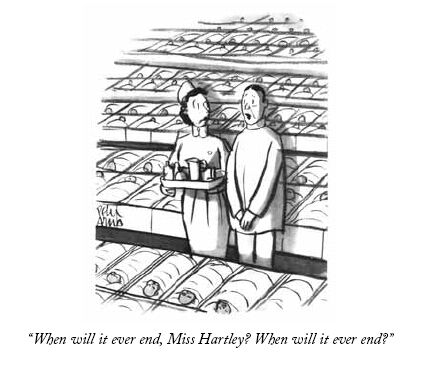
Artist: Alan Dunn, The New Yorker, May 7 1927

African-Americans might have looked alike to some but they were- and are- very precious.

Imagine Jazz, comedy, cinema, television, sports and Satyagraha of 20th century without African-Americans.

Sunday, April 10, 2011

NRI loves India...everything...its banks...particularly HSBC

The Times of India, April 9 2011:

"...In a surprising move that takes the American hunt for hidden money beyond the usual Swiss and Caribbean tax havens, the US Justice department's civil tax division asked a Federal Courts permission to force the London-based HSBC Bank to disclose names of thousands of wealthy Indian-American clients who it says maintain accounts with more than $ 100,000 in the banks India branches ostensibly to hide it from the IRS taxman.

In a 47-page statement filed before a San Francisco court, the IRS said there were 9,000 US residents of Indian-origin who had $100,000-minimum-balance accounts at HSBC India but that fewer than 1,400 had disclosed existence of their accounts."

Mind you, they didn't go to Switzerland or Caribbean. They came to their mother-land.

In the past couple of weeks, many of those 7600 (84.4%), cheered Indian team's triumph in ODI cricket WC and Anna Hazare's victory in his fight with corruption. Some of them even went on a symbolic fast.

How patriotic!

Artist: R K Laxman, The Times of India, Jan 10 2003

Saturday, April 09, 2011

Will today's Bandunana and Pandutatya hear Chitragupta?

The Asian Age March 24 2011:
"Minister of state for environment Jairam Ramesh on Wednesday launched a nationwide campaign to reduce noise levels across India, as it was turning “too noisy”..."

Nikil Saval:

"...What if we tried to listen to nothing? Silence is the feature of our buzzing sound-world we enjoy least, whose very existence we threaten to pave over track by track. Silence is the most endangered musical experience in our time. Turning it up, we might figure out what all our music listening is meant to drown out, the thing we can't bear to hear."

(Slate, March 28, 2011)

Sudhir Venkatesh:

"In public spaces, serendipitous interaction is needed to create the 'mob mentality.' Most iPod-like devices separate citizens from one another; you can't join someone in a movement if you can't hear the participants. Congrats Mr. Jobs for impeding social change."

Stanley Crouch:

"People are uncomfortable in silence because it can breed needless contemplation and may engender a floating into the deeper world of the self."

I celebrated the end of cricket ODI world cup because it was my life's noisiest sports tournament in India. Noisier than even Ganesh Chaturthi and Diwali.

Wiki: Chitragupta (चित्रगुप्त) is a Hindu God assigned with the task of keeping complete records of actions of human beings on the earth. Upon their death, Chitragupta has the task of deciding heaven or the hell for the humans, depending on their actions on the earth.

The interesting aspect is: Chitragupta reads out one's life's balance sheet to the dead.

More than 100 years ago, Shripad Krushna Kolhatkar (श्रीपाद कृष्ण कोल्हटकर) wrote a brilliant article 'Chitraguptacha Jamakharch' ('चित्रगुप्ताचा जमाखर्च') on what happened when his characters Bandunana (बंडूनाना) and Pandutatya (पांडूतात्या), after their death, reached Chitragupta's court and listened to their accounts.
['Sahitya-Battishi : Sudamyache Pohe', 1910 ('साहित्य-बत्तिशी : सुदाम्याचे पोहे')]

Alas there was very little show on the credit side. But at least they heard what was read out.

We mayn't be that lucky.


(apologies for the quality of cartoon's reproduction as my scanner is still down. Please open the picture in another window to get a better view.)

caption in Marathi reads:

"चित्रगुप्त महाराज! वाचून काही उपयोग नाही. हे सर्व मुंबईतून आलेले आहेत ठार बहिरे आहेत .."

("Chitragupta Maharaj! No point reading. They all have come from Mumbai and are stone-deaf...)

Artist: Vasant Sarwate, 1996

"The Best of Sarwate"
editor: Avadhoot Paralkar, Lokvangmay Gruh 2008

[कलावंत: वसंत सरवटे, १९९६ , "सरवोत्तम सरवटे" संपादक: अवधूत परळकर, लोकवाङ्मय गृह 2008]

Tuesday, April 05, 2011

We the People...1210000000!

During ODI Cricket WC, in March-April 2011, TV commentators kept saying "one billion Indians", implying the entire population of the country, which they presumed were following cricket.

I think they didn't read papers. They should have presumed "one point two one billion Indians".

James Lovelock:

Humans on the Earth behave in some ways like a pathogenic organism, or like the cells of a tumour or neoplasm. We have grown in numbers and disturbance to Gaia, to the point where our presence is perceptibly disturbing... the human species is now so numerous as to constitute a serious planetary malady. Gaia is suffering from Disseminated Primatemaia, a plague of people.


Jared Diamond:

The population especially of the developing world is growing, and some people remain fixated on this. They note that populations of countries like Kenya are growing rapidly, and they say that’s a big problem. Yes, it is a problem for Kenya’s more than 30 million people, but it’s not a burden on the whole world, because Kenyans consume so little. (Their relative per capita rate is 1.) A real problem for the world is that each of us 300 million Americans consumes as much as 32 Kenyans. With 10 times the population, the United States consumes 320 times more resources than Kenya does.

I agree with Prof. Diamond's logic.

But if Americans are not going to act, it is a problem for India’s more than 1210 million people, even if they- most of them- consume so little, because anything multiplied by 1210000000 is a sizeable number, and then surely a burden on the whole world!

I wonder what the father of India's family planning R D Karve (र. धो. कर्वे) would say about this number.

Now, I hope these 1.21 billion people will have at least 1 Olympic gold to show after London 2012.

Artist : Peter Arno, The New Yorker, 17 Oct 1936

Friday, April 01, 2011

Commerce in Cricket and Oil in the Middle-East Always Win

Susan Sontag:

“We live in a culture committed to unifying greeds…..everyone on the planet feeding at the same trough of standardized entertainment and fantasies of eros and violence…. (on the iconoclastic spirit of the 1960s) How one wishes that some of its boldness, its optimism, its disdain for commerce had survived……There is no culture ... without a standard of altruism, of regard for others.”


लोकसत्ता : "भारत आणि पाकिस्तान यांच्यामध्ये बुधवारी मोहालीत होणाऱ्या सामन्यावर पाच ते सहा हजार कोटींचा सट्टा घेतला गेला असून त्यासाठी कुख्यात गुंड दाऊद इब्राहिम आणि छोटा शकील सक्रिय झाल्याची सट्टाबाजारात जोरदार चर्चा आहे. त्यामुळे भारत आणि पाकिस्तान यांच्यातील सामन्याचा निकाल काहीही लागू शकतो, असेही या सूत्रांचे म्हणणे आहे..." (March 28 2011)


Artist: Jack Ohman, March 25 2011

For more pictures of brilliant Mr. Ohman, please visit http://www.gocomics.com/jackohman/

Sunday, March 27, 2011

बापा देखिलासि आतां डोळे । निवावे तैसे निवाले ॥

Matt Ridley:

"Scientists are often accused these days of overlooking the awe and wonder of the world, so it's exciting when a philosopher puts that magic at the very heart of a scientific hypothesis."

(WSJ, March 26 2011)


"रूपं महत्ते बहुवक्त्रनेत्रं
: महाबाहो बहुबाहूरुपादम्
बहूदरं बहुदंष्ट्राकरालं
: दृष्ट्वा लोकाः प्रव्यथितास्तथाहम् ॥११- २३॥

नभःस्पृशं दीप्तमनेकवर्णं
: व्यात्ताननं दीप्तविशालनेत्रम्
दृष्ट्वा हि त्वां प्रव्यथितान्तरात्मा
: धृतिं विन्दामि शमं विष्णो ॥११- २४॥

दंष्ट्राकरालानि ते मुखानि
: दृष्ट्वैव कालानलसन्निभानि
दिशो जाने लभे शर्म
: प्रसीद देवेश जगन्निवास ॥११- २५॥"

(भगवद् गीता ११, एकादशोऽध्याय: विश्वरूपदर्शनयोग)


The New York Times reminded me that "This month marks the 100th anniversary of Ernest Rutherford's model of the atom."

I, like billion others, always drew an atom like this:

"...something like a cockeyed solar system. The sun — the nucleus — is at the center, and the planets — the electrons — orbit in several different planes..."

Things alas are not that simple.

"Now it looks something like a composite of quarks surrounded by clouds of uncertainty. More accurate. Much harder to draw."

Much harder even to imagine.

John Horgan recently wrote:

"...Physicists' fantasies about parallel and virtual realms are not just stale. Increasingly they strike me as escapist and irresponsible. Scientists shouldn't have to serve the public good any more than poets or musicians. I value truth for its own sake, even if the truth disturbs. But I do think that theories—if they are being passed off as science—should have at least a remote chance of being empirically corroborated. Otherwise, how do they differ from pseudoscientific ideas like intelligent design?...

...Physicists pining for new data are now pinning their hopes on the Large Hadron Collider, in Switzerland. If and when that hypersensitive contraption gets up to full speed, perhaps it will stumble into a discovery so bizarre that it entices theorists lost in simulated and parallel universes back to reality.
Until then, I tell my students, if you're looking for science books that pose profound metaphysical puzzles, don't bother with the physics best sellers. Instead, check out works by Oliver Sachs, V.S. Ramachandran, and other intrepid explorers of the brain. Science's most thrilling frontier is the one inside our skulls."

Ned Denny says in his review of Brian Greene's "The Hidden Reality: Parallel Universes and the Deep Laws of the Cosmos":

"...The mother of them all is what Greene calls the Ultimate Multiverse, which states that any world that can be mathematically modelled – or even imagined – must perforce exist. We are back to Arjuna, agog in front of a reality that encompasses "the visions from thy innumerable eyes, the words from thy innumerable mouths". It is a joyfully bewildering concept that flags up the impossibility of the endeavour; surely trying to define All That Exists is like trying to box the wind or weigh a dream. What seems certain, as Greene writes, is that "what we've thought to be the universe is only one component of a far grander, perhaps far stranger, and mostly hidden, reality." And what a delicious irony it is that science, that model of sober investigation, is inexorably returning us to vistas so peculiarly like the deranged imaginings of our "superstitious" past."

"Arjuna, agog in front of a reality" is from the chapter 11 of Bhagvad Gita 'The Vision of the Universal Form' (विश्वरूपदर्शनयोग)

Reading this from Gita is fine but reading it from Dnyaneshwari (ज्ञानेश्वरी) gave me real joy. I realised why Ned Denny called it "delicious" and was delighted to return to 'vistas so peculiarly like the deranged imaginings of our "superstitious" past'.

Dnyaneshwar (ज्ञानेश्वर) has expanded on Gita. I have chosen a line from it: बापा देखिलासि आतां डोळे । निवावे तैसे निवाले ॥ as a title of this post. (I longed to see your universal form and that longing of mine has been well fulfilled. My eyes are sated with joy by seeing your cosmic form. )<- This translation doesn't really capture the essence of those lines.

From Dnyaneshwari:

जी लोचनां भाग्य उदेलें । मना सुखाचें सुयाणें पाहलें । जे अगाध तुझें देखिलें । विश्वरूप इहीं ॥ ३३८ ॥ हें लोकत्रयव्यापक रूपडें । पाहतां देवांही वचक पडे । याचें सन्मुखपण जोडें । भलतयाकडुनी ॥ ३३९ ॥ ऐसें एकचि परी विचित्रें । आणि भयानकें वक्त्रें । बहुलोचन हे सशस्त्रें । अनंतभुजा ॥३४०॥ अनंत चारु बाहु चरण । बहूदर आणि नानावर्ण । कैसें प्रतिवदनीं मातलेपण । आवेशाचें ॥ ३४१॥ हो कां महाकल्पाचिया अंतीं । तवकलेनि यमें जेउततेउतीं । प्रळयाग्नीचीं उजितीं । आंबुखिलीं जैसीं ॥ ३४२ ॥ नातरी संहारत्रिपुरारीचीं यंत्रें । कीं प्रळयभैरवाचीं क्षेत्रें । नाना युगांतशक्तीचीं पात्रें । भूतखिचा वोढविलीं ॥ ३४३ ॥ तैसीं जियेतियेकडे । तुझीं वक्त्रें जीं प्रचंडें । न समाती दरीमाजीं सिंव्हाडे । तैसे दशन दिसती रागीट ॥ ३४४ ॥ जैसें काळरात्रीचेनि अंधारें । उल्हासत निघतीं संहारखेंचरें । तैसिया वदनीं प्रळयरुधिरें । काटलिया दाढा ॥ ३४५ ॥ हें असो काळें अवंतिलें रण । कां सर्व संहारें मातलें मरण । तैसें अतिभिंगुळवाणेंपण । वदनीं तुझिये ॥ ३४६ ॥ हे बापुडी लोकसृष्टी । मोटकीये विपाइली दिठी । आणि दुःखकालिंदीचिया तटीं । झाड होऊनि ठेली ॥ ३४७ ॥ तुज महामृत्यूचिया सागरीं । आतां हे त्रैलोक्य जीविताची तरी । शोकदुर्वातलहरी । आंदोळत असे ॥ ३४८ ॥ एथ कोपोनि जरी वैकुंठें । ऐसें हन म्हणिपैल अवचटें । जें तुज लोकांचें काई वाटे ? । तूं ध्यानसुख हें भोगीं ॥ ३४९ ॥ तरी जी लोकांचें कीर साधारण । वायां आड सूतसे वोडण । केवीं सहसा म्हणे प्राण । माझेचि कांपती ॥ ३५० ॥ ज्या मज संहाररुद्र वासिपे । ज्या मजभेणें मृत्यु लपे । तो मी एथें अहाळबाहळीं कांपें । ऐसें तुवां केलें ॥ ३५१ ॥ परि नवल बापा हे महामारी । इया नाम विश्वरूप जरी । हे भ्यासुरपणें हारी । भयासि आणी ॥ ३५२ ॥

ठेलीं महाकाळेंसि हटेंतटें । तैसी किती{ए}कें मुखें रागिटें । इहीं वाढोनियां धाकुटें । आकाश केलें ॥ ३५३ ॥ गगनाचेंनि वाडपणें नाकळे । त्रिभुवनींचियाही वारिया न वेंटाळे । ययाचेनि वाफा आगी जळे । कैसें धडाडीत असे ॥ ३५४ ॥ तेवींचि एकसारिखें एक नोहे । एथ वर्णावर्णाचा भेदु आहे । हो कां जें प्रळयीं सावावो लाहे । वन्ह्ं ययाचा ॥ ३५५ ॥ जयाचिये आंगींची दीप्ती येवढी । जे त्रैलोक्य कीजे राखोंडी । कीं तयाही तोंडें आणि तोंडीं । दांत दाढा ॥ ३५६ ॥ कैसा वारया धनुर्वात चढला । समुद्र कीं महापुरीं पडिला । विषाग्नि मारा प्रवर्तला । वडवानळासी ॥ ३५७ ॥ हळाहळ आगी पियालें । नवल मरण मारा प्रवर्तलें । तैसें संहारतेजा या जाहलें । वदन देखा ॥ ३५८ ॥ परी कोणें मानें विशाळ । जैसें तुटलिया अंतराळ । आकाशासि कव्हळ । पडोनि ठेलें ॥ ३५९ ॥ नातरी काखे सूनि वसुंधरी । जैं हिरण्याक्षु रिगाला विवरीं । तैं उघडले हाटकेश्वरीं । जेवीं पाताळकुहर ॥ ३६० ॥ तैसा वक्त्रांचा विकाशु । माजीं जिव्हांचा आगळाचि आवेशु । विश्व न पुरे म्हणौनि घांसु । न भरीचि कोंडें ॥ ३६१ ॥ आणि पाताळव्याळांचिया फूत्कारीं । गरळज्वाळा लागती अंबरीं । तैसी पसरलिये वदनदरी- । माजीं हे जिव्हा ॥ ३६२ ॥ काढूनि प्रळयविजूंचीं जुंबाडें । जैसें पन्नासिलें गगनाचे हुडे । तैसे आवाळुवांवरी आंकडे । धगधगीत दाढांचे ॥ ३६३ ॥ आणि ललाटपटाचिये खोळे । कैसें भयातें भेडविताती डोळे । हो कां जे महामृत्यूचे उमाळे । कडवसां राहिले ॥ ३६४ ॥ ऐसें वाऊनि भयाचें भोज । एथ काय निपजवूं पाहातोसि काज । तें नेणों परी मज । मरणभय आलें ॥ ३६५ ॥ देवा विश्वरूप पहावयाचे डोहळे । केले तिये पावलों प्रतिफळें । बापा देखिलासि आतां डोळे । निवावे तैसे निवाले ॥ ३६६ ॥ अहो देहो पार्थिव कीर जाये । ययाची काकुळती कवणा आहे । परि आतां चैतन्य माझें विपायें । वांचे कीं न वांचे ॥ ३६७ ॥ एऱ्हवीं भयास्तव आंग कांपे । नावेक आगळें तरी मन तापे । अथवा बुद्धिही वासिपे । अभिमानु विसरिजे ॥ ३६८ ॥ परी येतुलियाही वेगळा । जो केवळ आनंदैककळा । तया अंतरात्मयाही निश्चळा । शियारी आली ॥ ३६९ ॥ बाप साक्षात्काराचा वेधु । कैसा देशधडी केला बोधु । हा गुरुशिष्यसंबंधु । विपायें नांदे ॥ ३७० ॥ देवा तुझ्या ये दर्शनीं । जें वैकल्य उपजलें आहे अंतःकरणीं । तें सावरावयालागीं गंवसणी । धैर्याची करितसें ॥ ३७१ ॥ तंव माझेनि नामें धैर्य हारपलें । कीं तयाहीवरी विश्वरूपदर्शन जाहलें । हें असो परि मज भलें आतुडविलें । उपदेशा इया ॥ ३७२ ॥ जीव विसंवावयाचिया चाडा । सैंघ धांवाधांवी करितसे बापुडा । परि सोयही कवणेंकडां । न लभे एथ ॥ ३७३ ॥ ऐसें विश्वरूपाचिया महामारी । जीवित्व गेलें आहें चराचरीं । जी न बोलें तरि काय करीं । कैसेनि राहें ? ॥ ३७४ ॥

पैं अखंड डोळ्यांपुढें । फुटलें जैसें महाभयाचें भांडें । तैशीं तुझीं मुखें वितंडें । पसरलीं देखें ॥ ३७५ ॥ असो दांत दाढांची दाटी । न झांकवे मा दों दों वोठीं । सैंघ प्रळयशस्त्रांचिया दाट कांटी । लागलिया जैशा ॥ ३७६ ॥ जैसें तक्षका विष भरलें । हो कां जे काळरात्रीं भूत संचरलें । कीं आग्नेयास्त्र परजिलें । वज्राग्नि जैसें ॥ ३७७ ॥ तैशीं तुझीं वक्त्रें प्रचंडें । वरि आवेश हा बाहेरी वोसंडे । आले मरणरसाचे लोंढे । आम्हांवरी ॥ ३७८ ॥ संहारसमयींचा चंडानिळु । आणि महाकल्पांत प्रळयानळु । या दोहीं जैं होय मेळु । तैं काय एक न जळे ? ॥ ३७९ ॥ तैसीं संहारकें तुझीं मुखें । देखोनि धीरु कां आम्हां पारुखे ? । आतां भुललों मी दिशा न देखें । आपणपें नेणें ॥ ३८० ॥ मोटकें विश्वरूप डोळां देखिलें । आणि सुखाचें अवर्षण पडिलें । आतां जापाणीं जापाणीं आपुलें । अस्ताव्यस्त हें ॥ ३८१ ॥ ऐसें करिसी म्हणौनि जरी जाणें । तरी हे गोष्टी सांगावीं कां मी म्हणें । आतां एक वेळ वांचवी जी प्राणें । या स्वरूपप्रळयापासोनि ॥ ३८२ ॥ जरी तूं गोसावी आमुचा अनंता । तरी सुईं वोडण माझिया जीविता । सांटवीं पसारा हा मागुता । महामारीचा ॥ ३८३ ॥ आइकें सकळ देवांचिया परदेवते । तुवां चैतन्यें गा विश्व वसतें । तें विसरलासी हें उपरतें । संहारूं आदरिलें ॥ ३८४ ॥ म्हणौनि वेगीं प्रसन्न होईं देवराया । संहरीं संहरीं आपुली माया । काढीं मातें महाभया- । पासोनियां ॥ ३८५ ॥ हा ठायवरी पुढतपुढतीं । तूंतें म्हणिजे बहुवा काकुळती । ऐसा मी विश्वमूर्ती । भेडका जाहलों ॥ ३८६ ॥ जैं अमरावतीये आला धाडा । तैं म्यां एकलेनि केला उवेडा । जो मी काळाचियाही तोंडा । वासिपु न धरीं ॥ ३८७ ॥ परी तया आंतुल नव्हे हें देवा । एथ मृत्यूसही करूनि चढावा । तुवां आमुचाचि घोटू भरावा । या सकळ विश्वेंसीं ॥ ३८८ ॥ कैसा नव्हता प्रळयाचा वेळु । गोखा तूंचि मिनलासि काळु । बापुडा हा त्रिभुवनगोळु । अल्पायु जाहला ॥ ३८९ ॥ अहा भाग्या विपरीता । विघ्न उठिलें शांत करितां । कटाकटा विश्व गेलें आतां । तूं लागलासि ग्रासूं ॥ ३९० ॥ हें नव्हे मा रोकडें । सैंघ पसरूनियां तोंडें । कवळितासि चहूंकडे । सैन्यें इयें ॥ ३९१ ॥

Thursday, March 24, 2011

Can you concentrate on Poetry when Breasts of the hostess are Apocalyptic?

I remember sketchily incident narrated by poet the late Dom Moraes in an article (in Imprint magazine or Sunday Observer? Both now defunct).

He once went on a boat cruise with Richard Burton and his wife Elizabeth Taylor. The occasion was a poetry recitation session. Mr. Burton observed that, hopefully, unlike most present there, Mr. Moraes was more interested in poetry than looking at his wife's teats! (I couldn't access the exact quote of Mr. Moraes. My apologies if it differs a lot from my paraphrasing of it.)

Mr. Burton himself once described Ms. Taylor’s breasts as “apocalyptic.”

He would write to Elizabeth well into their marriage. “You don't realize of course E. B. how fantastically beautiful you have always been, and how strangely you have acquired an added and special and dangerous loveliness. Your breasts jutting out from that half-asleep languid lingering body, the remote eyes, the parted lips.”

Reading this, I am sure, it must have been hard to concentrate on poetry, even for Mr. Moraes.

But there was a lot more to Ms. Taylor than just breasts. I thought she was a very good actor.

For me, she becomes Maggie in Tennessee Williams's "Cat on a Hot Tin Roof". Her voice disturbs me deeply at a fundamental level. Then, I stop looking at her breasts.

An iconic shot of Taylor splashing in the ocean, from the set of Suddenly Last Summer (1959). Vanity Fair used this image for the July 2010 cover.

© Sunset Boulevard/Corbis.

Wednesday, March 23, 2011

The Kama Sutra: It's NOT for me but have Blairs read it?

William Leith's review of Oliver James's 'Affluenza: How to Be Successful and Stay Sane':

"...One of the scariest parts of the book is James's analysis of New Labour politicians. Have they been infected with the virus (of Affluenza)? Well, just think of Tony Blair and his property dealings, his flash holidays, his spray-on tan. Think of Peter Mandelson, who said: "We are seriously relaxed about people becoming very, very rich." Think of Prescott. Think of Cherie Blair...
"Just as Aids is stalking the globe, so is the Affluenza virus," says James. I think he's right..."


Wendy Doniger:

"The emphasis on the physical postures of yoga may have been bolstered by the sensational publication, in 1883, of Sir Richard Burton’s English translation of the Kamasutra, a text that became notorious for its “positions”. The tendency to confuse the teachings of yoga and the Kamasutra may have led to the overemphasis on the “positions” in both, since yoga was always associated with sex in India and came to be eroticized in England, and the general English and Indian ignorance of the cultural content of the Kamasutra was matched by their ignorance of the philosophical content of (classical) yoga. Both yoga and the Kamasutra served the schizophrenic Victorian combination of public condemnation of sex and private obsession with it..."


(The Times Literary Supplement, March 2 2011)


I have still not read Kama Sutra. I have seen it. I have read about it. I have seen its portrayal in breath taking carvings of Khajuraho.

It's supposed to descibe "64 types of sexual acts"...overemphasis on the “positions”...Phew...pant...!!!

Sam Jordison has written a review-
easily one of the funniest prose pieces I have read- of it for Guardian, Feb 14 2011
:

"...Don't think you escape either, girls:

"Sprinkle a mixture of powdered milkweed thorns, hogweed, monkey's shit and root of glory lily on a woman. She will not want sex with anyone else."

Meanwhile, beware of the man who's taken another nugget of advice from the book and approaches you with his penis covered in the powder of "a kite that has died of natural causes, mixed with honey and gooseberries". He intends to bewitch you!

All of the above is taken from the new Penguin edition of the book that's generally held up as the last word in ancient wisdom about sack-play: The Kama Sutra. It's further confirmation of my belief that the wisdom of the ancients is most generally to be ignored. After all, most of human endeavour in the past 2,000 years has been dedicated to escaping such stuff and similar wisdom about flatness of the earth, the importance of blood draining, the way fire is powered by lignin, and a man who trotted around Galilee claiming to be able to cast out demons..."

Bart Simpson once tells Homer Simpson: "Oh, dad. Nobody can rationalize like you." (Season 17, Episode 20, 'Regarding Margie')

I would say the same to Tony Blair. Therefore, I would also hire him as a salesman. He would best his sales target every quarter.

They say a good sales person is the right combination of empathy and ego-drive.

Reading what is quoted below, looks like Tony Blair has another prominent 'drive'.

On March 19 2011, The Asian Age:

"...Former British Premier Tony Blair’s wife Cherie has lifted the lid on her sex life, saying that her husband “still excites me in all possible ways”.

“We’ve been married 31 years and known each other 35 and even now he still excites me in all possible ways,” the Sun tabloid quoted the 56-year-old mother-of-four as saying in an interview with a magazine.

Cherie, a Queen’s Counsel, giggled when asked how the couple spend their time when the former Prime Minister returns from his trips as envoy to West Asia.

Tony, 57, once joked he could make love “at least five times a night” and the couple also claim to be members of the mile high club. Last year, Tony revealed in his memoirs how he “devoured Cherie’s love” the night before he became Labour leader in 1994.He wrote: “I was an animal following my instinct.”

Cherie had son Leo, who is now 10, when she was 45 and living in Downing Street.She later revealed the pair conceived the child on an official stay at Balmoral in Scotland as it’s embarrassing to bring contraceptive “equipment” for the castle, where servants unpack wash bags.

But Cherie admitted some things have changed over the years.

Recalling watching the fireworks after the 1981 Royal Wedding, she said her husband lifted her on to his shoulders adding, “He couldn’t do that now. He would probably collapse.”"


Does The Kama Sutra describe a 'position' where a woman climbs on to a man's shoulder?
Picture courtesy: The Asian Age, March 19 2011

By the way, I have never even thought of lifting my wife or fantasised lifting any other woman on my shoulders!

My body is too weak for it. But on the positive side, I feel, I don't suffer from 'Affluenza'.


"...So why are we, in James's words, so fucked up? It's because of what James calls Selfish Capitalism, or, more catchily, "Affluenza", a virus-like condition that spreads through affluent countries. In these countries, notably English-speaking ones, people define themselves by how much money they make. They are also ruled by superficial values - how attractive they look, how famous they are, how much they are able to show off. As the sociologist Erich Fromm would have put it, we have moved from a state of "being" to a state of "having". Now we are obsessed with what other people think of us, and we've lost touch with our own feelings..."

Saturday, March 19, 2011

India's Top 10 Foreigners. My list

Wendy Doniger:

"...And so from the very start India was a place made up of land and people from somewhere else..."

[Chapter 2, 'Time and Space in India' from her book 'The Hindus: An Alternative History', 2009]

(notice the word: 'land' in the quote above)

The Times of India reported on December 10 2009 that Dr. Dwarkanath Shantaram Kotnis (द्वारकानाथ शांताराम कोटणीस) is in the list of China's top ten foreigners who made exceptional contributions to the country in the past 100 years.

What an honour!

Very few native Marathi speaking persons have been feted on such a scale on the global stage.

What about top ten foreigners, not necessarily friends or well-wishers, who have visited India since Alexander the great and shaped India's destiny for the better or the worse?

Here a foreigner means someone who was not borne or raised in the subcontinent.

Here is an attempt:

Alexander the great 356–323 BCE

Mahmud of Ghazni 971-1030

Vasco da Gama 1460/1469–1524

Babur 1483-1531

Ahmad Shah Durrani/Abdali 1722–1773

Robert Clive 1725–1774

William Jones 1746-1794

Thomas Babington Macaulay 1800–1859

The Lord Curzon of Kedleston 1859–1925

Mother Teresa 1910–1997


Artist: Mischa Richter, The New Yorker, 9 October 1965

Tuesday, March 15, 2011

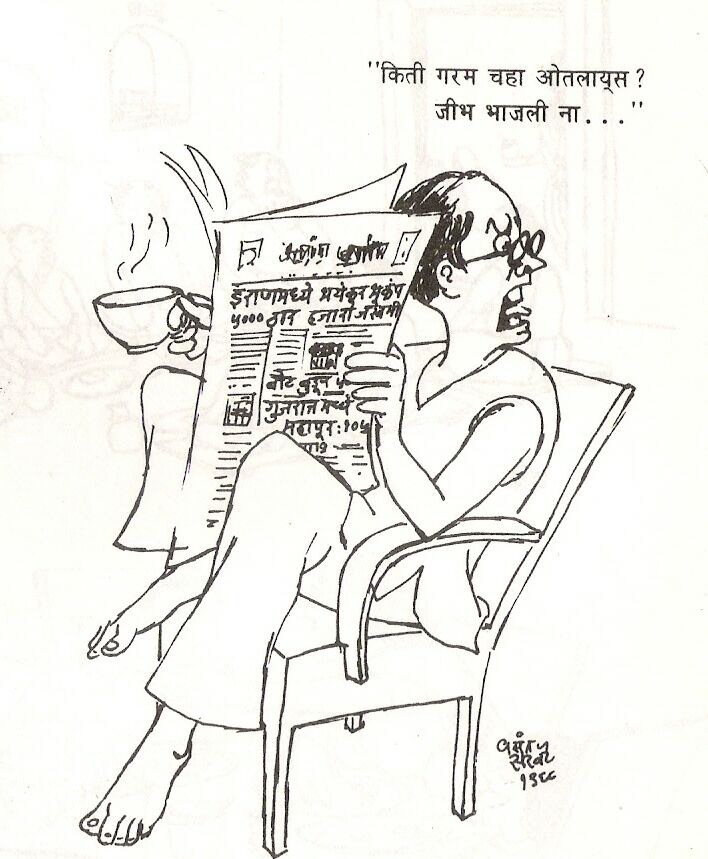
मी: "अंजु, किती गरम चहा ओतलायस ? जीभ भाजली ना..."

I, Aniruddha G. kulkarni, was heard shouting at my wife on Friday March 11 2011 afternoon watching BBC / CNN:

"Anju, how hot have you poured tea? Tongue is torched..."


(Open the picture in another browser window to get a clearer view of the news in the Marathi broadsheet* held by HIM.)

Artist: Vasant Sarwate (वसंत सरवटे), 1968

* the broadsheet he is reading has these news-items: "A quake in Iran kills 5,000 and injures thousands", "floods in Gujarat killing hundreds", "Boat capsizes" etc!