What does one say
when season changes,
another birthday comes and goes,
friend departs,
crow that perches on your balcony every day stops doing so without a warning,
neighbourhood friendly cat who trusted you enough to kitten in your house dies,
stray dog you see every day is without a leg one morning,
a booming (and yet soothing) voice that defined your world, however small and insignificant, is silenced...
Not for me, Dylan Thomas's "Rage, rage against the dying of the light".
Instead only the acceptance of, to paraphrase Sadanand Rege (सदानंद रेगे),
"आमचीही वही कोरी होत चाललीय...".
The only consolation:
"भीमसेन कसले मेले? भीमसेन गातचि बसले"
Monday, January 24, 2011


Saturday, January 22, 2011
Literature in the Time of Plague and Flu
John Gray: The peace and prosperity of one generation stand on the injustices of earlier generations; the delicate sensibilities of liberal societies are fruits of war and empire. The same is true of individuals. Gentleness flourishes in sheltered lives; an instinctive trust in others is rarely strong in people who have struggled against the odds. The qualities we say we value above all others cannot withstand ordinary life.
Wikipedia: The 1918 flu pandemic (the Spanish Flu) killed as many as 17 million in India, about 5% of the population.
I haven't read a single book of Philip Roth. Not even the one I have with me- 'The Professor of Desire'!
But I have read tens of reviews of his work.
For FT review of his latest book "Nemesis", Adrian Turpin says:
"Philip Roth’s fifth short novel in five years is a perfectly proportioned Greek tragedy played out against the background of the polio epidemic that swept Newark, New Jersey, during the summer of 1944..."
Although some of us witness some pseudo scares like H1N1 in 2009 in Pune, we cannot even begin to understand what an epidemic does to a society. However, our not-very-distant-forefathers lived in such times.
Sadly, I have not come across many good Marathi books where an epidemic has cast a large shadow.
A few exceptions are C V Joshi's (चिं. वि. जोशी) 'Rahat-gaadagan' (रहाट-गाडगं), Laxmibai Tilak’s (लक्ष्मीबाई टिळक) 'Smritichitre' (स्मृतिचित्रे) and Natyachhatakar Diwakar's (नाट्यछटाकार दिवाकर) monologues.
I am sure there are a few more that I have not read. But not many, not surely in the class of Roth, Joshi, Tilak and Diwakar at any rate.
Pune in 1897 was shaken by the murder of W. C. Rand of ICS by Chapekar brothers. Wikipedia claims that "This action of the Chapekars has been considered the worst violence against political authority seen anywhere in the world during the third plague pandemic."
Maybe but there is no good book- like say Godse Bhatji's (गोडसे भटजी) 'Maza pravas' (माझा प्रवास) for events of year 1857- in Marathi describing that epidemic, to make us relive those times in Pune.
Marathi poet Keshavsut (केशवसुत), 39 - who some consider a great one- and his wife died in a plague epidemic of 1905 at Hubli. He died on November 7 that year. There was some confusion on the exact date of his death. I was touched reading the efforts put in by Natyachhatakar Diwakar ['Samagra Diwakar' (समग्र दिवाकर) edited by Sarojini Vaidya (सरोजिनी वैद्य), 1996] to establish the correct date. (Diwakar himself died of flu at the age of 42.)
Sadanand Rege (सदानंद रेगे), whose brilliance and eclecticism are seldom matched in 20th century Marathi writings, has written a moving poem on this.

(double click on the image to get a larger, readable view)
[courtesy 'Aksharvel' (अक्षरवेल), 'Popular Prakashan' (पॉप्युलर प्रकाशन),1957]
[p.s. last three lines of the poem are from the best poem of Keshavsut 'Zapurza' (झपुर्झा). Just for inventing the word 'Zapurza', Keshavsut for me was an extraordinary talent.]
I said earlier that we cannot even begin to understand what an epidemic does to a society.
Or do we?
TONI BENTLEY: “Cosmetic surgery is now so prevalent that it could qualify as a national epidemic. And under all that Botox — the gateway procedure — as well as the face-lifts and tummy tucks, lies a sinister story, as deep as it is shallow.”

Courtesy: The Spectator
Wikipedia: The 1918 flu pandemic (the Spanish Flu) killed as many as 17 million in India, about 5% of the population.
I haven't read a single book of Philip Roth. Not even the one I have with me- 'The Professor of Desire'!
But I have read tens of reviews of his work.
For FT review of his latest book "Nemesis", Adrian Turpin says:
"Philip Roth’s fifth short novel in five years is a perfectly proportioned Greek tragedy played out against the background of the polio epidemic that swept Newark, New Jersey, during the summer of 1944..."
Although some of us witness some pseudo scares like H1N1 in 2009 in Pune, we cannot even begin to understand what an epidemic does to a society. However, our not-very-distant-forefathers lived in such times.
Sadly, I have not come across many good Marathi books where an epidemic has cast a large shadow.
A few exceptions are C V Joshi's (चिं. वि. जोशी) 'Rahat-gaadagan' (रहाट-गाडगं), Laxmibai Tilak’s (लक्ष्मीबाई टिळक) 'Smritichitre' (स्मृतिचित्रे) and Natyachhatakar Diwakar's (नाट्यछटाकार दिवाकर) monologues.
I am sure there are a few more that I have not read. But not many, not surely in the class of Roth, Joshi, Tilak and Diwakar at any rate.
Pune in 1897 was shaken by the murder of W. C. Rand of ICS by Chapekar brothers. Wikipedia claims that "This action of the Chapekars has been considered the worst violence against political authority seen anywhere in the world during the third plague pandemic."
Maybe but there is no good book- like say Godse Bhatji's (गोडसे भटजी) 'Maza pravas' (माझा प्रवास) for events of year 1857- in Marathi describing that epidemic, to make us relive those times in Pune.
Marathi poet Keshavsut (केशवसुत), 39 - who some consider a great one- and his wife died in a plague epidemic of 1905 at Hubli. He died on November 7 that year. There was some confusion on the exact date of his death. I was touched reading the efforts put in by Natyachhatakar Diwakar ['Samagra Diwakar' (समग्र दिवाकर) edited by Sarojini Vaidya (सरोजिनी वैद्य), 1996] to establish the correct date. (Diwakar himself died of flu at the age of 42.)
Sadanand Rege (सदानंद रेगे), whose brilliance and eclecticism are seldom matched in 20th century Marathi writings, has written a moving poem on this.

(double click on the image to get a larger, readable view)
[courtesy 'Aksharvel' (अक्षरवेल), 'Popular Prakashan' (पॉप्युलर प्रकाशन),1957]
[p.s. last three lines of the poem are from the best poem of Keshavsut 'Zapurza' (झपुर्झा). Just for inventing the word 'Zapurza', Keshavsut for me was an extraordinary talent.]
I said earlier that we cannot even begin to understand what an epidemic does to a society.
Or do we?
TONI BENTLEY: “Cosmetic surgery is now so prevalent that it could qualify as a national epidemic. And under all that Botox — the gateway procedure — as well as the face-lifts and tummy tucks, lies a sinister story, as deep as it is shallow.”

Courtesy: The Spectator
Tuesday, January 18, 2011
Duniya Banane Wale...
The other day I was watching, one more time, my favourite film 'Teesri Kasam' (तीसरी क़सम, 1966).
What a journey! I wish I were a bullock to participate in it.
A song there asks a question:
"Duniya Banane Wale Kya Tere Man Mein Samaayi
Kaaheko Duniya Banayi"?

Artist: Sam Gross, The New Yorker
(For selection of pictures by Mr. Gross go to Cartoonbank.com by using this link.)
If this is true, the lyricist may want to ask this question:
"If you knew you might not have time to look after it, why did you create it in the first place?"!
What a journey! I wish I were a bullock to participate in it.
A song there asks a question:
"Duniya Banane Wale Kya Tere Man Mein Samaayi
Kaaheko Duniya Banayi"?

Artist: Sam Gross, The New Yorker
(For selection of pictures by Mr. Gross go to Cartoonbank.com by using this link.)
If this is true, the lyricist may want to ask this question:
"If you knew you might not have time to look after it, why did you create it in the first place?"!
Friday, January 14, 2011
ऐ मेरे वतन के लोगो
"...कोई सिख कोई जाट मराठा
कोई गुरखा कोई मदरासी
सरहद पे मरनेवाला
हर वीर था भारतवासी
जो ख़ून गिरा पर्वत पर
वो ख़ून था हिंदुस्तानी
जो शहीद हुए हैं उनकी
ज़रा याद करो क़ुरबानी..." कवि प्रदीप
Stanley Crouch:
…heroes need huge obstacles to teach them what they must know in order to achieve the victories demanded of them.
Dominic Sandbrook:
Despite all the patriotic American nonsense about the "greatest generation", (Antony) Beevor shows that there were remarkably few heroes. There were rarely "more than a handful of men prepared to take risks and attack," he says; most men just wanted to get home in one piece and "somebody else to play the role of hero". Surveys showed that if a few broke ranks and fled, the rest would follow; in most engagements, as many as half never fired a shot.
This could be true of Panipat 1761 too but the important thing is there were "few heroes". And today is the day to remember them one more time. Let us also not forget their mounts- ponies, elephants, camels, bullocks...(read a related post here).
Remembering those who died 250 years ago today on Makar Sankranti day January 14 1761 at Panipat whose great valour was praised in lofty terms by none other than the enemy who vanquished them...
They made the supreme sacrifice NOT in the name of
a Caste,
a Religion,
a Language,
a Region...
but, maybe unwittingly, to preserve the idea of tolerant, pluralistic, multilingual, multiethnic India...
Read a related post that was written to mark the beginning of the anniversary year on January 15 2010 here.
Joseph Campbell: "A hero is someone who has given his or her life to something bigger than oneself. ”

Artist: Pablo Picasso
(Ignore the name of the artist for a moment and look at the picture again.
Isn't it still deeply moving?
Don, Sancho, bright sun, high ideals, dreams, castles, princesses, mounts, spear, shield, windmills...Who is to say victory or defeat?
I still remember my confusion reading Mahabharat that when Yudhishthira reaches the heaven he finds Kauravas who were killed in the battle- and not his brothers who died during the journey- having good time.)
कोई गुरखा कोई मदरासी
सरहद पे मरनेवाला
हर वीर था भारतवासी
जो ख़ून गिरा पर्वत पर
वो ख़ून था हिंदुस्तानी
जो शहीद हुए हैं उनकी
ज़रा याद करो क़ुरबानी..." कवि प्रदीप
Stanley Crouch:
…heroes need huge obstacles to teach them what they must know in order to achieve the victories demanded of them.
Dominic Sandbrook:
Despite all the patriotic American nonsense about the "greatest generation", (Antony) Beevor shows that there were remarkably few heroes. There were rarely "more than a handful of men prepared to take risks and attack," he says; most men just wanted to get home in one piece and "somebody else to play the role of hero". Surveys showed that if a few broke ranks and fled, the rest would follow; in most engagements, as many as half never fired a shot.
This could be true of Panipat 1761 too but the important thing is there were "few heroes". And today is the day to remember them one more time. Let us also not forget their mounts- ponies, elephants, camels, bullocks...(read a related post here).
Remembering those who died 250 years ago today on Makar Sankranti day January 14 1761 at Panipat whose great valour was praised in lofty terms by none other than the enemy who vanquished them...
They made the supreme sacrifice NOT in the name of
a Caste,
a Religion,
a Language,
a Region...
but, maybe unwittingly, to preserve the idea of tolerant, pluralistic, multilingual, multiethnic India...
Read a related post that was written to mark the beginning of the anniversary year on January 15 2010 here.
Joseph Campbell: "A hero is someone who has given his or her life to something bigger than oneself. ”

Artist: Pablo Picasso
(Ignore the name of the artist for a moment and look at the picture again.
Isn't it still deeply moving?
Don, Sancho, bright sun, high ideals, dreams, castles, princesses, mounts, spear, shield, windmills...Who is to say victory or defeat?
I still remember my confusion reading Mahabharat that when Yudhishthira reaches the heaven he finds Kauravas who were killed in the battle- and not his brothers who died during the journey- having good time.)
Monday, January 10, 2011
Sangeet Manapman, one of the greatest Marathi entertainers will be 100 soon!
Sidney Poitier: “…One of the reasons Marlon Brando was so brilliant, particularly at his beginning, was that when you watched him on stage, you didn't think you were watching people on the stage. You would think you were peeking in on someone's life because what he did with the words, he made them so real that that audience gets swept up."
George Orwell:”The only true test of artistic merit is survival.”
“Sangeet Saubhadra” (संगीत सौभद्र) by Annasaheb Kirloskar (अण्णासाहेब किर्लोस्कर), the greatest Marathi entertainer of 19th/20th century combined, completed 125 years of its staging on November 18, 2007. Read more about it here.
(The only rivals of these two are Loknatya /Tamasha performed by the likes of Dada Kondke दादा कोंडके among a few others.)
Sangeet Manapman (संगीत मानापमान) was first staged on March 12 1911.
I have yet to hear a better music album than that...and one of the best songs ever 'Prem Seva Sharan' (प्रेम सेवा शरण) sung by Asha Bhosle (आशा भोसले) and earlier her father Dinanath Mangeshkar (दीनानाथ मंगेशकर)... (My father wrote the first biography of Mother Teresa in Marathi. Its title: 'प्रेम सेवा शरण' 'Love, Service, Surrender')
Writer- Krushnaji Prabhakar Khadilkar कृष्णाजी प्रभाकर खाडिलकर
Music- Govindrao Tembe गोविंदराव टेंबे (Read a post on him here.)
Cast- Joglekar जोगळेकर , Ganpatrao Bodas गणपतराव बोडस...Bal Gandharva बालगंधर्व
Baldanharva's only daughter died on the morning of March 12 1911 but the show went on...
Following is from one of the best Marathi books of 20th century that also won Sahitya Akademi Award in 1958: 'Bahurupee' ('बहुरूपी') by Chintaman Ganesh Kolhatkar (चिंतामण गणेश कोल्हटकर), first published October 1957.
 Krushnaji Prabhakar Khadilkar

K P Khadilkar's hand writing
George Orwell:”The only true test of artistic merit is survival.”
“Sangeet Saubhadra” (संगीत सौभद्र) by Annasaheb Kirloskar (अण्णासाहेब किर्लोस्कर), the greatest Marathi entertainer of 19th/20th century combined, completed 125 years of its staging on November 18, 2007. Read more about it here.
(The only rivals of these two are Loknatya /Tamasha performed by the likes of Dada Kondke दादा कोंडके among a few others.)
Sangeet Manapman (संगीत मानापमान) was first staged on March 12 1911.
I have yet to hear a better music album than that...and one of the best songs ever 'Prem Seva Sharan' (प्रेम सेवा शरण) sung by Asha Bhosle (आशा भोसले) and earlier her father Dinanath Mangeshkar (दीनानाथ मंगेशकर)... (My father wrote the first biography of Mother Teresa in Marathi. Its title: 'प्रेम सेवा शरण' 'Love, Service, Surrender')
Writer- Krushnaji Prabhakar Khadilkar कृष्णाजी प्रभाकर खाडिलकर
Music- Govindrao Tembe गोविंदराव टेंबे (Read a post on him here.)
Cast- Joglekar जोगळेकर , Ganpatrao Bodas गणपतराव बोडस...Bal Gandharva बालगंधर्व
Baldanharva's only daughter died on the morning of March 12 1911 but the show went on...
Following is from one of the best Marathi books of 20th century that also won Sahitya Akademi Award in 1958: 'Bahurupee' ('बहुरूपी') by Chintaman Ganesh Kolhatkar (चिंतामण गणेश कोल्हटकर), first published October 1957.
 Krushnaji Prabhakar Khadilkar
K P Khadilkar's hand writing
Friday, January 07, 2011
All I know I already live in Hong Kong
I just finished reading John Lanchester's "Whoops!: Why everyone owes everyone and no one can pay".
I found some parts of it very good.
You can read it on Google books here.
Go to page 12 and read it from "How did we get here?" to the end of page 14 (In physical book it is from page 6 to page 8)..."because home was coming to me":
"...I grew up in Hong Kong at the time when it was the most unbridled freemarket economy in the world. There were no rules, no taxes (well, eventually there was a top-rate tax of 15%), no welfare state, no guarantee of healthcare or schooling. The ugly edge of no-rules capitalism was everywhere apparent. Shantytowns sprawled halfway up the hillsides. But the ways in which capitalism created growth and wealth were everywhere apparent too.
Refugees from communist China swam, crawled and smuggled themselves into Hong Kong in every imaginable way, and they regularly died in the attempt. What they were trying to get to wasn’t the place so much as the system. So the system must be something of extraordinary power. Even a child could see that. You could see it mainly in the sheer speed of change. It was a regular event to go round a corner and experience the jolt of not knowing where the hell you were, because some regular landmark had disappeared.
At that time, Hong Kong was like an experiment, a lab test in free-market capitalism. Britain seemed much slower, more cautious, more regulated, warier of change. But in the three decades after I left Hong Kong, it was as if there were a kind of reverse takeover, in which Hong Kong’s rules took over the rest of the world. The unbridled and unregulated operation of the free market became the new normal.
It wasn’t so much that this version of capitalism won the argument as that it won by sheer force: countries that had adopted it were growing their economies faster than those that weren't. You can't accurately measure subjective changes in the texture of people's experiences, but you can measure growth in GDP, and the evidence from GDP was irrefutable. With Ronald Regan in power in the US and Mrs Thatcher in power in the UK, a Hong Kongite version of free-market capitalism took over the world. I couldn't go home again, but in some important respects it made no difference because home was coming to me..."
It's interesting some people want a "work permit" system for Mumbai, a kind of 'visa' for Indians.
Apart from being certain about rampant corruption- Octroi like- indulged by the natives, one can imagine what might happen to migrant workers in such a setup:
"They, huddled masses and wretched refuses from the picture below, will swim, crawl and smuggle themselves into Mumbai in every imaginable way, and they will regularly die in the attempt."
Maybe it will be the last chapter in Hong Kongisation of this country.

Artist: William O'Brian, The New Yorker, March 17 1973
I found some parts of it very good.
You can read it on Google books here.
Go to page 12 and read it from "How did we get here?" to the end of page 14 (In physical book it is from page 6 to page 8)..."because home was coming to me":
"...I grew up in Hong Kong at the time when it was the most unbridled freemarket economy in the world. There were no rules, no taxes (well, eventually there was a top-rate tax of 15%), no welfare state, no guarantee of healthcare or schooling. The ugly edge of no-rules capitalism was everywhere apparent. Shantytowns sprawled halfway up the hillsides. But the ways in which capitalism created growth and wealth were everywhere apparent too.
Refugees from communist China swam, crawled and smuggled themselves into Hong Kong in every imaginable way, and they regularly died in the attempt. What they were trying to get to wasn’t the place so much as the system. So the system must be something of extraordinary power. Even a child could see that. You could see it mainly in the sheer speed of change. It was a regular event to go round a corner and experience the jolt of not knowing where the hell you were, because some regular landmark had disappeared.
At that time, Hong Kong was like an experiment, a lab test in free-market capitalism. Britain seemed much slower, more cautious, more regulated, warier of change. But in the three decades after I left Hong Kong, it was as if there were a kind of reverse takeover, in which Hong Kong’s rules took over the rest of the world. The unbridled and unregulated operation of the free market became the new normal.
It wasn’t so much that this version of capitalism won the argument as that it won by sheer force: countries that had adopted it were growing their economies faster than those that weren't. You can't accurately measure subjective changes in the texture of people's experiences, but you can measure growth in GDP, and the evidence from GDP was irrefutable. With Ronald Regan in power in the US and Mrs Thatcher in power in the UK, a Hong Kongite version of free-market capitalism took over the world. I couldn't go home again, but in some important respects it made no difference because home was coming to me..."
It's interesting some people want a "work permit" system for Mumbai, a kind of 'visa' for Indians.
Apart from being certain about rampant corruption- Octroi like- indulged by the natives, one can imagine what might happen to migrant workers in such a setup:
"They, huddled masses and wretched refuses from the picture below, will swim, crawl and smuggle themselves into Mumbai in every imaginable way, and they will regularly die in the attempt."
Maybe it will be the last chapter in Hong Kongisation of this country.

Artist: William O'Brian, The New Yorker, March 17 1973
Tuesday, January 04, 2011
You gave me so much joy...1p, 2p, 3p, 5p, 10p, 20p, 25p...
On December 30 2010 the government of India announced that coins below 50 paise will cease to be legal tender from June 30, 2011.
"“From this date, these coins (denomination of 25 paise and below) shall cease to be a legal tender for payment as well as on account,” the finance ministry said, adding that the minimum denomination coin acceptable for transaction will be 50 paise from July."
"...At present, stainless steel costs more than Rs 3,000 a tonne, which has made even Rs 1 and Rs 5 coins vulnerable to being melted down for profit.
Officials said the shortage in coins was mainly because smaller denominations were being melted down to make razor blades.
“These blades are sold in small villages as well as smuggled out for sale in neighbouring countries such as Bangladesh, Myanmar and Nepal,” they said.
Apparently, a Rs 5 coin can be melted to yield six blades, which are sold at Rs 2.50 each..." (This explains why those thick Rs.5 coins have suddenly disappeared from Pune market for almost a year now.)
This govt sponsored coin-cranage may be a good idea but I cannot help miss all those glorious coins of denominations that will soon become extinct. (Read a related post तानी मावशीचे दोन आणे.)

"“From this date, these coins (denomination of 25 paise and below) shall cease to be a legal tender for payment as well as on account,” the finance ministry said, adding that the minimum denomination coin acceptable for transaction will be 50 paise from July."
"...At present, stainless steel costs more than Rs 3,000 a tonne, which has made even Rs 1 and Rs 5 coins vulnerable to being melted down for profit.
Officials said the shortage in coins was mainly because smaller denominations were being melted down to make razor blades.
“These blades are sold in small villages as well as smuggled out for sale in neighbouring countries such as Bangladesh, Myanmar and Nepal,” they said.
Apparently, a Rs 5 coin can be melted to yield six blades, which are sold at Rs 2.50 each..." (This explains why those thick Rs.5 coins have suddenly disappeared from Pune market for almost a year now.)
This govt sponsored coin-cranage may be a good idea but I cannot help miss all those glorious coins of denominations that will soon become extinct. (Read a related post तानी मावशीचे दोन आणे.)

Sunday, January 02, 2011
A Tale of Two Scorecards- Wish Rajan Bala were here
V V S Laxman's masterly 96 reminded me of another match winning knock for India- January 14 1975 - by G R Viswanath, against mighty West Indies that had among others Andy Roberts, on a lively Chennai wicket and batsmen then didn't wear gladiatorial uniforms.
I of course heard this ball-by-ball on our PYE valve radio. (One of the commentators probably was Suresh Saraiya.)
The best Indian writer, for me, on Cricket, Rajan Bala has talked about Vishy's innings in his book "All the Beautiful Boys" 1990:
"...It was the only time I have seen a fast bowler in a Test match resort to bowling to widish bouncers in order to prevent a batsman getting a single. The West Indians wanted to deprive Vishy of his second century in two Tests and get at Chandrasekhar, the last man. They succeeded. That was Andy's (Roberts) ultimate tribute to Vishy..."
See the complete score-card, which will never record the romance above, here.
 And then of course we just had this:
 See the complete scorecard of that match here.
(scorecard images courtesy ESPNCrickinfo)
I of course heard this ball-by-ball on our PYE valve radio. (One of the commentators probably was Suresh Saraiya.)
The best Indian writer, for me, on Cricket, Rajan Bala has talked about Vishy's innings in his book "All the Beautiful Boys" 1990:
"...It was the only time I have seen a fast bowler in a Test match resort to bowling to widish bouncers in order to prevent a batsman getting a single. The West Indians wanted to deprive Vishy of his second century in two Tests and get at Chandrasekhar, the last man. They succeeded. That was Andy's (Roberts) ultimate tribute to Vishy..."
See the complete score-card, which will never record the romance above, here.
 And then of course we just had this:
 See the complete scorecard of that match here.
(scorecard images courtesy ESPNCrickinfo)
Friday, December 31, 2010
Escape: Shel Silverstein's Papillon and GA's Swami
From B S Mardhekar's (बा. सी. मर्ढेकर) following poem:
भरून येइल ह्रुदय जेधवां
शरीर पिळुनी निघेल घाम;
अन् शब्दांच्या तोंडांमध्यें
बसेल तूझा गच्च लगाम;
काळयावरतीं जरा पांढ़रें
ह्या पाप्याच्या हातुन व्हावें
फक्त तेधवां : आणि एरव्हीं
हेंच पांढऱ्या वरतीं काळे!,
I am always fascinated by these words:
"अन् शब्दांच्या तोंडांमध्यें / बसेल तूझा गच्च लगाम;" (I never had any ambition of Mardhekar that is reflected in 'काळयावरतीं जरा पांढ़रें / ह्या पाप्याच्या हातुन व्हावें'. Also not sure what BSM achieved in that regard!)
For many years in my childhood at Miraj, I observed tongas (light horse-drawn carriage) and, more intently, horses that pulled them. The leash sat so tight...not to mention the whip that lashed...गच्च लगाम. (One of the most interesting activities then was watching nailing of horseshoes to the horses and bullocks.)
But then there is always a hope of freedom...Hope springs eternal.
Following is one of the greatest cartoons I have seen. I can see it everyday and still be amused by it.
Descend your eyes from the top to the bottom of the picture.
The cell resembles the space described in G A Kulakrni's (जी ए कुलकर्णी ) "Swami" (स्वामी) where the head of the sect is held forcibly and a kingdom rules in his name outside.
As G A describes the prison cell- read that at the end of this para- one thinks the Swami has no hope in hell of escaping or even committing suicide. Despite that the Swami fights back. Some opium has been hidden by the previous unfortunate inmate of the cell. Swami unearths it and dies eating it. He chooses to die as he lets another life, a weed, choke the only air-inlet pipe on its journey to the sunlight.

(open this picture in another window and then enlarge to read the text)
Shel Silverstein's Papillon is more ingenious. He has thought of a plan to escape. Alive.

Artist: Shel Silverstein, 1950s
Wiki informs: Silverstein was both fascinated and distressed by the amount of analysis and commentary that almost immediately began to swirl around the cartoon. "A lot of people said it was a very pessimistic cartoon, which I don't think it is at all," he said. "There's a lot of hope even in a hopeless situation..."
Indeed, Sir. Here's looking at 2011!
भरून येइल ह्रुदय जेधवां
शरीर पिळुनी निघेल घाम;
अन् शब्दांच्या तोंडांमध्यें
बसेल तूझा गच्च लगाम;
काळयावरतीं जरा पांढ़रें
ह्या पाप्याच्या हातुन व्हावें
फक्त तेधवां : आणि एरव्हीं
हेंच पांढऱ्या वरतीं काळे!,
I am always fascinated by these words:
"अन् शब्दांच्या तोंडांमध्यें / बसेल तूझा गच्च लगाम;" (I never had any ambition of Mardhekar that is reflected in 'काळयावरतीं जरा पांढ़रें / ह्या पाप्याच्या हातुन व्हावें'. Also not sure what BSM achieved in that regard!)
For many years in my childhood at Miraj, I observed tongas (light horse-drawn carriage) and, more intently, horses that pulled them. The leash sat so tight...not to mention the whip that lashed...गच्च लगाम. (One of the most interesting activities then was watching nailing of horseshoes to the horses and bullocks.)
But then there is always a hope of freedom...Hope springs eternal.
Following is one of the greatest cartoons I have seen. I can see it everyday and still be amused by it.
Descend your eyes from the top to the bottom of the picture.
The cell resembles the space described in G A Kulakrni's (जी ए कुलकर्णी ) "Swami" (स्वामी) where the head of the sect is held forcibly and a kingdom rules in his name outside.
As G A describes the prison cell- read that at the end of this para- one thinks the Swami has no hope in hell of escaping or even committing suicide. Despite that the Swami fights back. Some opium has been hidden by the previous unfortunate inmate of the cell. Swami unearths it and dies eating it. He chooses to die as he lets another life, a weed, choke the only air-inlet pipe on its journey to the sunlight.
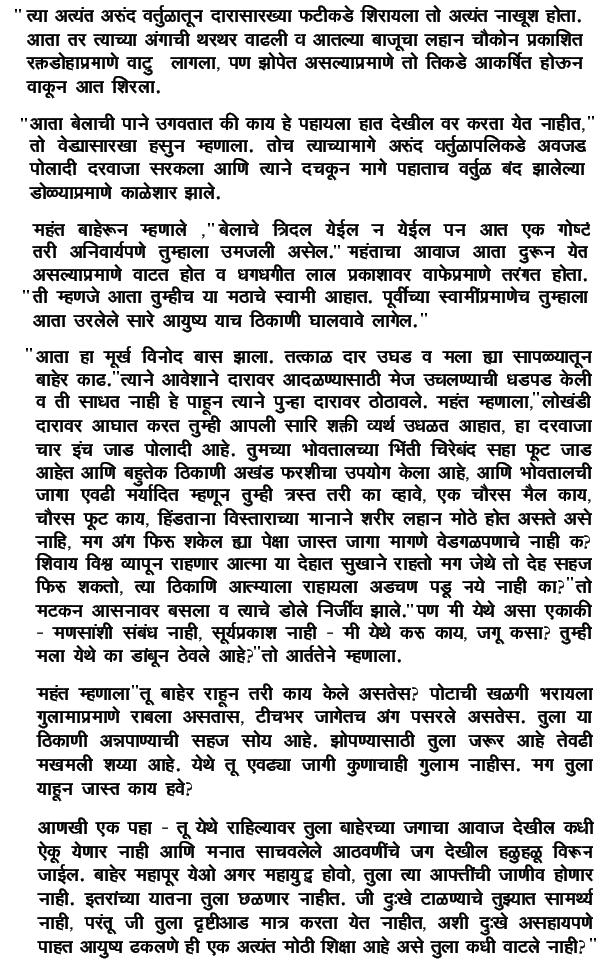
(open this picture in another window and then enlarge to read the text)
Shel Silverstein's Papillon is more ingenious. He has thought of a plan to escape. Alive.

Artist: Shel Silverstein, 1950s
Wiki informs: Silverstein was both fascinated and distressed by the amount of analysis and commentary that almost immediately began to swirl around the cartoon. "A lot of people said it was a very pessimistic cartoon, which I don't think it is at all," he said. "There's a lot of hope even in a hopeless situation..."
Indeed, Sir. Here's looking at 2011!
Tuesday, December 28, 2010
I wish we had a lot of Dadoji Konddeo's and S R Sankaran's
E A S Sarma:
S R Sankaran, the retired IAS officer, died on October 7 2010. During the 30-odd years that he served the state and the centre as a civil servant in various capacities, Sankaran’s home offered an open shelter to anyone in need of help and solace. He transcended the rigid barriers of the civil services to reach out to the needy, the oppressed and the deprived. His uprightness, sincerity and compassion for the poor disarmed politicians, inspired young civil servants and provided hope and succour to millions of voiceless people. He was a civil servant with a difference. More than that, he was a self-effacing human being par excellence. (EPW, Vol XLV No.43 October 23, 2010)
Mel Brooks:
“Nietzsche whispers to you: ‘Without audacity there is no greatness.’ Freud whispers to you: ‘Why must there be greatness?’ That fight’s still going on. And you don’t understand either one, because they’re both whispering in German."
Peter Maass, The New Yorker, January 10, 2011:
"In a way, statue topplings are the banana peels of history that we often slip on."
Dadoji Konddeo (दादोजी कोंडदेव) was NOT Shivaji's (शिवाजी) guru. I agree.
They removed Konddev's statue from Lal Mahal (लाल महाल) . I have no quarrel with that.
One of the all-time top five Marathi writers, Samarth Ramdas (समर्थ रामदास) was NOT Shivaji's guru. I have no quarrel with that either. (In fact, M V Dhond म वा धोंड argues that Shivaji was Ramdas's guru. I agree with Dhond. When you are a contemporary of a giant like Shivaji, how can you be NOT his disciple?)
But when I heard caste-fundamentalists of Maharashtra disparaging Konddev as "ordinary", "lowly" servant of Shivaji, I felt sad.
By all accounts I have read, Konddev was an honest and trusted civil servant of Shivaji and his father.
Isn't that enough to make him a hero in this country? How many honest civil servants has India got 363 years after Konddev's death?
Why can't you be ordinary? Why do you have to be great to be remembered? What have most elites done for the majority of this country?
Konddev-sir, Don't feel bad. Your statue has only been removed from one place. Mr. S R Sankaran most likely will have no statue.
S R Sankaran, the retired IAS officer, died on October 7 2010. During the 30-odd years that he served the state and the centre as a civil servant in various capacities, Sankaran’s home offered an open shelter to anyone in need of help and solace. He transcended the rigid barriers of the civil services to reach out to the needy, the oppressed and the deprived. His uprightness, sincerity and compassion for the poor disarmed politicians, inspired young civil servants and provided hope and succour to millions of voiceless people. He was a civil servant with a difference. More than that, he was a self-effacing human being par excellence. (EPW, Vol XLV No.43 October 23, 2010)
Mel Brooks:
“Nietzsche whispers to you: ‘Without audacity there is no greatness.’ Freud whispers to you: ‘Why must there be greatness?’ That fight’s still going on. And you don’t understand either one, because they’re both whispering in German."
Peter Maass, The New Yorker, January 10, 2011:
"In a way, statue topplings are the banana peels of history that we often slip on."
Dadoji Konddeo (दादोजी कोंडदेव) was NOT Shivaji's (शिवाजी) guru. I agree.
They removed Konddev's statue from Lal Mahal (लाल महाल) . I have no quarrel with that.
One of the all-time top five Marathi writers, Samarth Ramdas (समर्थ रामदास) was NOT Shivaji's guru. I have no quarrel with that either. (In fact, M V Dhond म वा धोंड argues that Shivaji was Ramdas's guru. I agree with Dhond. When you are a contemporary of a giant like Shivaji, how can you be NOT his disciple?)
But when I heard caste-fundamentalists of Maharashtra disparaging Konddev as "ordinary", "lowly" servant of Shivaji, I felt sad.
By all accounts I have read, Konddev was an honest and trusted civil servant of Shivaji and his father.
Isn't that enough to make him a hero in this country? How many honest civil servants has India got 363 years after Konddev's death?
Why can't you be ordinary? Why do you have to be great to be remembered? What have most elites done for the majority of this country?
Konddev-sir, Don't feel bad. Your statue has only been removed from one place. Mr. S R Sankaran most likely will have no statue.
Subscribe to:
Posts (Atom)