मेघदूत: "नीचैर्गच्छत्युपरि दशा चक्रनेमिक्रमेण"

समर्थ शिष्या अक्का : "स्वामीच्या कृपाप्रसादे हे सर्व नश्वर आहे असे समजले. पण या नश्वरात तमाशा बहुत आहे."

G C Lichtenberg: “It is as if our languages were confounded: when we want a thought, they bring us a word; when we ask for a word, they give us a dash; and when we expect a dash, there comes a piece of bawdy.”

C. P. Cavafy: "I’d rather look at things than speak about them."

Martin Amis: “Gogol is funny, Tolstoy in his merciless clarity is funny, and Dostoyevsky, funnily enough, is very funny indeed; moreover, the final generation of Russian literature, before it was destroyed by Lenin and Stalin, remained emphatically comic — Bunin, Bely, Bulgakov, Zamyatin. The novel is comic because life is comic (until the inevitable tragedy of the fifth act);...”

सदानंद रेगे: "... पण तुकारामाची गाथा ज्या धुंदीनं आजपर्यंत वाचली जात होती ती धुंदी माझ्याकडे नाहीय. ती मला येऊच शकत नाही याचं कारण स्वभावतःच मी नास्तिक आहे."

".. त्यामुळं आपण त्या दारिद्र्याच्या अनुभवापलीकडे जाऊच शकत नाही. तुम्ही जर अलीकडची सगळी पुस्तके पाहिलीत...तर त्यांच्यामध्ये त्याच्याखेरीज दुसरं काही नाहीच आहे. म्हणजे माणसांच्या नात्यानात्यांतील जी सूक्ष्मता आहे ती क्वचित चितारलेली तुम्हाला दिसेल. कारण हा जो अनुभव आहे... आपले जे अनुभव आहेत ते ढोबळ प्रकारचे आहेत....."

Kenneth Goldsmith: "In 1969 the conceptual artist Douglas Huebler wrote, “The world is full of objects, more or less interesting; I do not wish to add any more.”1 I’ve come to embrace Huebler’s ideas, though it might be retooled as “The world is full of texts, more or less interesting; I do not wish to add any more.” It seems an appropriate response to a new condition in writing today: faced with an unprecedented amount of available text, the problem is not needing to write more of it; instead, we must learn to negotiate the vast quantity that exists. How I make my way through this thicket of information—how I manage it, how I parse it, how I organize and distribute it—is what distinguishes my writing from yours."

Tom Wolfe: "The first line of the doctors’ Hippocratic oath is ‘First, do no harm.’ And I think for the writers it would be: ‘First, entertain.’"

विलास सारंग: "… . . 1000 नंतर ज्या प्रकारची संस्कृती रुढ झाली , त्यामध्ये साधारणत्व विश्वात्मकता हे गुण प्राय: लुप्त झाले...आपली संस्कृती अकाली विश्वात्मक साधारणतेला मुकली आहे."

Wednesday, March 14, 2018

स्टीफन हॉकिंग आणि जयंत नारळीकर ....Things of Which We Cannot See the Bottom Are Not Necessarily Profound


#STEPHENHAWKING
 
Alexander Waugh, The Spectator, 2010 reviewing Stephen Hawking's 'The Grand Design' :

"If Hawking were really serious about answering the ‘ultimate questions of life’ he should have realised long ago that mathematics and geometry are not the right tools for the task....Stephen Hawking has written a short, occasionally facetious, but generally reliable and informative history of classical and quantum mechanics. That is all. That he has adverted to it as an answer to the ultimate question of life is both annoying and inaccurate, but no doubt commercially sensible. Richard Feynman, the American physicist on whose work Hawking bases much of his own theory, wrote: ‘I think I can safely say that nobody understands quantum mechanics.’ Nothing has changed since Feynman’s death in 1988, and although Hawking may have a far deeper knowledge of quantum mechanics than anyone else on this planet, he still doesn’t understand it. With a little less chutzpah he might also have realised that things of which we cannot see the bottom are not necessarily profound."


John Horgan, ‘Hey, Physics, Get Real!’, 2011:
“.... But more than new ideas, physics desperately needs new facts. Budget cuts have forced into retirement the biggest American particle accelerator, the Tevatron, which helped flesh out the standard model of particle physics. Physicists pining for new data are now pinning their hopes on the Large Hadron Collider, in Switzerland. If and when that hypersensitive contraption gets up to full speed, perhaps it will stumble into a discovery so bizarre that it entices theorists lost in simulated and parallel universes back to reality.
Until then, I tell my students, if you're looking for science books that pose profound metaphysical puzzles, don't bother with the physics best sellers. Instead, check out works by Oliver Sachs, V.S. Ramachandran, and other intrepid explorers of the brain. Science's most thrilling frontier is the one inside our skulls.”
 

मी स्टीफन हॉकिंग यांची दोन पुस्तके*  विकत घेतली पण त्यातले एकही पान कधी वाचले नाही.  (* खूप महाग, हार्ड कव्हर ठोकळा  'God Created the Integers', 2005  आणि स्वस्त पेपरबॅक 'A Brief History of Time', 1988)

मी त्यांचे एक चरित्र मात्र विकत घेतले आणि थोडे फार वाचले आहे. त्यातील डॉक्टर नारळीकरांवरील भाग वाचा.
"...As well as developing his theory of the origin of the Universe, Hoyle acted as supervisor to a select group of students. One of his charges was a graduate student named Jayant Narlikar. Narlikar had been assigned the task of working through some of the mathematics for Hoyle’s theory as part of the research material for his Ph.D. He also happened to occupy the office next to Hawking’s. Hawking became very interested in Narlikar’s equations. Without too much persuasion, Narlikar shared the research material he was working on and Hawking began to develop the theories further.  During the next few months Hawking spent more and more time walking between his friend’s office and his own, clutching pages full of  mathematical interpretations in one hand and leaning heavily on his newly acquired walking stick with the other.

At this point it should be emphasized that Hawking had no malicious intent toward Hoyle or, indeed, Narlikar. He was quite simply curious about the material and was floundering with his own projects. The equations and their meaning were fascinating and perhaps initially more stimulating than his own research. Besides which, the whole approach within the department was one of shared goals and ideals.
Before too long things came to a head. Hoyle decided to make a public announcement of his findings at a meeting of the Royal Society in London. Although it was certainly not without precedent, some of his colleagues considered that he was being overly keen in doing this because the work had not been refereed. Hoyle gave his talk to around a hundred people; at the end there was warm applause and the usual post-lecture hubbub of conversation. Then he asked if there were any questions. Naturally Hawking had attended and had followed the arguments closely. He stood up slowly, clutching his stick. The room fell silent.
“The quantity you’re talking about diverges,” he said.
Subdued murmurs passed around the audience. The gathered scientists saw immediately that, if Hawking’s assertion were correct, Hoyle’s latest offering would be shown to be false.
“Of course it doesn’t diverge,” Hoyle replied.
“It does,” came Hawking’s defiant reply.
Hoyle paused and surveyed the room for a moment. The audience was absolutely silent. “How do you know?” he snapped.
“Because I worked it out,” Hawking said slowly.
An embarrassed laugh passed through the room. This was the last thing Hoyle wanted to hear. He was furious with the young upstart. But any enmity between the two men was short lived—Hawking had demonstrated himself to be too good a physicist for that. But Hoyle considered Hawking’s action to be unethical and told him so. In return, Hawking and others pointed out that Hoyle had been unethical in announcing results that had not been verified. The only innocent party, who no doubt had to bear the full brunt of Hoyle’s anger, was the middleman, Narlikar...."

(‘STEPHEN HAWKING: A Life in Science’ by Michael White and John Gribbin)

   सौजन्य : कॉपीराईट होल्डर्स 

Sunday, March 11, 2018

त्या तीघी...आहिल्याबाई होळकर, आनंदीबाई पेशवे आणि दुर्गाबाई भागवत... Ahilya, Aanandi and Durga

थॉमस हार्डी यांच्या 'फार फ्रॉम दि मॅडिंग क्राऊड' (Thomas Hardy, 'Far From the Madding Crowd'), १८७४ कादंबरीतले एक वाक्य पहा:
".... “I have always this dreary pleasure in thinking over those past times with you—that I was something to you before he was anything, and that you belonged almost to me. But, of course, that’s nothing. You never liked me.”
“I did; and respected you, too.”
“Do you now?”
“Yes.”
“Which?”
“How do you mean which?”
“Do you like me, or do you respect me?”
“I don’t know—at least, I cannot tell you. It is difficult for a woman to define her feelings in language which is chiefly made by men to express theirs. My treatment of you was thoughtless, inexcusable, wicked! I shall eternally regret it. If there had been anything I could have done to make amends I would most gladly have done it—there was nothing on earth I so longed to do as to repair the error. But that was not possible.”..."

दुर्गा भागवत (१९१०-२००२) त्यांच्या 'पत्रांच्या निसटत्या आठवणी' ('भावसंचित', २०१५ मध्ये समाविष्ट) लेखात आहिल्याबाई होळकर आणि आनंदीबाई पेशवे यांच्यातील पत्र व्यवहाराचा पुनरुल्लेख करतात (पहिला उल्लेख: 'पैस', १९७०).

 आहिल्याबाई (१७२५-१७९५) आणि आनंदीबाई पेशवे (१७४? - १७९४) या १८व्या शतकातील देशाच्या राजकारणातील महत्वाच्या  स्त्रिया, पण बऱ्याच दृष्टीने भिन्न.

जसा काळ गेलाय तशी  आहिल्याबाईंची कीर्ती दिवसेंदिवस वाढत गेलीय.  भारताच्या सध्याच्या लोकसभेच्या स्पीकर (श्री. सुमित्रा महाजन) त्यांना मानणाऱ्या लाखो लोकांपैकी एक आहेत. आनंदीबाईंची प्रतिमा मात्र संपूर्णपणे अनैतिहासिक अशा "ध चा मा" प्रकरणाने मलीन झालेली. त्यात त्या पडल्या राघोबा पेशव्यांच्या पत्नी आणि दुसऱ्या बाजीरावांच्या आई.

कै. म वा धोंड आनंदीबाईंबद्दल त्यांच्या एका लेखात काय म्हणतात ते पहा:
'''स्वामी' आणि पेशवेकालीन मराठी". सत्यकथा, जुलै १९६५ / 'जाळ्यांतील चंद्र : समीक्षालेखसंग्रह', १९९४/१९९८

कृतज्ञता: म वा धोंड यांच्या साहित्याचे कॉपीराईट होल्डर्स आणि राजहंस प्रकाशन, पुणे


आनंदीबाईंचे पत्र आणि  त्यावर आहिल्याबाईंची कृती याचे  दुर्गाबाईंनी ज्या संवेदनशीलतेने वर्णन केले आहे ते अजोड आहे, दुर्गाबाईंच्याच  भाषेत एखाद्या धर्मानुभवासारखा आहे.

आनंदीबाईंनी आपली व्यथा मांडली आणि आहिल्याबाईंनी त्यांना प्रेमाने आणि आदराने वागवले. माझ्या मते एक संवेदनशील स्त्रीच ह्याचे त्याला न्याय देणारे वर्णन करू शकते. आनंदीबाईंच भाग्य की त्यांच्या मृत्यनंतर जवळजवळ पावणे दोनशे वर्षानंतर मराठीतील, भारतातील  एका सर्वोत्तम लेखकाने  त्यांना समजावून घ्यायचा प्रयत्न केला.

ह्या ब्लॉग वरील ऑगस्ट २०, २०१७ ची पोस्ट पहा.

कै. म वा धोंड म्हणतात की "... पुरुष जेंव्हा स्वार्थी, स्वैराचारी , स्त्रैण व भ्याड बनतात , तेंव्हा स्त्रीया राजकारणे करू पाहतात, घराबाहेर पडतात , हातात शस्त्रं धरतात आणि अंती त्यांच्याप्रमाणे बेजबाबदार, उच्छृंखळ, पुरुषी व बदफैली बनतात" ( प्रस्तावना, 'मऱ्हाटी लावणी', १९५६/२००३). 

ह्याचे खंडन मी त्या पोस्ट मध्ये केले होते. 

आहिल्याबाई आणि आनंदीबाई यांच्यातील परस्पर व्यवहार हे आणखी एक उदाहरण आहे की स्त्रीया राजकारण करू लागल्यावर किती जबाबदारीने, परिपक्वतेने आणि संवेदनशीलतेने वागू शकतात याचे. 


कृतज्ञता : दुर्गा भागवतांच्या साहित्याचे कॉपीराईट होल्डर्स 

Saturday, March 10, 2018

भूपेन खखर आणि इसाप....Aesop and Bhupen Khakhar@84

#BhupenKhakhar84
 
Today March 10 2018 is Bhupen Khakhar's 84th birth anniversary


'You Can’t Please All', 1981 by Bhupen Khakhar (1934-2003)

based on Aesop's (c. 620 BCE- 564 BCE) 'The Miller, His Son, and Their Ass'


Friday, March 09, 2018

Bhagat Singh Lives In Many Hearts, Lenin Just A Collectible


त्र्यं शं शेजवलकर, डिसेंबर २६ १९३६:
"आज पुनः इस्लामसारखेच संकट साम्यवादाच्या रूपाने अवतरले आहे."
('निवडक लेखसंग्रह', १९७७, पृष्ठ )   
 

Recycling my post dated October 27 2007.....

South Asia is celebrating Bhagat Singh’s 100th birth anniversary.

Supreme sacrifice of young Bhagat Singh, Rajguru and Sukhdev for a larger cause has motivated millions in the past and will continue to do so.

T S Shejwalkar (त्र्यंबक शंकर शेजवलकर) has described in his essay of October 1930 what Motilal Nehru (more charismatic personality than his son) felt on meeting Bhagat Singh:”For the first time in my life, I met someone greater than me.”

Bhagat Singh was just 23 when hanged.

I have always been impressed with not just Bhagat Singh’s rugged good looks- wearing Western hat or prisoner’s chains- but his intellect. Man was an atheist and remained so till the end. He didn’t believe in rebirth. He must be one of the first famous people in India to talk about Charles Darwin’s work. Just for the appreciation of readers, he established a library of 175 books at Agra, where the Assembly bomb plan was finalised. As a revolutionary thinker, he encouraged the reading habit among his comrades and also debates on topical social and political issues.

His family was very eclectic and was open to diverse influences. It truly believed in a composite India and also practised it in the family.

He once said: “Up to that period (1925) I was a romantic revolutionary… That was a turning point in my revolutionary career;

“Study” was the cry that reverberated in the corridors of my mind. Study to enable yourself to face the arguments advanced by opposition. Study to arm yourself with arguments in favour of your cult. I began to study.

My previous faith and convictions underwent a remarkable modification. The romance of violent methods alone, which was so prominent amongst our predecessors, was replaced by serious ideas. No more mysticism, no more blind faith. Realism became our cult. Use of force justifiable when restored to as a matter of terrible necessity: non-violence as policy indispensable for all mass movements. So much about methods.

The most important thing was the clear conception of ideal for which we were to fight. As there were no important activities in the field of action, I got ample opportunity to study various ideals of world revolution. I studied Bakunin, the anarchist leader, something of Marx, the father of communism and much of Lenin, Trotsky and others – the men who had successfully carried out a revolution in their country.”

Bhagat Singh trusted Lenin and his revolution in Russia without realizing horrors of Russian revolution. George Orwell was to write “Animal Farm” only in 1945.

Brad DeLong:”Lenin was a really evil man. His followers and supporters slaughtered more than ten million of their fellow humans… for Communists, Lenin and Guevara are truly heroic. Standing as they did on the shoulders of the great Karl Marx, they saw deeply into the present and far into the future. They ran great personal risks and stood bravely against their adversaries as they struggled to bring about the revolutionary liberation of humanity.... we cannot view Lenin and Guevara as truly heroic, any more than we can view Hitler and Mussolini as truly heroic…”

In retrospect, I feel Bhagat Singh didn’t need Lenin. His native idealism, his ideas, his leadership qualities and his youthful good looks were more than enough to power his dreams.

Like in the picture below Lenin is being assigned to the dustbin of history while Bhagat Singh continues to rule many young hearts in India.


Artist: Eldon Dedini, The New Yorker,  27 Nov 1989

Thursday, March 08, 2018

ह्या 'पुरुषाच्या' जगात अंगावर घालायच तरी काय?...OH MON DIEU un téton (de femme)!

#InternationalWomensDay

Today March 8 2018 is International Women's Day

"In response to the ban on burkinis from beaches in France, an anonymous illustrator has drawn a cartoon that sums up the myriad of dress standards which women are expected to meet. The cartoon argues that women are shamed if they dress conservatively or not, because everyone feels empowered to act as judge and jury on a woman's clothing choices."  (Independent, UK, August 20 2016)


Artist: Anonymous

source: @LaSauvageJaune/Twitter

A translation :

courtesy: @LaSauvageJaune,  @bitofkit and The Guardian

Tuesday, March 06, 2018

Did Marathi Classics Gain From Its Illustrations?


George Orwell: 
"Many children begin to know his characters by sight before they can even read, for on the whole Dickens was lucky in his illustrators."

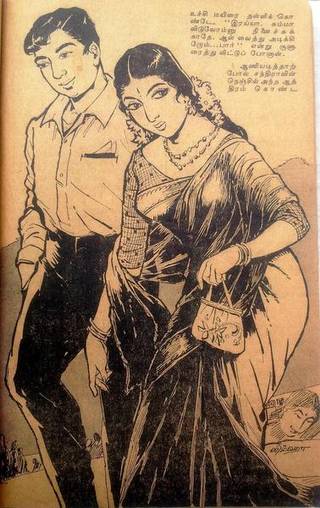
फेब्रुवारी २२ २०१८ला 'द हिंदू' मध्ये जी स्वामीनाथन यांचा हा लेख पहिला: 'How Tamil classics gained from its illustration'

मी आठवू लागलो की अशी मराठी 'क्लासीक्स' आहेत का?

एक पुस्तक लगेच आठवले - बाबासाहेब पुरंदरे यांचे 'राजा शिवछत्रपती', ज्याची चित्रे दीनानाथ दलालांनी काढली आहेत. ह्या अत्यंत लोकप्रिय आणि एकेकाळी माझ्या आवडत्या पुस्तकाबद्दल मी जून ३ २०११ला इथे लिहले होते:
"I remember how devastated I felt when- reading it first time in c 1970- I came across the picture at the end of the book.
Did Shivaji-maharaj too die just like so many of them did in our Miraj neighbourhood? I couldn't quite get over the grief for many days. I still recall the pain when I see it....Dalal's picture, not Purandare's words, had created that mood."

 सौजन्य : दीनानाथ दलाल आणि बाबासाहेब पुरंदरे यांच्या निर्मितेचे कॉपीराईट होल्डर्स

दुसर एक पुस्तक माझ्या मनात त्याच्या चित्रांसाठी घर करून आहे. त्या पुस्तकाबद्दल मी एप्रिल १३ २०१५ला इथे लिहले होते.

Artist: Bhavanrao Shrinivas alias Balasaheb Pandit Pant Pratinidhi (भवानराव श्रीनिवास उर्फ बाळासाहेब पंडित पंत प्रतिनिधी १८६८-१९५१)

"Simha was another unique illustrator whose works showed men and women who were special, handsome and beautiful. His illustrations for Rajam Krishnan’s prize novel Malargal in Ananda Vikatan showed Chitra, Mangalam, Madhavan, Nirmala and Visalam in different moods."

Saturday, March 03, 2018

मला पहायचीय तुक्या आणि काफ्क्याची भेट...Tukaram Bij

#तुकारामबीजशके१९३९ 
आज तुकाराम बीज, मार्च ३ २०१८, फाल्गुन कृष्ण २ शके १९३९

मागे फेसबुक वर लिहलेल्या पोस्टवर आधारित.

आज तुकाराम बीज... आज तुक्या नाहीसा झाला... पिरियड.

म वा धोंड (Who was M V Dhond? कोण बर हे म. वा. धोंड?) म्हणतात एक स्वतःला आणि बघ्यांना वेगळ्या पातळीवर नेवून सोडणारे कीर्तन पंढरपुरात करून नाहीसा झाला.

तुक्या बाकी बरेच काही असेल पण फार भारी कवी आणि कीर्तनकार.

कवी असण्याबद्दल, तुक्याएवढच जीवन जगलेला, त्याच्याच योग्यतेचा, फ्रान्झ काफ्क्या काय म्हणतोय पहा :
‘You describe the poet as a great and wonderful man whose feet are on the ground, while his head disappears in the clouds. Of course, that is a perfectly ordinary image drawn within the intellectual framework of lower-middle-class convention. It is an illusion based on wish fulfilment, which has nothing in common with reality. In fact, the poet is always much smaller and weaker than the social average. Therefore he feels the burden of earthly existence much more intensely and strongly than other men. For him personally his song is only a scream. Art for the artist is only suffering, through which he releases himself for further suffering. He is not a giant, but only a more or less brightly plumaged bird in the cage of his existence.'

तुका आकाशाएवढा असेल पण मला तो असा वाटतो: "...brightly plumaged bird in the cage of his existence..."

विंदा करंदीकर कल्पना करतात तुक्या आणि शेक्सपियर च्या भेटीची... मला पहायचीय तुक्या आणि काफ्क्याची भेट

'Manuel Osorio Manrique de Zúñiga', 1787-188
Artist : Francisco Goya

Tuesday, February 27, 2018

शेक्सपिरियन आणि शेक्सपियर यातला फरक काय?....Kusumagraj@106

#कुसुमाग्रज१०६  #Kusumagraj106
 
Today February 27 2018 is 106th birth anniversary of Vishnu Vāman Shirwādkar (विष्णु वामन शिरवाडकर) aka Kusumagraj (कुसुमाग्रज). 

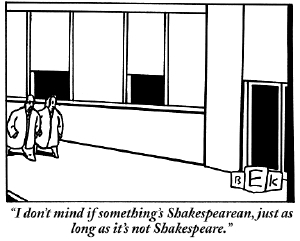
शेक्सपिरियन आणि शेक्सपियर यातला फरक काय?

In 2016, Marathi play "Raja Lear" (राजा लिअर) by Vinda Karandikar (विंदा करंदीकर) was staged again to observe 400th death anniversary year of William Shakespeare.

I did NOT see it because...


Artist: B E Kaplan, The New Yorker, 2014


Vinda's 'Raja Liyar' was Shakespeare....On the other hand, Shirwadkar's 'Natsamrat' (नटसम्राट) is Shakespearean...And also, I already know King Lear, explained here in just three frames:
Artist: Maya Gosling, 2014

Saturday, February 24, 2018

लाकडी वाघ ठेवून खऱ्या वाघांना मारणारे....Tipu's Three Real Tigers and Arthur Wellesley

खालील तिन्ही उतारे Jon Wilson's "India Conquered: Britain's Raj and the Chaos of Empire", 2016 यांच्या अप्रतिम पुस्तकातून साभार.
“...French craftsmen had built the mechanism inside the famous life-size toy tiger that is now on display in London’s Victoria and Albert Museum. The tiger, a symbol of the Mysore regime, has sunk its fangs into the throat of a prostrate European man, and it roars when it bites. Wellesley was worried that France and India would collaborate in more than symbolic craftwork, fearing particularly that the French navy would invade western India from its base at Mauritius to join up with Mysore and drive the British from southern India....”


 पण या लाकडी वाघाच्या बरोबरीने इंग्रजांना तीन खरे वाघ सापडले होते...
 “...The Company’s armies arrived at Tipu’s capital of Sriringapatam in April. The city survived a month’s siege, but on 2 May the Company managed to blow a series of big holes in the walls of the fort and then, over the next two days, fought their way into the city. Tipu was seen shooting from the battlements with hunting rifles, but was killed in the fighting, his still warm body later found in a room full of corpses. Inside the palace, soldiers found Tipu’s mechanical tiger, and three of the real beasts, caged and starving.
Arthur Wellesley was appointed military governor of Tipu’s lands. His first act was to shoot the tigers: ‘[T]here is no food for them, and nobody to attend them, and they are getting violent.’...”

दुसऱ्या महायुद्धात ज्यावेळी जपानचा मद्रास वर हल्ला होणार असे वाटत होते....
"... In Madras, the prospect of invasion seemed so imminent that government offices were moved to towns scattered throughout the interior, and the big cats in the city’s zoo killed to stop them rampaging after the inevitable attack. When the city’s Indian chief officer complained that ‘everyone seemed to have lost their head’, the British chief of police sent a platoon to the zoo who ‘ruthlessly did their job in minutes’. By the middle of 1942, the government was drawing up plans to retreat from India and lead the fighting against Japan from Australia. Indians withdrew their savings from British-run banks and could not even trust paper money so started to collect small coins..."


Artist: Joe Dator, The New Yorker, 2017

Wednesday, February 21, 2018

विस्टन ह्यू ऑडन यांनी मागितले - "धैर्य दे अन् नम्रता दे..." आणि त्यांना ते मिळाले!...W H Auden@111

#WHAuden111

बा सी मर्ढेकरांवर (१९०९-१९५६) ज्यांचा समर्थ रामदासांइतका प्रभाव होता, ज्यांच्या न्यूयॉर्क मधील एका भेटीवरती विलास सारंगांनी अधुनिक मराठीतील एक सर्वोत्कृष्ट निबंध लिहला, त्या डब्ल्यू एच ऑडेन (१९०७-१९७३) यांची आज फेब्रुवारी २१ २०१८ रोजी १११वी जयंती आहे.

ऑडेन यांच्या बाबतची, माझ्या डोळ्यात अक्षरशः पाणी आणणारी, वाक्य मागच्या वर्षी LRB मधील एका लेखात वाचली:

Mark Ford: "...I think there’s a humility in Auden which is one of the most striking characteristics, and unusual characteristics, of a great poet, that often great poets have a kind of hard self-belief or egocentrism which survives all their various kind of … the trajectory of their careers, and the ways in which their thoughts or idioms develop. But Auden, from beginning to end, despite the kind of seemingly prophetic or didactic or like a preacher-man aspect of his poetry, there is a kind of humility in it. And when I was re-reading his poetry in preparation for this, I just found myself weeping at that particular aspect of Auden – not just the beauty of the poetry, particularly the early poetry, I just found it overwhelming … Paid on Both Sides, Poems (1930) – I just found them just so moving to read. But I also felt that there was a humility in his concept of poetry which was very distinctive and very powerful...."

Seamus Perry:
"...Yes, and Alan Bennett captures that very beautifully, I think, in his piece in the LRB in 1985, so perhaps we should end with what Bennett says. Bennett’s saying how happily Auden lacked a lot of characteristics that are usually associated with the masculine, and Bennett says, ‘He didn’t care much for fame, for instance, or go in for self-advertisement, was careless about his reputation and was unmoved by criticism.’..." 
('Auden Anxieties', LRB, August 2017

'विस्टन ह्यू ऑडन (१९०७-१९७३): एक त्रोटक आठवण', 'सर्जनशोध आणि लिहिता लेखक', मौज प्रकाशन, २००७

 सौजन्य : विलास सारंग यांच्या साहित्याचे कॉपीराईट होल्डर्स 


  Picture courtesy: The John Deakin Archive/ Getty and LRB