मेघदूत: "नीचैर्गच्छत्युपरि दशा चक्रनेमिक्रमेण"

समर्थ शिष्या अक्का : "स्वामीच्या कृपाप्रसादे हे सर्व नश्वर आहे असे समजले. पण या नश्वरात तमाशा बहुत आहे."

G C Lichtenberg: “It is as if our languages were confounded: when we want a thought, they bring us a word; when we ask for a word, they give us a dash; and when we expect a dash, there comes a piece of bawdy.”

C. P. Cavafy: "I’d rather look at things than speak about them."

Martin Amis: “Gogol is funny, Tolstoy in his merciless clarity is funny, and Dostoyevsky, funnily enough, is very funny indeed; moreover, the final generation of Russian literature, before it was destroyed by Lenin and Stalin, remained emphatically comic — Bunin, Bely, Bulgakov, Zamyatin. The novel is comic because life is comic (until the inevitable tragedy of the fifth act);...”

सदानंद रेगे: "... पण तुकारामाची गाथा ज्या धुंदीनं आजपर्यंत वाचली जात होती ती धुंदी माझ्याकडे नाहीय. ती मला येऊच शकत नाही याचं कारण स्वभावतःच मी नास्तिक आहे."

".. त्यामुळं आपण त्या दारिद्र्याच्या अनुभवापलीकडे जाऊच शकत नाही. तुम्ही जर अलीकडची सगळी पुस्तके पाहिलीत...तर त्यांच्यामध्ये त्याच्याखेरीज दुसरं काही नाहीच आहे. म्हणजे माणसांच्या नात्यानात्यांतील जी सूक्ष्मता आहे ती क्वचित चितारलेली तुम्हाला दिसेल. कारण हा जो अनुभव आहे... आपले जे अनुभव आहेत ते ढोबळ प्रकारचे आहेत....."

Kenneth Goldsmith: "In 1969 the conceptual artist Douglas Huebler wrote, “The world is full of objects, more or less interesting; I do not wish to add any more.”1 I’ve come to embrace Huebler’s ideas, though it might be retooled as “The world is full of texts, more or less interesting; I do not wish to add any more.” It seems an appropriate response to a new condition in writing today: faced with an unprecedented amount of available text, the problem is not needing to write more of it; instead, we must learn to negotiate the vast quantity that exists. How I make my way through this thicket of information—how I manage it, how I parse it, how I organize and distribute it—is what distinguishes my writing from yours."

Tom Wolfe: "The first line of the doctors’ Hippocratic oath is ‘First, do no harm.’ And I think for the writers it would be: ‘First, entertain.’"

विलास सारंग: "… . . 1000 नंतर ज्या प्रकारची संस्कृती रुढ झाली , त्यामध्ये साधारणत्व विश्वात्मकता हे गुण प्राय: लुप्त झाले...आपली संस्कृती अकाली विश्वात्मक साधारणतेला मुकली आहे."

Thursday, May 14, 2020

The Majority of Modern books are Merely Wavering Reflections of the Present...कारण काफ्कांनी पण तेच सांगितल

मला मराठीतील नवीन पुस्तके वाचावीशी वाटत नाहीत.

एकतर मी त्यांच्या दर्जाबद्दल कायमच साशंक राहिलो  आहे आणि जास्त महत्वाचे म्हणजे जुनी पुस्तके वाचून अजून संपलीच नाहीयत.

जी. ए. कुलकर्णी लिहतात:
"...आता शिवलीलामृतांचच उदाहरण घे. त्या कथा मी फार आवडीनं वाचे. काही वेळा तर पुढं वाचवू नये असा माझा गळा भरून येत असे. आणि ते शब्द तरी किती माहेर घरगुतीपणान येतात, माहीत आहे? बोटांतून रांगोळी झरझर पडत जावी, अगर गाईला पान्हा फुटावा तसे कथांना शब्द येत जातात..."
(पृष्ठ २१५, 'घर', 'पिंगळावेळ', १९७७)


आता शिवलीलामृत वाचल्याशिवाय हे काय समजणार मला?

पहा फ्रान्झ काफ्का काय म्हणतात या विषयाबद्दल:


“...I surprised Franz Kafka in his office studying a catalogue of the Reclam-Bücherei.
‘I am getting drunk on book tides,’ said Kafka. ‘Books are a narcotic.’
I opened my brief-case and showed him the contents.
‘I am a hashish addict, Herr Doktor.’
Kafka was amazed.
‘Nothing but new books!’
I emptied the brief-case on to his writing-desk. Kafka took one book after the other, turned the pages, read a passage here and there, and returned me the book.
‘And you are going to read all that?’
I nodded.
Kafka pursed his lips.
‘You spend too much time on ephemeras. The majority of modern books are merely wavering reflections of the present. They disappear very quickly. You should read more old books. The classics. Goethe. What is old reveals its deepest value – lastingness. What is merely new is the most transitory of all things. It is beautiful today, and tomorrow merely ludicrous. That is the way of literature.’...”

(‘Conversations with Kafka’ by Gustav Janouch)


मागे मला एका वाचकाने काफ्का यांच्या पुस्तकाच्या विश्वसार्हतेबद्दल शंका व्यक्त केली होती. त्यांच्या सारख्या लोकांसाठी खालील मजकूर उपयोगी ठरू शकतो. 
 
p.s.

FRANCINE PROSE,   ‘Introduction’, ‘CONVERSATIONS WITH KAFKA’, 2012:
“…At some point during the time since I first read Janouch, I heard that a question had been raised about whether Kafka had really said everything Janouch claims. Readers might well wonder, especially when we notice that several of the memoir’s walk-on characters (a violin maker, a friend of Janouch’s) sound strikingly like Kafka. And how did Janouch memorize verbatim these long flights of improvisational fancy that we ourselves have to read many times before we can get them straight? Later I heard that the person most eager to discredit Janouch (a cache of letters exists in a file at New Directions) might have had some extra-literary, personal, or professional interest in the project.
In the interval between my first reading and this one, I sometimes wondered if, aware of a challenge to its authenticity, I would like the book as much as I had before. I am pleased to report that the questions raised about the book made little difference, or none at all. Perhaps the sharpness of my judgment has been blunted by the debates and doubt that have come to surround the contemporary memoir. Or perhaps I experienced a new admiration for the skill with which Janouch may have partly described and partly invented a semi-historical, semi-fictional character known as Kafka.
Rereading Janouch, I thought: If Kafka didn’t say all these things, he said some of them and should have said the rest. Perhaps he might have admired Janouch’s exploration of the line between appropriation, ventriloquism, and spirit possession: channeling, we might call it. I want to believe that Kafka said what Janouch wrote down, just as I want more than ever to pretend that I am walking in Janouch’s place, pestering Franz Kafka with sophomoric questions and thirstily imbibing the gnomic, goofy poetry of the master’s pontifications... ”

Tuesday, May 12, 2020

New Bathing Suit? Silly, They are For Making a Face Mask....


 courtesy: republished April 30  2020 on Digital Comic Museum Facebook Page


Wikipedia:

"Mopsy was a comic strip created in 1937 by Gladys Parker, who was one of the few female cartoonists of the era. The strip had a long run over three decades. Parker modeled the character of Mopsy after herself...."

Seeing this I wrote following caption for it:
"Silly, they are for making a mask. Don't waste them elsewhere"

Saturday, May 09, 2020

...तिठ्यावर उभा मी...Yesterday, Last Summer, Tomorrow


Artist: Saul Steinberg, 1969

I can never go back to yesterday , even last summer looks like from another world & time and tomorrow is here....

Thursday, May 07, 2020

Geeta Bali@90....A Victim of Smallpox

कै गीता बाली यांची जन्म तारीख कुठे मिळाली नाही पण जन्मसाल १९३० आहे.

जगातील माझ्या अत्यंत आवडत्या सिने कलाकारांपैकी त्या एक आहेत. त्या पडद्यावर असतील तर माझे दुसरीकडे लक्षच जात नाही.


सौजन्य: अनामिक फोटोग्राफर
 कलाकार : आर के लक्ष्मण 


Saturday, May 02, 2020

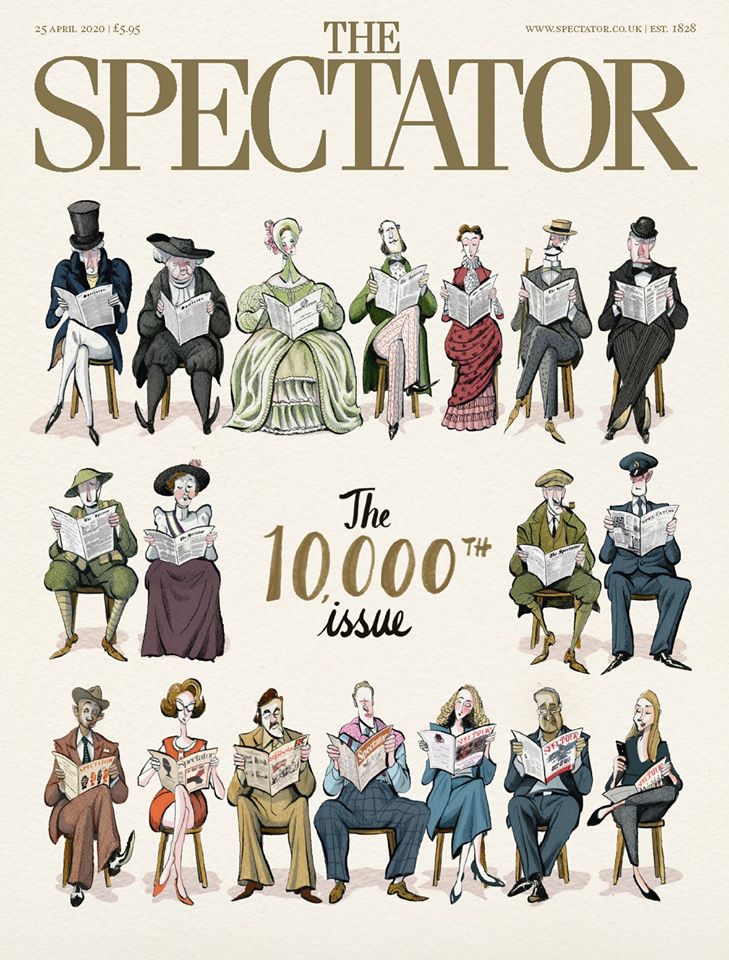
द स्पेक्टेटर , १०००० वा अंक!....The Spectator 1828- 2020-


George Orwell, 'Lear, Tolstoy and the Fool':
"Ultimately there is no test of literary merit except survival, which is itself an index to majority opinion."
 

"... A new history of The Spectator is published by David Butterfield (on sale today) and its first chapter underlines a point I’ve been thinking about a lot over these past few weeks. R.S. Rintoul, who set up The Spectator in 1828, feared there would never be a proper commercial market for a magazine that rejected partisanship, and that cared as much about art, books and ideas as economics and foreign affairs. But it worked..."

 १८२८ ते २०२०...  ह्या मासिकाच्या दीर्घायुष्याची दाद दिली पाहिजे कारण कोणत्याही भारतीय भाषेत एवढे काळ (कदाचित एखादे वर्तमानपत्र सोडून) काय टिकले आहे? साप्ताहिक किंवा मासिक तरी नक्कीच नाही. 

इतिहासकार टॉम हॉलंड:
"... For Rintoul, as it had been for Addison and Steele, the great enemy of journalism was dullness. Today’s Spectator, almost 200 years on, still manifestly subscribes to that conviction. It is evident in its patronage of writers who have variously drunk themselves to death or gone to prison for possession of cocaine; in the surge of sex scandals that, during the editorship of the current Prime Minister, added so hugely to the gaiety of the nation; in its willingness to probe the limits of what liberal opinion in Britain today regards as acceptable, and to do so in a tone of satire that Swift might well have enjoyed..."

आता ह्या स्पेक्टेटराचा आणि मराठीचा १९ व्या शतकात कसा संबंध आला ते पहा. 

टॉम हॉलंड :
"... The magazine has always cast a certain wistful gaze back at the 18th century. This is evident enough from its title. To launch a new publication back in 1828 was no less a leap of faith than it would be today — but to call it The Spectator was a gesture of self-confidence so lavish that it might have seemed to verge on the conceited. The original Spectator, founded in 1711, was a daily publication which, despite folding after a year, had come to be enshrined over the course of the 18th century as a supreme model of English prose.
As David Butterfield describes in his history of the magazine, Joseph Addison and Richard Steele, the men who had written the essays which constituted The Spectator’s daily offering, were admired by even the most exacting critics. ‘Who ever wished to attain an English style, familiar but not coarse, and elegant but not ostentatious, must give his days and nights to the study of Addison.’ This decree, coming from the robustly Tory Dr Johnson, was praise indeed for a man who had ranked as a most notorious Whig. To call a magazine The Spectator, then, was to follow in the footsteps of giants...."

विष्णुशास्त्री चिपळूणकर:
"...उदाहरणार्थ, इंग्लिश भाषेत पहा.  हित जे ग्रंथकार आजपर्यंत झाले त्या  सर्वात आडिसन याची प्रमुखत्वाने गणना आहे.… व जोवर या पृथ्वीवर इंग्लिश राहील तोंवर वरील ग्रंथकाराचे लेख  बुडायचे नाहीत असा खात्रीचा अभिप्राय मोठमोठ्यांनी प्रदर्शित केला आहे…"

आडिसन म्हणजे Joseph Addison!