मेघदूत: "नीचैर्गच्छत्युपरि दशा चक्रनेमिक्रमेण"

समर्थ शिष्या अक्का : "स्वामीच्या कृपाप्रसादे हे सर्व नश्वर आहे असे समजले. पण या नश्वरात तमाशा बहुत आहे."

G C Lichtenberg: “It is as if our languages were confounded: when we want a thought, they bring us a word; when we ask for a word, they give us a dash; and when we expect a dash, there comes a piece of bawdy.”

C. P. Cavafy: "I’d rather look at things than speak about them."

Martin Amis: “Gogol is funny, Tolstoy in his merciless clarity is funny, and Dostoyevsky, funnily enough, is very funny indeed; moreover, the final generation of Russian literature, before it was destroyed by Lenin and Stalin, remained emphatically comic — Bunin, Bely, Bulgakov, Zamyatin. The novel is comic because life is comic (until the inevitable tragedy of the fifth act);...”

सदानंद रेगे: "... पण तुकारामाची गाथा ज्या धुंदीनं आजपर्यंत वाचली जात होती ती धुंदी माझ्याकडे नाहीय. ती मला येऊच शकत नाही याचं कारण स्वभावतःच मी नास्तिक आहे."

".. त्यामुळं आपण त्या दारिद्र्याच्या अनुभवापलीकडे जाऊच शकत नाही. तुम्ही जर अलीकडची सगळी पुस्तके पाहिलीत...तर त्यांच्यामध्ये त्याच्याखेरीज दुसरं काही नाहीच आहे. म्हणजे माणसांच्या नात्यानात्यांतील जी सूक्ष्मता आहे ती क्वचित चितारलेली तुम्हाला दिसेल. कारण हा जो अनुभव आहे... आपले जे अनुभव आहेत ते ढोबळ प्रकारचे आहेत....."

Kenneth Goldsmith: "In 1969 the conceptual artist Douglas Huebler wrote, “The world is full of objects, more or less interesting; I do not wish to add any more.”1 I’ve come to embrace Huebler’s ideas, though it might be retooled as “The world is full of texts, more or less interesting; I do not wish to add any more.” It seems an appropriate response to a new condition in writing today: faced with an unprecedented amount of available text, the problem is not needing to write more of it; instead, we must learn to negotiate the vast quantity that exists. How I make my way through this thicket of information—how I manage it, how I parse it, how I organize and distribute it—is what distinguishes my writing from yours."

Tom Wolfe: "The first line of the doctors’ Hippocratic oath is ‘First, do no harm.’ And I think for the writers it would be: ‘First, entertain.’"

विलास सारंग: "… . . 1000 नंतर ज्या प्रकारची संस्कृती रुढ झाली , त्यामध्ये साधारणत्व विश्वात्मकता हे गुण प्राय: लुप्त झाले...आपली संस्कृती अकाली विश्वात्मक साधारणतेला मुकली आहे."

Monday, August 22, 2011

Rereading Vasant Sarwate at Ramlila Maidan in August 2011

Indian government until August 22 2011 to the supporters of The Jan Lokpal Bill and middle-class people in general...


caption:

मी लोकशाहीचा कट्टा पुरस्कर्ता आहे. मग त्यासाठी सर्वच्या सर्व जनतेविरुद्ध लढा द्यावा लागला, तरी बेहत्तर, मी माझी भूमिका जरासुद्धा बदलणार नाही, सांगून ठेवतो!..."

(I am an ardent supporter of democracy. And for that if I have to fight the entire populace, I could not care less, I will not change my stance even one bit, I am telling you!...")

Artist: Vasant Sarwate first published in 1969, (वसंत सरवटे)

[courtesy: 'Reshalekhak Vasant Sarwate' (रेषालेखक वसंत सरवटे) edited by Dileep Majgaonkar / Madhukar Dharmapurikar (दिलीप माजगावकर / मधुकर धर्मापुरीकर ), 2009]

This was published in one of the best Marathi periodicals- despite its soft(?) Hindutva bent- of all time - 'Manoos' (माणूस).

Political cartoons of Sarwate that were published in Manoos from 1969-1972 tell us more about Indian democracy as practised in Maharashtra than any history book. Particularly see his cartoon on hunting expedition of the then chief minister Vasantrao Naik (वसंतराव नाईक).

This collection proves how in the field of political cartoons Sarwate is equal to the likes of Abu Abraham and R K Laxman. And if you add the rest of his repertoire to it, he is better than both.

We at Miraj used to get Manoos for a long time by post. I used to pounce on it. I still remember many things from it- Sadanand Borse's (सदानंद बोरसे) reviews of films for instance. My father and my brother both were handsome contributors to its contents over a number of years.

Like almost all good Marathi periodicals, it died long time ago...

Sunday, August 21, 2011

What if Anna Hazare were to be an Army Deserter

K.N. PANIKKAR:

"Indian democracy has evolved an institutional structure on the basis of the principles and prescriptions laid down in the Constitution. But there is a wide gulf between precept and practice. Democracy as practised by the state and society is far removed from the ideal form of democracy in which equalities – political, cultural and economic – are continuously negotiated. The gulf between the concept and practice may not be fully bridged ever, but it could be reduced through continuous public reasoning and dialogue. Amartya Sen has argued that the availability of a most perfect institutional structure need not necessarily ensure the success of democracy. The success would largely depend upon the intervention of human agency for using the available opportunities.

What democracy does in India is only a caricature of what democracy really is."

(Frontline, Aug. 13-26, 2011)

The Times of India, August 21 2011:

"...The RTI reply from Dakshin ASC records (South) dated August 3 puts the record straight that Anna "never deserted" the Army, and that he was "honourably" discharged from the armed forces on completion of the 12 years of his service..."

What if he deserted army? What has it to do with the movement he has started now? Is deserting army a mistake? And even if it is, did not Mahatma Gandhi constantly make mistakes if not blunders and tried to learn from them?

According to Wiki:

"During the First World War, Bertrand Russell was one of a very small number of intellectuals engaged in pacifist activities, and, in 1916, he was dismissed from Trinity College following his conviction under the Defence of the Realm Act. A later conviction resulted in six months' imprisonment in Brixton prison. Russell was released from prison in September 1918."

Adam Hochschild has written a book 'To End All Wars: How the First World War Divided Britain' on these 'pacifist activities'.

Maurice Walsh:

"...Hochschild's book is not another lament for a lost generation, a mere backward look at the folly and waste of war. He sets out to restore to this story those who at the time proclaimed the fighting to be madness, in the face of mass conformity moulded by one of the greatest propaganda campaigns in history...".

Adam Hochschild:

"...during this greatest crisis of his generation, loved his country deeply but believed from the very first moments that the war was an appalling mistake.

Part of Russell’s intellectual bravery lay in his willingness to confront that last set of conflicting loyalties. He described himself poignantly in the autumn of 1914 as being “tortured by patriotism. . . . I desired the defeat of Germany as ardently as any retired colonel. Love of England is very nearly the strongest emotion I possess, and in appearing to set it aside at such a moment, I was making a very difficult renunciation.” What left him even more anguished was realizing that “anticipation of carnage was delightful to something like ninety per cent of the population. . . . As a lover of truth, the national propaganda of all the belligerent nations sickened me. As a lover of civilization, the return to barbarism appalled me. As a man of thwarted parental feeling, the massacre of the young wrung my heart.” Over the four years to come, he never yielded in his belief that “this war is trivial, for all its vastness. No great principle is at stake, no great human purpose is involved on either side. . . . The English and French say they are fighting in defence of democracy, but they do not wish their words to be heard in Petrograd or Calcutta.”..."

Artist: Alan Dunn, The New Yorker, June 11 1966

If we don't put our democracy in order, we will hear even erstwhile law-abiding citizens saying: I don't obey the law even if I do agree with it.

Saturday, August 20, 2011

Can Anna Hazare be compared to Mahatma Gandhi? How clean a smell he manages to leave behind!

A favourite repost of Anna Hazare's detractors is - He is no Gandhi. (Someone writes he is not a patch on Jayaprakash Narayan.)

Maybe he is not. But are they so sure?

I have now read most of Joseph Lelyveld's 'Great Soul: Mahatma Gandhi and His Struggle with India', 2011.

And the overwhelming feeling I constantly got while reading the book: how human Gandhi was. Hardly a saint for sure if I compare him to the saints I know Kabir, Dnyaneshwar, Tukaram, Namdev...He was a politician and social activist.

Was Gandhi successful in what he set out to achieve in personal and public life?

It's hard to judge his personal life. Although reading the section of Lelyveld's book on his 'experiments in brahmacharya' (pages 303-308), I feel his personal life was tormented.

And public life?

Mahatma Gandhi: "India has still to attain social, moral and economic independence in terms of its 700,000 villages as distinguished from its cities."

Lelyveld: "...India has now been free and independent for about four months. And the leading shaper of that independence unsettled and despairing...No single catastrophe served as catalyst for his decision to start seventeenth and final fast on January 13 (1948). In the days running up to the fast, he'd been forcefully struck by several indications that matters were on a downward slide. First he received a detailed account of rampant corruption at all levels of the newly empowered Congress movement in the Andhra region of southeastern India...Announcing the fast at his prayer meeting on January 12, the Mahatma mentioned the insecurity of Muslim and the Congress's corruption..." (page 337-338)

Andrew Roberts: "...of the four great campaigns of Gandhi's life—for Hindu-Muslim unity, against importing British textiles, for ending Untouchability and for getting the British off the subcontinent—only the last succeeded, and that simply because the near-bankrupt British led by the anti-imperialist Clement Attlee desperately wanted to leave India anyhow after a debilitating world war."

Why do I then like a billion others still admire Gandhi? Why do I hang my head in shame that his killer was a Maharashtrian Brahmin like me?

George Orwell:

“One may feel, as I do, a sort of aesthetic distaste for Gandhi, one may reject the claims of sainthood made on his behalf (he never made any such claim himself, by the way), one may also reject sainthood as an ideal and therefore feel that Gandhi's basic aims were anti-human and reactionary: but regarded simply as a politician, and compared with the other leading political figures of our time, how clean a smell he has managed to leave behind!

(This essay of George Orwell, Peter Davison speculates, could have been influenced by Balraj Sahni who worked with Gandhiji in 1938 and with Orwell at the BBC. Orwell brought Mr. Sahni and his future wife, Damyanti, together.

From 'George Orwell, A Life in Letters', 2010)

Anna Hazare too is a politician and social activist and so far he has managed to leave behind only clean smell!


Artist: Mischa Richter, The New Yorker, Apr 23 1960

Thursday, August 18, 2011

Marathi Anna Hazare's Hindi: Let us march against Corruption

David Ogilvy:

When Aeschines spoke, they said, “How well he speaks.” But when Demosthenes spoke, they said, “Let us march against Philip.”..."


In 1991, there were three candidates in fray to become the 9th Prime Minister of India: P. V. Narasimha Rao, Sharad Pawar, and Madhavrao Scindia.

I remember 'India Today' quoting a Congress source saying that the best Marathi speaking among them would become the Prime Minister! (All three of them spoke fluent Marathi.)

Mr. Rao won the race.

Just for the record: the late Mr. Rao has translated Marathi classic H N Apte's (ह. ना. आपटे) 'Pan Lakshat Kon Gheto' (पण लक्षात कोण घेतो) into Telugu.

People admire Anna Hazare for various things. I admire him first for speaking Hindi so effectively. The last Marathi person speaking Hindi so effectively on national stage was probably the late Pramod Mahajan.

This is not unprecedented. Read 'exploits' of another 'simpleton' Marathi, Saint Namdev (CE 1270-1350), who has been hailed by Vinoba Bhave as the first great classical writer in Hindi ('पहिला अभिजात उत्तम लेखक') here.

I wonder how effective Hindi B G Tilak and Dr B R Ambedkar, two of the most popular Marathi speaking national leaders, spoke.

The other day Mr. Hazare said: "the Prime Minister is just echoing Kapil Sibbal" in Hindi something like this: "प्राइम मिनिस्टर कपिल सिब्बल की री ओढ़ रहे है." Oh, it was so delightful!

Sharad Yadav once said in Lok Sabha that the President of India Pratibha Patil should have made her address in Hindi instead of English.

His rationale: Not some jingoism but "When Marathi people speak Hindi, it is so sweet." (My son says Mr. Yadav won't say this if he hears my Hindi!)

Read Shivaji-maharaj's likely expertise of Farsi language here. Had he got the opportunity to speak at the court of Mughal, would he have moved them with his command of Persian?

On this blog, I have already quoted Ramachandra Guha reviewing "The Argumentative Indian: Writings on Indian History, Culture and Identity" by Amartya Sen for 'The Economic and Political Weekly':

"...All works of history must necessarily be selective; still, reading Sen’s book, a younger reader may come away thinking that, apart from the splendid aberration of Rabindranath Tagore, there were no Indian intellectuals or arguers between the age of Akbar and the age of Hindutva.

I wonder – is Sen’s neglect of what I have called the proximate argumentative tradition linked somewhat to the characteristic insularity of the Bengali intellectual? The typical “bhadralok” scholar travels a straight line between Kolkata and some point to the west: this might be London or, by way of variation, Paris or Moscow or Havana or New York.

But his interest in other parts of India is pretty nearly non-existent. In this respect his Bengali cosmopolitanism is also a Bengali parochialism.

Thus one member of the species has written that “Bengal was the site of the most profound response to the colonial encounter”, and that the province’s capital city, Calcutta, “was the crucible of Indian nationalist politics, and the home…of modern Indian liberal consciousness itself”.

Writing from neutral Bangalore, I would instead award the honour to the state of Maharashtra (as is now is).

Consider a few names: Ranade, Gokhale, Phule, Agarkar, Ambedkar.

Now consider a few more: Tarabai Shinde, V R Shinde, D D Karve, Shahu Maharaj.

If one sees “liberal consciousness” as being composed of individual rights, caste reform, and gender equality, then I think the contributions of these Marathi-speakers rate rather higher than those of their (admittedly more loquacious) Bengali counterparts..."

An 'ordinary' Marathi person, like many of the names quoted above, is once again likely to make it big on the national stage. He has begun well. He has proven that language is no barrier. Whether he succeeds or not, we shall find out in good time.

Wednesday, August 17, 2011

Would M N Srinivas be a happy man today?

T. J. Jackson Lears in "Rebirth of a Nation: The Making of Modern America, 1877-1920" (2009):

"A great deal of waste, fraud and corruption went into the making of the modern American economy.”

George Santayana


"...of course there is no probability that a reaction against material progress should set in in the near future, since as yet the tide of commercialism and population continues everywhere to rise; but does any thoughtful man suppose that these tendencies will be eternal and that the present experiment in civilisation is the last the world will see?

If social democracy, however, refused to diminish labour and wealth and proposed rather to accelerate material progress and keep every furnace at full blast, it would come face to face with a serious problem. By whom would the product be enjoyed? By those who created it? What sort of pleasures, arts, and sciences would those grimy workmen have time and energy for after a day of hot and unremitting exertion?"


I am thoroughly incompetent to judge a lot of that goes on around me in the world of politics. But I try to follow wise people who I think were/are saner.

M N Srinivas
(1916–1999), one of the greatest social scientists India produced:

"To recapitulate, in-discussing changing values in India today my approach has been that of an empirically-minded sociologist. But I am also a citizen, and an individual with my own preferences, values, if you like.

On the institutional side, I think that people's movements are essential to set right the many ills that infest the body social of which body politic is a vital part. People's movements are indispensable to lessen corruption in Indian public life, to see that development plans do not destroy the environment, to ensure gender equality, to promote decentralisation of power, and to combat growing consumerism. People's movements are needed particularly to teach elected representatives that real power in a democracy rests with the people, and that errant, corrupt or perverse governments will not be tolerated.

The tendency to autocracy is so deep at the state and lower levels that periodical elections are not enough to curb autocracy. People's movements might provide the necessary curb but they need time to be built up given the fact that the electorate is poor, uneducated and local leaders are bribable. Perhaps institutions
such as recall may be necessary to make leaders more responsive to public opinion..."

(first published Economic and Political Weekly, May 8 1993- Now part of 'Social Change in Modern India', Orient Black Swan, 2010)

On a lighter note: When I heard that Anna Hazare had refused to leave Tihar jail on August 16 2011, I was reminded of this very funny cartoon which has already appeared on this blog here.

Artist: Dana Fradon, The New Yorker, April 6 1963

Tuesday, August 16, 2011

Life is first boredom? Not when Shammi-mama is on a song

Friedrich Nietzsche:
“You must have chaos within you to give birth to a dancing star.”
Woody Allen:

"You could argue that the Fred Astaire film is performing a greater service than the Bergman film, because Bergman is dealing with a problem that you're never going to solve. Whereas Fred Astaire, you walk in off the street, and for an hour and half they're popping champagne corks and making light banter and you get refreshed, like a lemonade."

Casey Walker:

"After all, Shakespeare’s work, like the moon, is a vast place; it exists not in some perfect superhuman archive, but in parallax view, from Earth, one reader at a time."

Govindrao Tembe:

"I consider Narayanrao very cultured man because he never talks about himself."

(गोविंदराव टेंबे: "नारायणरावांना मी फार सुसंस्कृत मनुष्य समजतो - कारण ते स्वतःबद्दल कधी बोलत नाहीत -")

As I have often felt, as a kid, movies were always surreal for me and I think it all started with Janwar (1965).

Our favourite Shashi-mama (शशी-मामा) who had already seen the movie more than a dozen times (!) took me to Janwar that was playing at Deval (देवल ) talkies in Miraj (मिरज ).
Even today I recall 'LAAL CHADI MAIDAN KHADI' (लाल छड़ी मैदान खड़ी) playing on silver screen.

An Evening in Paris (1967) is my favourite movie. First time, I watched its matinee show (3 PM) at Kolhapur (कोल्हापुर) after going through an overwhelming experience of standing in a boisterous queue in the hot sun for eternity to buy a ticket.

I thoroughly enjoyed the film. What did I like in it?...Shammi Kapoor, Shammi Kapoor, Shammi Kapoor…music of Shankar - Jaikishan, Rajendranath and bikini clad Sharmila Tagore.

This went on and one day, after watching Brahmchari (1968), Shammi Kapoor became Shammi-mama.

Why did he become Mama? We almost never had my father's four brothers visiting us and mother's three brothers didn't come that often too. So we met Shammi Kapoor more often than any of them. And like Bart Simpson tells his father: "It's just hard not to listen to TV: it's spent so much more time raising us than you have." (Episode: 2F06 “Homer Bad Man” Original air-date: 27-Nov-94)

I still remember how, while watching Brahmchari, sitting with my mother in 'Ladies' of Deval cinema in Miraj, I got to my feet and started cheering wildly during his fight with Pran towards the end of the movie.

I read somewhere that when Lata Mangeshkar called great Mehboob Khan on phone on his death bed, he requested her to sing- 'Rasik balma hai re dil kyon lagaaya tose' (रसिक बलमा, हाय, दिल क्यों लगाया तोसे).

I want to not just hear but watch 'Main Gaoon Tum So Jao' (मैं गाऊँ तुम सो जाओ) followed by a poem or two of Tukaram (तुकाराम).

No author, no playwright, no actor, no singer, no cricketer, no athlete, no music composer, no cartoonist, no poet, no stand-up comedian has entertained me more than Shammi Kapoor.

Poet Philip Larkin has famously said:

“Life is first boredom
Then fear.”

Maybe. But how fortunate we are that we have remedy in the form of Shammi Kapoor for the first.

Another characteristic of the late Mr. Kapoor was he seldom talked about himself in all the TV interviews he gave in recent years. It was always about music composers, Mohammad Rafi, co-stars, directors, his parents, brothers, his own family...And when he turned to himself, it was all self-deprecating humour. (For instance: "Ranbir Kapoor and others came over and pulled my leg...or whatever is left of them!", "If I were to become aeronautical engineer, more Mig aircrafts would have crashed than what they today!")

Mr. Kapoor said if his film 'Tumsa Nahin Dekha' (1957) had flopped, he would have gone to Assam and become a tea garden manager, riding horse with a whip in hand and whiskey in back pocket!

I lived on a tea estate of Assam from 1989-90. I never saw a horse on any tea estate of Upper Assam or manager with a whip but kept seeing fair bit of whiskey in glasses and Mr. Kapoor on TV.

However, I think I was destined to meet him. If not on silver screen surrounded by pitch-darkness, it would have been at Doom Dooma planters club! (We lived next to the club.)

Woody Allen brings up lemonade to describe Fred Astaire movie experience. For Shammi Kapoor movie experience, I would pour a glass of fresh sugarcane juice that we often drank in Miraj. At a sugarcane juice parlour (गुर्हाळ) not too far from Deval talkies.

Monday, August 15, 2011

I don't mind the Indian independence movement as long as it doesn't have too much greed in it

शंकरराव किर्लोस्कर, मार्च २४ १९६९ :

जुने राज्य गेले, चालीरीती बदलल्या पूर्वीचे स्थैर्यही गेले. आता धावपळीचा काळ आलाआहे. सध्या कुठलेही पत्र उघडा. त्यात हाणामारी, संप हेवेदावे यांना ऊत आलेला दिसतो. अप्रामाणिकपणा नाही असे क्षुल्लकसुद्धा क्षेत्र नाही. आम्ही स्वातंत्र्य मिळवले यात मोठे भूषण समजतो. पण सगळीकडे बोकाळलेला भ्रष्टाचार पाहिल्यावर राष्ट्र या दृष्टीने आपलीउन्नती झाली का अवनती अशा विचारत पडतो.

('एक संपादक... / एक लेखिका...' संपादक डॉ अंजली सोमण, २००९)

(Shankarrao Kirloskar, March 24 1969:

Old regime is gone, ways of life changed and the stability of the past gone. Now is the time of running around. Open any newspaper. There fights, strikes, disputes, wranglings seem to have come to a boil. There is not even a single mundane field where there is no dishonesty. We feel very proud that we achieved independence. But when one looks at the pervasive corruption, one wonders whether as a nation we have progressed or digressed.)


'चिमणी' आपटे-सर ('Sparrow' Apte-sir), whom I liked a lot, taught us history in 9th at Miraj High School, where great Vasuvev-shastri Khare (वासुदेव-शास्त्री खरे) once taught.

Boston Tea Party was in the curriculum.

Learning it was such a thrill.

Some ninety thousand pounds tea powder was poured into Boston Harbor.

Although I didn't drink tea then, it was fun to imagine 'some' tea for bay creatures.

It of course is a political event. As Wiki says: The incident remains an iconic event of American history, and other political protests often refer to it.

My guess is a lot of burning of foreign clothes of 19th/20th century in India was inspired by that.

Caleb Crain
has written a very interesting article on the event in The New Yorker.

Apparently George Washington disapproved of it, and so did Benjamin Franklin! It's like saying Mahtma Gandhi and Vallabhabhai Patel not liking something about the Indian independence movement from 1920 to 1948!

Crain writes:

"...over the past two years the history of America’s first insurgency has taken on a new pertinence, as the Tea Party movement has laid claim to its anti-tax and pro-liberty principles—and has inadvertently reproduced its penchant for conspiracy theory, misinformation, demagoguery, and even threats of violence. Furthermore, in much the way that journalists have begun to ask whether shadowy corporate interests may be sponsoring today’s Tea Party, historians have long speculated that merchants may have instigated early unrest to protect smuggling profits from British regulators..."

Sounds familiar.

Indivar Kamtekar writes in "Fables of Nationalism":

'.... For businessmen in India, the 1940s were a time of unprecedented war profits; for agricultural labourers, they were years of frightening starvation...'

SWAMINATHAN S ANKLESARIA AIYAR elaborates this thus:

"...Massive inflation was the inevitable outcome, something that did not happen in Britain itself. The food price index (1937=100) shot up to 311 by 1949 in India, against 193 in the US and only 108 in Britain. The data reflect the rationed price of food in India: the black market price was even higher.

Now, inflation is very good for producers and asset owners. All property owners saw property values skyrocket. Rising agricultural prices benefited all landowners, and even small ones got out of debt and bought fresh land. Many new salaried jobs were created by the war, and the problem of the educated unemployed disappeared.

Above all, the business class flourished. The war required unprecedented quantities of every sort of manufacture. Lack of shipping constrained competition from imports. The price of cloth rose five-fold before the colonial state imposed price controls: its top priority was to encourage production, not worry about janata cloth. Business fortunes were made, and new giants like Telco and Hindustan Motors emerged in this period. Tax evasion was widespread and not seriously checked by the authorities. Indeed, some businessmen defended tax evasion as “patriotic” non-cooperation with the Raj!

But the very scarcity that helped the propertied classes hit casual labourers. It also hit pensioners and others on a fixed income. The real wages of factory workers declined 30% between 1939 and 1943. By contrast, British real wages rose 49%, a levelling up.

The rural landless in India were the worst hit. They had neither access to the new urban jobs or rationed urban supplies. Ranging from a quarter of the rural population in Bengal to over half in Madras, they bore the brunt of spiralling prices..."


Artist: Helen E Hokinson, The New Yorker, March 15 1947

There have been many brilliant cartoonists and there will be many more but my life-time won't surely see another Ms. Hokinson (1893–1949) who "specialized in wealthy, plump, and ditsy society women and their foibles, referring to them as 'My Best Girls'...".

Apparently HEH depended on others to write captions to her cartoons. Therefore, if I were to write it for the one above:

"I don't mind the Indian independence movement as long as it doesn't have too much greed in it."

p.s. Return to the quote of the late Mr. Kirloskar at the top of this post. If you add terrorism to his list- which was missing in his days, our bitterness is even more than his.

Friday, August 12, 2011

Vote Your Caste Here

Justice J.S. Verma, a former Chief Justice of India:

"Earlier, people looked at caste only at the time of marriage. Now caste is not relevant at marriage, but it is prominent all the time. This malady exists at the highest levels.... Reservations are still with us though they were meant to be transitory. All this shows that we have not been able to integrate society. We see national integration only when there is a national calamity..."

Wendy Doniger:


“India is a country where not only the future but even the past is unpredictable. You could easily use history to argue for almost any position in contemporary India: that Hindus have been vegetarians, and that they have not; that Hindus and Muslims have gotten along well together, and that they have not; that Hindus have objected to suttee, and that they have not; that Hindus have renounced the material world, and that they have embraced it; that Hindus have oppressed women and lower castes, and that they have fought for their equality. Throughout history, right up to the contemporary political scene, the tensions between the various Hinduisms, and the different sorts of Hindus, have simultaneously enhanced the tradition and led to incalculable suffering.”

Pranab Bardhan:

"Our governance structures are also hemmed in by our sociology and culture. In 19th-century Europe (as in Mao’s China) the state took a leading initiative in spreading mass education and health services. In contrast, our elite is relatively callous about these basic needs of the poor; this may be a reflection of traditional elite disdain for the lower classes and castes. But even when the latter come to power, the issue of basic social services gets low priority in comparison with larger symbolic issues of dignity politics (particularly in North India). A perceived slight in the speech of a higher-caste political leader resented by a lower-caste one will usually cause much more of an uproar than if the same leader’s policy neglect keeps hundreds of thousands of children severely malnourished in the same lower caste. The issue of job reservation for backward castes catches the public imagination more fervently than that of child mortality or school dropouts that afflict the majority in those communities. Thus the demand from below for those basic social services is as inarticulate as their supply from above is deficient."


Hindi film 'Aarakshan' (आरक्षण) is being released today August 12 2011. (Or is it?)

I was just browsing "CASTE, ITS TWENTIETH CENTURY AVATAR", 1996 edited and introduced by the one and only the late M N Srinivas.

The best place to start reading the book is the back cover of the book.

It has this brilliant cartoon by the late Abu Abraham:


I would make just one change to it in 2011. Remove the word 'UP' from the ballot box.

(p.s I think it was Abu who created the word play on caste / cast that has now so pervasive.)

There is a brilliant cartoon by Sudhir Tailang in today's The Asian Age on how the film "Aarakshan" was reserved for different categories!

Monday, August 08, 2011

रक्त लाल रंगाचा दिस्तां खंडळ्याचो घाट Bloody Red Khandala Ghat

हिरव्या हिरव्या रंगाची, झाडि घनदाट
सांग्गो चेड्वा दिस्तां कसो, खंडळ्याचो घाट.


Michael Kazin has written a review of "RAILROADED / The Transcontinentals and the Making of Modern America" By Richard White for The New York Times July 15 2011:

"...“Transcontinental railroads,” he asserts in “Railroaded,” “were a Gilded Age extravagance that rent holes in the political, social and environmental fabric of the nation, creating railroads as mismanaged and corrupt as they were long.”..."

"...To gain an edge on their corporate rivals, railroad owners built expensive lines into drought-prone areas that had few settlers and little prospect of attracting more. To finance their risky endeavors, they routinely bribed politicians and borrowed money they could not pay back — while publishing mendacious financial reports. To insure friendly coverage, railroad executives bankrolled local newspapers and arranged to kill or delay the publication of stories that might damage their interests. At the helm of a dangerous industry where workplace accidents were common, they resisted installing air brakes and other devices that would have sharply reduced the toll of maimings and deaths..."

Sounds so eerily familiar in today's India.

"...In contrast, Charles Francis Adams Jr., the head of the Union Pacific, regarded himself as a genteel intellectual. The grandson and great-grandson of presidents was merely dabbling, temporarily, in the biggest industry in the land, which he vowed to reform. Adams scorned the venality of his fellow railroad bosses. “Our method of doing business is founded upon lying, cheating and stealing — all bad things,” he remarked..."

Oh how we miss Mr. Adams' frankness in today's India?

"...But White calls Huntington and his ilk “men in octopus suits.” He views them as 19th-century equivalents of the profit-mad, short-sighted financiers who recently undermined economies on both sides of the Atlantic. Both transcontinental railroad managers then and the Wall Street bankers in our time ran “highly leveraged operations” that “depended on continued borrowing to meet their obligations.” Both groups made it rich because they had powerful enablers in Washington..."

Conflict of interest?

"...Grover Cleveland, the Democrat who sat in the White House during the depression of the 1890s, intoned, “Though the people support the government, the government should not support the people.” Yet, in 1894, Cleveland’s attorney general, Richard Olney, rushed to court to bust a national strike by railroad workers who were expressing solidarity with a walkout by employees of the Pullman sleeping car company. With a federal injunction in hand, Cleveland ordered thousands of American troops to break the strike and arrest its leaders. At the time, the attorney general was on the payroll of at least one major railroad company..."

"...At the end of his powerful book, crowded with telling details and shrewd observations about nearly every aspect of the world the railroad bosses made, White floats a counterfactual balloon: what if the steel lines that spanned the continent had been “built as demand required” instead of as part of a competitive dash that caused as much waste and hardship as progress? Slower, more rational development would have lessened the damage to the environment, given Native Americans a chance to adapt to conquest and perhaps saved thousands of lives. White advises, “We need to think about what did not happen in order to think historically.”
Such an alternative past would probably require a different country. The history of American capitalism is stuffed with tales of industries that overbuilt and overpromised and left bankruptcies and distressed ecosystems in their wake: gold and silver mining, oil drilling and nuclear power, to name a few. The railroad barons wielded more power than other businessmen in the Gilded Age. But their behavior revealed a trait they shared with many of their fellow citizens: too much was never enough."

Meanwhile what happened in British India?

Matthew Engel has reviewed "Blood, Iron and Gold: How the Railways Transformed the World" by Christian Wolmar for Guardian November 29 2009:

"...The narrative takes on its most epic quality in the United States; its most stupid in Australia (where the different states set about building a charming variety of gauges without a thought about what would happen when you tried to link them up); and its most brutal in India, where maybe 25,000 workers died building the line through the Western Ghats alone..."

Yes, the same Ghat in this lovely song...
हिरव्या हिरव्या रंगाची, झाडि घनदाट
सांग्‌ गो चेड्‌वा दिस्तां कसो, खंडळ्याचो घाट.

We too need to think about what did not happen in order to think historically.

There is a strong counter-point to these arguments in The New York Times, July 27 2011 "The World as America Dreamed It":

"...But there was something quite different about much 19th-century American culture. The Industrial Revolution was not repelled but embraced; it was often seen not as an intrusion but as an offering of possibility. It brought miseries but also innovations. It did not overturn the natural world, it seemed to coexist with it...

...There are paintings here, for example, showing newly built railway lines puffing smoke. Those engines appear not as threats but as features of the pastoral landscape..."


Artist: Ernest Griset

"The Far West-Shooting Buffalo on Line of the Kansas-Pacific Railroad", Frank Leslie’s Illustrated Newspaper
, June 3 1871.

Credit: Smithsonian American Art Museum

Next time I am on a train, climbing Khandala ghat, taking in a million-dollar view and the train stops without an apparent reason, I might hear echoes of dying screams of men and women.

Q: सांग्‌ गो चेड्वा दिस्तां कसो, खंडळ्याचो घाट?
A: रक्त लाल रंगाचा दिस्तां खंडळ्याचो घाट

Thursday, August 04, 2011

Makers of Today's India- My 19

George Orwell:

History is thought of largely in nationalist terms, and such things as the Inquisition, the tortures of the Star Chamber, the exploits of the English buccaneers (Sir Francis Drake, for instance, who was given to sinking Spanish prisoners alive), the Reign of Terror, the heroes of the Mutiny blowing hundreds of Indians from the guns, or Cromwell's soldiers slashing Irishwomen's faces with razors, become morally neutral or even meritorious when it is felt that they were done in the 'right' cause.

KENNETH MINOGUE:

Instead of recognizing the importance of apocalyptic thinking, Mr. Landes argues, we prefer to posit a common-sense world in which grand flights of imagination are construed as outbursts of misguided enthusiasm. Most historians, he says, make the same mistake. They view apocalyptic prophecy as a kind of falsified madness that leaves little of importance behind.

In fact, Mr. Landes says, the whole texture of our lives is deeply affected by our response to both past apocalyptic beliefs and current millennial aspirations. Nor is apocalyptic frenzy limited to the religious sphere. It also underlies the secular world of seemingly common-sense understanding. (WSJ, July 28 2011)


Ramachandra Guha's book "Makers of Modern India" was recently published.

It profiles nineteen Indians whose ideas, according to the author, had a defining impact on the formation and evolution of our Republic.

Here are my nineteen who were borne 1800 CE or later and whose ideas and actions, ahead of others, have a defining impact on the state of Indian union today:

(Names are not in any order. And I defy anyone who says history is progress.)

1. Lord Macaulay

2. B G Tilak

3. M K Gandhi

4. Rabindranath Tagore

5. M A Jinnah

6. B R Ambedkar

7. J L Nehru

8. M S Golvilkar

9. Indira Gandhi

10. L K Advani

11. V P Singh

12. Dhirubhai Ambani

13. Raj Kapoor

14. M. G. Ramachandran

15. Shankar-Jaikishan

16. C. Subramaniam

17. Rajesh Khanna

18. Manmohan Singh

19. Sachin Tendulkar

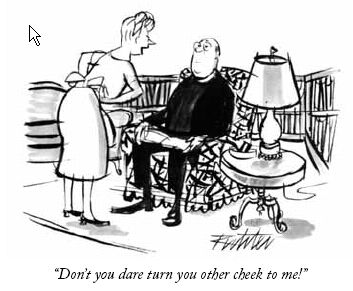
And remember, like Mr. Gridley in the picture below that is now 78-year old but remains brilliant, whether best-selling historians or ordinary bloggers, they put too much of themselves into 'it'!

Artist: Leonard Dove, The New Yorker, July 29 1933