मेघदूत: "नीचैर्गच्छत्युपरि दशा चक्रनेमिक्रमेण"

समर्थ शिष्या अक्का : "स्वामीच्या कृपाप्रसादे हे सर्व नश्वर आहे असे समजले. पण या नश्वरात तमाशा बहुत आहे."

G C Lichtenberg: “It is as if our languages were confounded: when we want a thought, they bring us a word; when we ask for a word, they give us a dash; and when we expect a dash, there comes a piece of bawdy.”

C. P. Cavafy: "I’d rather look at things than speak about them."

Martin Amis: “Gogol is funny, Tolstoy in his merciless clarity is funny, and Dostoyevsky, funnily enough, is very funny indeed; moreover, the final generation of Russian literature, before it was destroyed by Lenin and Stalin, remained emphatically comic — Bunin, Bely, Bulgakov, Zamyatin. The novel is comic because life is comic (until the inevitable tragedy of the fifth act);...”

सदानंद रेगे: "... पण तुकारामाची गाथा ज्या धुंदीनं आजपर्यंत वाचली जात होती ती धुंदी माझ्याकडे नाहीय. ती मला येऊच शकत नाही याचं कारण स्वभावतःच मी नास्तिक आहे."

".. त्यामुळं आपण त्या दारिद्र्याच्या अनुभवापलीकडे जाऊच शकत नाही. तुम्ही जर अलीकडची सगळी पुस्तके पाहिलीत...तर त्यांच्यामध्ये त्याच्याखेरीज दुसरं काही नाहीच आहे. म्हणजे माणसांच्या नात्यानात्यांतील जी सूक्ष्मता आहे ती क्वचित चितारलेली तुम्हाला दिसेल. कारण हा जो अनुभव आहे... आपले जे अनुभव आहेत ते ढोबळ प्रकारचे आहेत....."

Kenneth Goldsmith: "In 1969 the conceptual artist Douglas Huebler wrote, “The world is full of objects, more or less interesting; I do not wish to add any more.”1 I’ve come to embrace Huebler’s ideas, though it might be retooled as “The world is full of texts, more or less interesting; I do not wish to add any more.” It seems an appropriate response to a new condition in writing today: faced with an unprecedented amount of available text, the problem is not needing to write more of it; instead, we must learn to negotiate the vast quantity that exists. How I make my way through this thicket of information—how I manage it, how I parse it, how I organize and distribute it—is what distinguishes my writing from yours."

Tom Wolfe: "The first line of the doctors’ Hippocratic oath is ‘First, do no harm.’ And I think for the writers it would be: ‘First, entertain.’"

विलास सारंग: "… . . 1000 नंतर ज्या प्रकारची संस्कृती रुढ झाली , त्यामध्ये साधारणत्व विश्वात्मकता हे गुण प्राय: लुप्त झाले...आपली संस्कृती अकाली विश्वात्मक साधारणतेला मुकली आहे."

Friday, January 11, 2013

विष्णु चिंचाळकरना उमजलेले कुमार गंधर्व Kumar Gandharva as Understood by Vishnu Chinchalkar


Tomorrow January 12 2013 is 21st death anniversary of Pandit Kumar Gandharva (ಶಿವಪುತ್ರಪ್ಪ ಸಿದ್ಧರಾಮಯ್ಯ ಕಂಕಾಳಿಮಠ).

Wikipedia informs: 

"The Voyager Golden Records are phonograph records which were included aboard both Voyager spacecraft, which were launched in 1977. They contain sounds and images selected to portray the diversity of life and culture on Earth, and are intended for any intelligent extraterrestrial life form, or for future humans, who may find them."

If I had a vote, the late Kumar Gandharva's voice would be there. 


Lawewnce Krauss speculates if indeed ET life will ever find and decode them:
"I am glad they will be found to contain visual images of this beautiful blue planet as it once was, along with music, to demonstrate that intelligent beings once lived on Earth. It will also deliver simple greetings in hundreds of dialects from our species—perhaps giving the impression that we knew we were lucky to exist for a brief time on this cosmic speck, instead of suffering under the solipsistic notion that we somehow reigned supreme in a universe created for us."
Humility expressed in the quote above too would go well with Kumar's art.
 I understand almost nothing of music but he remains the greatest male singer and one of the greatest 20th century artists for me. I understand a little bit about Kabir and Bal Gandharva (बालगंधर्व) because of his music.

There is an excellent page on Panditji on Facebook. You may visit it here.

Courtesy that page, I was introduced to a very good artist Vishnu Chinchalkar (विष्णु  चिंचाळकर) 1917-2000.

Look at his following two pictures featuring Kumar.


Photo 


line drawing of Pandit Kumar Gandharva

These pictures are stunning in simplicity and yet convey Kumar's mien in all its majesty.

I have been very lucky. Some time during 1985-1987,  my friend Jayant Inamdar (जयंत इनामदार) and I attended at Karnataka Sangha, Matunga, Mumbai (कर्नाटक संघ, माटुंगा) lecture-cum-demonstration programme of Panditji, everyday evening, for almost a week. 

I remember Marathi poet Vasant Bapat (वसंत बापट) interviewing him. I still recall the late Mr. Bapat saying: I am here like a calf pushing his mother so that she lactates more! 

How true! No one in that audience- the late Gangadhar Gadgil (गंगाधर गाडगीळ) and his wife came almost everyday- could have really interviewed Kumar.  He transcended words every time he sang. He often asked (chided?)  his accompanists to play softly.

I also remember Kumar say that a lot of singers sing 'Miyan Ki Malhar' because they can's sing 'Malhar'! He also compared  raga to a painting where a singer works like a painter. 


I don't think I will ever attend a better live program than that in my life. And it was completely free. We had to just show up.

Monday, January 07, 2013

Virdhawal-I Turns 100 and, Even Better, Sells at 50!

Russ Kick, editor of  'The Graphic Canon'- Volume 1 and 2 quoted in The New York Times, November 30 2012:

 “We’re living in a golden age of the graphic novel, of comic art and of illustration in general. Legions of talented artists — who employ every method, style and approach imaginable — are creating such a flood of amazing, gorgeous, entertaining and groundbreaking material that it’s pretty much impossible to keep up with it all. What if a bunch of these artists used as their source material the greatest literature ever written?” 
 
Rachel Cooke, Guardian, November 30 2012:

"This year has delivered us a crop of graphic novels so rich and varied, you could wrap a different one for each family member and have done with other bookish presents altogether."


Virdhawal Khade (वीरधवल खाडे) is a champion swimmer and much better sportsperson than many of our star cricketers but I like him more because of his first name!

He however is Virdhawal-II in my life. The first one is Nath Madahav's (नाथ माधव) "Virdhawal".

Both are my heroes.

Recently, I bought a number of Marathi books priced at INR 50  each. They are reprints of old Marathi bestselling books that now are in public domain, their copyrights have expired. I am hoping to write on most  of them on this blog.

This is a great news for me because there was a time I was turning into bibliokleptomaniac, a book-thief!

Since I wish to own every book I want to read, the only hope for me to access forever-out-of-print Marathi books was Google Books. Read my earlier post on it here.

These low priced books are published by Samanvay Prakashan , Kolkapur (समन्वय प्रकाशन, कोल्हापूर) and their principal distributor is 'Ajab distributors', Kolhapur (अजब) phone 9422421502.

The prices printed on them are multiple times 50 but, at the moment, they are being sold at 50 each.

Reading public of Pune (पुणे) seem to have received them very well. There were crowds in the hall that were selling them. I don't have trade figures but the sales must be substantial.

One of those books I bought is "Virdhawal". Printed price INR 610.  It is 616 pages long.

Nathmadhav was the pen name of the late Mr. D M Pitale (द्वारकानाथ माधव पितळे) 1882-1928.  Read more about the author here and here.


Nathmadhav.  Isn't  he Virdhawal himself? Reading about his fight against his own disability, I feel he surely was one in real life.

Picture courtesy: Marathi Wikipedia and Government Of Maharashtra Cultural Information Portal.

This best selling book- 'Virdhawal'- was first published in 1913. As per the preface of the author for its second edition that was published in October 1923, the first edition was sold out within a year but the book could not be reprinted largely because of the high cost and the shortage of paper on account of World War I (1914-1918).

[Read Govindrao Tembe's  (गोविंदराव टेंबे) commentary on what two world wars did to Indian society and culture. I was almost in tears. Some day I will reproduce it on this blog.]


Artist: Unknown to me

I never read Virdhawal as a kid (8-10 years old) in the form of a 'words' novel but fell in love with it reading serialisation of it done in the form of a graphic novel by the late Mr. Bhaiyyasaheb Omkar (भैय्यासाहेब ओंकार) for a weekend edition of a Marathi daily (Kesari केसरी?) or a weekly. (Although I still recall many of the artist's pictures vividly, I forget the name of the publication).

 I never took clippings of them but I kept reading the issue for days. I also remember missing a couple of issues from the series, silently blaming my father for that and hurting badly for the miss.

I also remember his serialization of graphic novel of Marathi translation of H G Wells's 'The Time Machine'.

I remain grateful to the late artists- Pitale, Wells, and more than them, Omkar-  for lighting up my childhood.

I liked Omkar's art much more than that of Amar Chitra Katha (ACK) and Chandoba (चांदोबा). For a few years, he was my most favorite artist.

Even today, I miss his art. Where can I lay my hands on Bhaiyyasaheb Omkar's graphic 'Virdhawal'?


When did I last see a great graphic novel in Marathi? Frankly, I have not seen any after the ones of Mr. Omkar I  have mentioned above. (ACK books I have seen are all mythological or biographical.)

World wide graphic novel as a medium is thriving.

This is how Tim Martin describes the experience of reading a graphic novel: "Reading a graphic novel is at once a complex and instinctive act. The reader is forced not only to parse several narrative streams – speech bubbles, the silent communication of figurative attitudes and scenic arrangement, repeated visual symbols, often a narrative commentary – but also construe them as a continuous sequence that represents the passage of time. It’s an act we perform without thinking about it, but is nevertheless a complicated piece of translation between the concrete and the abstract."

Why am I not getting the opportunity to perform that act in Marathi?

If not serious graphic fiction, erotic graphic fiction (NOT porn) could have thrived in Marathi. It's a very popular genre in English.

The following looks interesting to me.


Artist: Unknown to me , courtesy: The Independent, UK July 2012

Tim Pilcher, the author of a two-volume history, 'Erotic Comics: A Graphic History', writes about the subject in relation to India:

"In India, there are interesting online web-comics, which they call "Kirtu", which is Indian for erotic comics. Present day India—moralistically and socially—is very much like Victorian England. They’ve kept the strict English principles, which we have thrown out of the window and mixed that with a strong Hindu/Muslim moralistic ethos. To actually produce erotic comics in print form would be unthinkable in India. More than anything, pornography is technically illegal, although it is widely available: A lot of softcore, but very little hardcore. There is a healthy comics industry, but it’s primary target audience is a young readership, but country is on the tip of a cultural comics revolution, where they are starting to produce publications for an older readership.. There’s an online webcomic called Savita Bhabhi, about an archetypal frustrated housewife, who has these worldly sexcapades with various men. Because she is unhappily married, this is incredibly scandalous. That is a very revolutionary concept for a prudish country like India. A country where no woman would wear a bikini on the beach. Men and women swim fully clothed. It is quite bizarre, when you see it. And they stare at Westerners stripped down to their bikinis and swim-shorts. So Savita Bhabhi has caused huge scandal, and along with that, obviously, a huge readership. They got around sixteen million visitors a month. In 2009, the website was shut down by the Indian government, but they reopened another, shortly afterwards. It was originally started by a British Indian businessman—so it was actually produced in the UK, but aimed at the Indian market. That guy knew exactly what he was doing. Culturally, he wouldn’t have been able to do that if he was an Indian businessman in India. The shame would be too great."

Wednesday, January 02, 2013

I Steal from Both: The Simpsons and Henry James

Louis Bayar:

"No matter how many times you're reminded, you will always forget you're watching an animated show. Mr. Burns and Waylon Smithers, Principal Skinner and Groundskeeper Willie, Barney and Apu and Moe and Ned Flanders and Krusty the Clown (with his superb initial "K") will seem more real than any flesh-and-blood television family. More real, maybe, than your own family because life can't distill us quite so succinctly into our essences. For that, we need art. Which "The Simpsons" manifestly is."

My younger brother Bhaiyya (Abhimanyu अभिमन्यु ) - one of  Vasant Sarwate's  (वसंत सरवटे) and the late Vijay Tendulkar's (विजय तेंडुलकर) favourite cartoonists-   introduced me to The Simpsons more than a decade ago. And the life has never been the same again.

Since then I have often looked at the world through the eyes of  The Simpsons.

Most times I have behaved like Homer Simpson, my mother and wife have been like Marge Simpson, my son and brother have been like Bart Simpson, my sister has been like Maggie Simpson, fundamentally most of my corporate bosses have been like Mr. Burns, whenever I have felt a bit intellectual I have been like Lisa Simpson, the cops have been like Chief Wiggum, politicians have been like Mayor Quimby, drivers on the roads have been like Otto Mann, when we had a tom cat - Chintya (c1969- 1981)-  he was like Snowball and slowly I am turning into Abe Simpson....

Whenever I get very critical of US and Americans- white and brown, I remember my indebtedness to that nation...She gave me 'The Simpsons' and Orson Welles...I forgive her and them...

As A O Scott says: 

“I have long been of the opinion that the entire history of American popular culture — maybe even of Western civilization — amounts to little more than a long prelude to “The Simpsons."

And thanks to the globalization, instead of Western  civilization, we can just say middle-class life.

There of course was a similar family in my past: C V Joshi (चिं. वि. जोशी) created Chimanrao's (चिमणराव)  family. That family to me is as dear as  'The Simpsons'. 

I have spent days reading and fantasizing about that family- how Chimanrao and co. might behave in a particular situation in my life.  TV serial based on it was good but not even close to the greatness of the original. You have to be Orson Welles or Yasujirō Ozu or Guru Dutt to capture its warmth on the TV screen!

In one of the greatest essays I have read in my life, 'Divine Comedy', Julian Gough writes:

 “A comparison between The Simpsons and a soap opera is instructive. A soap opera is trapped inside the rules of the format; all soaps resemble each other (like psychologically plausible realist novels). What the makers of The Simpsons did was take a soap opera and put a frame around it: "this is a cartoon about a soap opera." This freed them from the need to map its event-rate on to real life: they could map its event-rate on to cartoon life. A fast event-rate is inherently comic, so the tone is, of necessity, comic. But that is not to say it isn't serious. The Simpsons is profoundly serious. And profoundly comic. Like Aristophanes, debating the war between Athens and Sparta by writing about a sex strike by the women of Athens and beyond.

With its cartoon event-rate, a classic series of The Simpsons has more ideas over a broader cultural range than any novel written the same year. The speed, the density of information, the range of reference; the quantity, quality and rich humanity of the jokes—they make almost all contemporary novels seem slow, dour, monotonous and almost empty of ideas.

So steal from The Simpsons, not Henry James."

I steal from both! 

I may yet fail but no one can blame me for not stealing! 


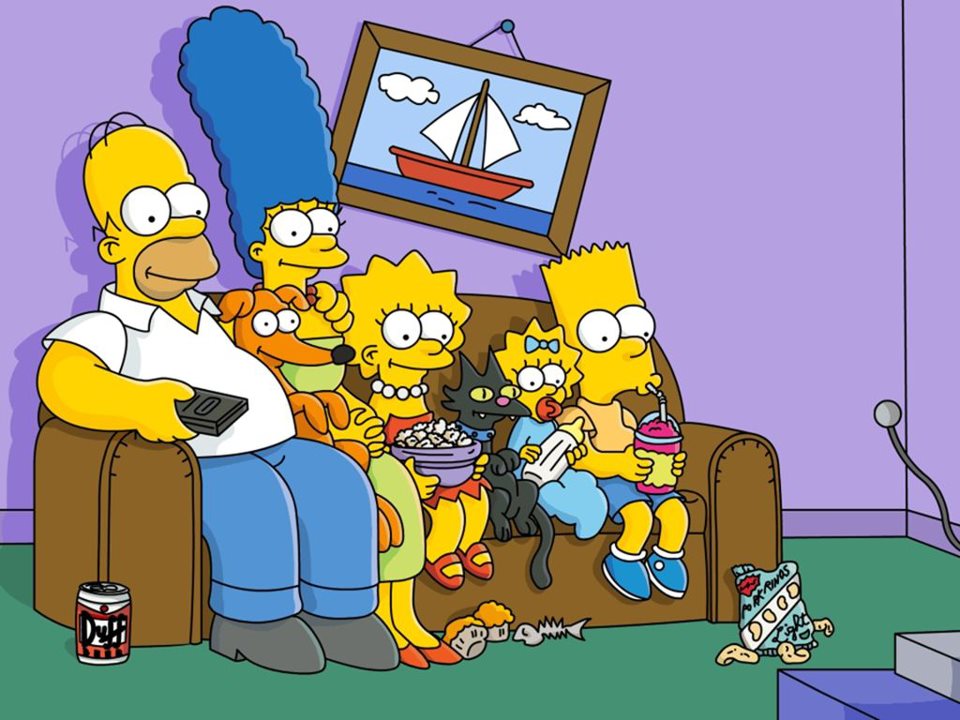
courtesy: Matt Groening, James L. Brooks, Sam Simon, Fox...

Look at the picture. It's a treasure trove. Look at the frame on the wall...Duff beer can, fish skeleton,  cupcakes on the carpet, TV remote, cat and dog sharing premium space on couch...Healthy food in Lisa's hands and junk in Bart's...How happy they look together...

They are wishing us happy 2013! 

Monday, December 31, 2012

Barring Accidents, the Sun will Rise on January 1 2013


John Crowley:
 
"Meanwhile the real world then, no matter what, will be as racked with pain and insufficiency as any human world at any time. It just won’t be racked by the same old pains and insufficiencies; it will be strange. It is forever unknowably strange, its strangeness not the strangeness of fiction or of any art or any guess but absolute. That’s its nature. Of course holding the mirror up to nature is what Hamlet insisted all playing, or pretending, must do; but—as Lewis Carroll knew—the image in a mirror, however scary or amusing or enlightening, is always reversed."
 
HOWARD MANSFIELD:

"If clock time isn’t real, what is time, anyway? We don’t understand time, and we definitely don’t want to admit that our allotment is limited. We just want to get on with our day."


Homer Simpson:

“You never know when an old calendar might come in handy. Sure, it’s not 1985 now, but who knows what tomorrow will bring?”

John Gray:

"Philosophers have always tried to show that we are not like other animals, sniffing their way uncertainly through the world. Yet after all the work of Plato and Spinoza, Descartes and Bertrand Russell we have no more reason than other animals do for believing that the sun will rise tomorrow."

According to the Hindu mythology "we are in the KALI YUGA, or Iron Age a period of decline. It was preceded by the ages of gold, silver, and bronze. After the end of the KALIYUGA and a short hiatus, a new age will begin: the age of truth (KRITA YUGA), when all the wickedness, strife, and dissension of this era will be replaced by righteousness. It is understood that this age will be ushered in by Kalki, the future
incarnation or AVATAR of VISHNU, riding on a magnificent white horse."


('Encyclopedia of Hinduism' by Constance A. Jones and James D. Ryan, 2007)

I have often wondered will this new age accompanied by Kalki riding in on a magnificent white horse will happen on  January 1 of a year or on a Gudi Padwa day. Or will it happen on a random day?

I know one thing: with each passing year, I am unlikely to witness that grand event!

Or is that I am already living in KRITA YUGA but being too much of a pessimist to realise it? Or is this a 'short hiatus'?


Artist: Kemp Starrett, The New Yorker, January 13 1934

Friday, December 28, 2012

Goodbye, Mr. Tata...Btw- I Have Taken the Blue Pill!

The Economist (October 26 2006):

"In the early 1900s, when Britain ruled India, the chairman of the colony's Railway Board, Sir Frederick Upcott, was so sceptical about Tata, then a young steel company, that he declared he would “eat every pound of steel rail” that it could produce to Britain's exacting specifications. His subsequent indigestion is not recorded, even though Tata was producing hundreds of tonnes a year by 1916."


A Case for Opium Dens: Indian industry got its first tranche of capital accumulation in the 19th century when the Tatas joined hands with the Sassoons and the British to force opium onto the Chinese. The addicts in China in that period took to opium to drown their unpleasant reality in momentary dreams, while knowing in moments of cold assessment that pipe dreams could never be realised in real life. It was only when Mao Zedong came to power in 1949 that the Chinese government banned opium dens, and people accepted their closure in the expectation that they might have a chance of achieving some of their hopes..."
Arundhati Roy:
"...The Tatas, for example, run more than 100 companies in 80 countries. They are one of India’s oldest and largest private sector power companies. They own mines, gas fields, steel plants, telephone, cable TV and broadband networks, and run whole townships. They manufacture cars and trucks, own the Taj Hotel chain, Jaguar, Land Rover, Daewoo, Tetley Tea, a publishing company, a chain of bookstores, a major brand of iodised salt and the cosmetics giant Lakme. Their advertising tagline could easily be: You Can’t Live Without Us.
According to the rules of the Gush-Up Gospel, the more you have, the more you can have..."
Mr. Ratan Tata retires this month. I have nothing to say on the man. Particularly after "Radia tapes controversy". 

I felt so disappointed. I have worked in corporates for many years and I know real life is messy and real people are complicated. But that messy and that complicated? Couldn't Tata's be different?


Siddharth Varadarajan has said about the controversy (The Hindu, November 29 2010):
 
"...In the science fiction film, “The Matrix”, Morpheus tells Neo, “You're here because you know there's something wrong with the world.” The Matrix, he says, is the world that has been pulled over everyone's eyes to blind them from the truth that they are slaves. He offers Neo the choice of a blue or red pill. “You take the blue pill and the story ends. You wake in your bed and believe whatever you want to believe. You take the red pill ... and I show you how deep the rabbit-hole goes.”

The Nira Radia audio archive loaded on to the Internet by Open and Outlook magazines last week is the red pill of our time. It reveals the source codes, networks, routers, viruses and malware that make up the matrix of the Indian State. The transmission of information, also known as “news”, between different nodes is vital for the system to work efficiently. The news is also the medium for reconciling conflicts between different sectors of the establishment. If you hear the recordings, you begin to understand the truth about the Wonderland that is India. No wonder there are many amongst us who would rather swallow the blue pill. For once you go in, the only way out is to keep digging. And yes, the rabbit-hole runs deep...

...We also hear in the tapes an iconic businessman, Ratan Tata, who today makes sanctimonious statements about crony capitalism and the danger of India becoming a banana republic, lobbying through his PR agent, Ms Radia, for A. Raja to be given the Telecom portfolio..."


Artist: William Steig, The New Yorker, 2 July 1960

"I didn't get where I am by begging for raises, Aniruddha, I lobbied for what I wanted." 

Look at the cartoon, as old as me, above. There  is not much to it except two things- catchy caption and, more importantly, the depiction of the boss. I can just go on looking at him for all day long. That is the hallmark of a great cartoonist like the late Mr. Steig (1907-2003)- she creates the lasting impact out of thin air by her art.