मेघदूत: "नीचैर्गच्छत्युपरि दशा चक्रनेमिक्रमेण"

समर्थ शिष्या अक्का : "स्वामीच्या कृपाप्रसादे हे सर्व नश्वर आहे असे समजले. पण या नश्वरात तमाशा बहुत आहे."

G C Lichtenberg: “It is as if our languages were confounded: when we want a thought, they bring us a word; when we ask for a word, they give us a dash; and when we expect a dash, there comes a piece of bawdy.”

C. P. Cavafy: "I’d rather look at things than speak about them."

Martin Amis: “Gogol is funny, Tolstoy in his merciless clarity is funny, and Dostoyevsky, funnily enough, is very funny indeed; moreover, the final generation of Russian literature, before it was destroyed by Lenin and Stalin, remained emphatically comic — Bunin, Bely, Bulgakov, Zamyatin. The novel is comic because life is comic (until the inevitable tragedy of the fifth act);...”

सदानंद रेगे: "... पण तुकारामाची गाथा ज्या धुंदीनं आजपर्यंत वाचली जात होती ती धुंदी माझ्याकडे नाहीय. ती मला येऊच शकत नाही याचं कारण स्वभावतःच मी नास्तिक आहे."

".. त्यामुळं आपण त्या दारिद्र्याच्या अनुभवापलीकडे जाऊच शकत नाही. तुम्ही जर अलीकडची सगळी पुस्तके पाहिलीत...तर त्यांच्यामध्ये त्याच्याखेरीज दुसरं काही नाहीच आहे. म्हणजे माणसांच्या नात्यानात्यांतील जी सूक्ष्मता आहे ती क्वचित चितारलेली तुम्हाला दिसेल. कारण हा जो अनुभव आहे... आपले जे अनुभव आहेत ते ढोबळ प्रकारचे आहेत....."

Kenneth Goldsmith: "In 1969 the conceptual artist Douglas Huebler wrote, “The world is full of objects, more or less interesting; I do not wish to add any more.”1 I’ve come to embrace Huebler’s ideas, though it might be retooled as “The world is full of texts, more or less interesting; I do not wish to add any more.” It seems an appropriate response to a new condition in writing today: faced with an unprecedented amount of available text, the problem is not needing to write more of it; instead, we must learn to negotiate the vast quantity that exists. How I make my way through this thicket of information—how I manage it, how I parse it, how I organize and distribute it—is what distinguishes my writing from yours."

Tom Wolfe: "The first line of the doctors’ Hippocratic oath is ‘First, do no harm.’ And I think for the writers it would be: ‘First, entertain.’"

विलास सारंग: "… . . 1000 नंतर ज्या प्रकारची संस्कृती रुढ झाली , त्यामध्ये साधारणत्व विश्वात्मकता हे गुण प्राय: लुप्त झाले...आपली संस्कृती अकाली विश्वात्मक साधारणतेला मुकली आहे."

Wednesday, October 02, 2019

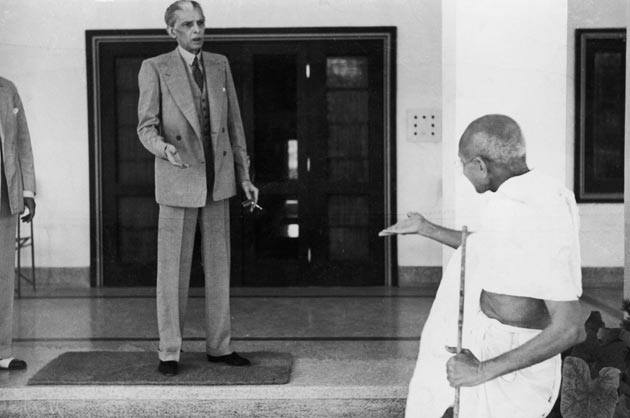
Gandhi, Jinnah and a Nervous Foot Rash

Today October 2 2019 is 150th birth anniversary of Mahatma Gandhi

कै श्री म माटे , वाङ्मय  शोभा, सप्टेंबर १९४४

Jad Adams:
"...While Wavell thought both leaders were ‘obstinate, intransigent, crafty old men,’ he at least felt they could achieve something. But his conclusion was: ‘The two great mountains have met and not even a mouse has emerged.’ Wavell analysed the differences between them: Jinnah wanted Pakistan first and independence afterwards, ‘while Gandhi wants independence first with some kind of self-determination for Muslims to be granted by a provisional government which would be predominantly Hindu.’ Jinnah simply did not believe that a Hindu-majority government would grant any significant level of Muslim self-determination. He was betting on getting Pakistan from the British before they left.

They were unable to continue their meetings, which had anyway become less than cordial, in January 1945 because both were ill, Jinnah with pleurisy. If Gandhi was often distinguished by putting this whole body into the national struggle, Jinnah was no less so: he maintained a glassy outward persona while his body was racked with disease; every public appearance took an effort of will.

Jinnah unwound enough to mention to Gandhi that he was troubled by a nervous rash on one foot. Gandhi knelt on the floor and insisted he remove Jinnah’s shoes and socks, then held the affected part, saying: ‘I know what will heal you. I will send it tomorrow morning.’ He sent a box of healing earth, which Jinnah accepted with his usual good manners, declaring he had already seen improvement, but in fact he made no more use of that than of anything else Gandhi had to offer...."
('Gandhi: The True Man Behind Modern India',  2011)

I came across the following well known picture dated 1939, capturing a moment as Gandhi was leaving Jinnah's house.

Instead if we were to imagine it dated 1944- 1945, considering what Mr. Mate and Mr. Adams are saying in the quotes above....


"Jinnahji, my brother: don't be shy, let me check your rash...."

Tuesday, October 01, 2019

सिनेमात अशा कितीतरी आश्चर्यजनक गोष्टी सर्रास असतात...Ga Di Ma and Majrooh Sultanpuri@100

#GaDiMadgulkar100 #गदिमाडगूळकर१००

#MajroohSultanpuri100

Today October 1 2019 is 100th birth anniversary of  G D Madgulkar and Majrooh Sultanpuri

मी ऑक्टोबर १५, २०१६ रोजी ह्या ब्लॉगवरील पोस्ट मध्ये लिहले होते:

"...
अशोक शहाणे म्हणतात:
 "...परिंदे मेरे साथ गाने लगे है।
इशारोसे बादल बुलाने लगे है। 
हंसी देखकर मुस्कराने लगे है। 
कदम अब मेरे डगमगाने लगे है। 
ह्या ओळी हिंदी सिनेमातल्या एका गाण्यातल्या आहेत. आणि हा अपवाद नव्हे. हिंदी सिनेमात अशा कितीतरी आश्चर्यजनक गोष्टी सर्रास असतात..." (पृष्ठ २०, 'नपेक्षा', १९६३/२००५/२००८)
[गीतकार: केदार शर्मा,  'हमारी याद आएगी', १९६१] 
माझ्यामते शैलेंद्र, साहिर लुधियानवी, मजरुह सुल्तानपुरी, नीरज वगैरे लोकांनी हिंदी सिनेमासाठी गाणी लिहिता लिहिता भारतातील काही सर्वोत्कृष्ट साहित्य लिहले आहे. त्यांची लोकप्रियता तर संतकवींसारखी आहे पण त्यांचा गौरव साहित्यकार म्हणून जसा व्हायला पाहिजे तसा झालेला नाही. 

उदाहरणार्थ, जी. ए. कुलकर्णींच्या असंख्य पत्रातील एका पत्रात ते शैलेंद्र यांना ग. दि. माडगूळकरांच्या तुलनेत कमी लेखताना दिसतात. शैलेंद्र हे जींएच्या योग्यतेचे साहित्यिक होते, गदिमांपेक्षा काकणभर चांगले गीतकार होते आणि जींएच्या पेक्षा हजारो-लाखो पटीने जास्त लोकप्रिय होते आणि अजूनही आहेत. 

...."

एक कला म्हणून हिंदी सिनेमाचे महत्व समजलेला एक मोठा मराठी साहित्यिक म्हणजे - कै. भाऊ पाध्ये... पण त्यांची हिंदी सिनेमावरची पुस्तके (उदा : मधुबाला , गुरुदत्त) मला आवडत नाहीत...

Sunday, September 29, 2019

बहिर्मुख भोंडला ....A Dance to the Music of Time

आज अश्विन शुद्ध १, शके १९४१, घटस्थापना , शारदीय नवरात्रारंभ

दुर्गा भागवत: 
"... एकूण काय, आजचा हादगा हे अनेक ग्रंथातील उचल केलेल्या संमिश्र प्रथेचे व भग्न अवशेषांचेच प्रतीक आहे"
('हादग्याची किंवा भोंडल्याची गाणीं, पृष्ठ १०९, 'संस्कृतिसंचित', २०१५, मूळ लेख 'सत्यकथा', फेब्रुवारी १९५२)


Artist: Nicolas Poussin, 'A Dance to the Music of Time',  ca 1634-36

courtesy: Wikipedia

Wednesday, September 25, 2019

त्रासिक बिछान्यावर कामचकित दोघे ....The Sex Is Horrible, And We're Miserable

आज सप्टेंबर २५, २०१९.... अरुण कोलटकर यांना जाऊन आज १५ वर्षे झाली 

खालील कार्टून पाहून अरुण कोलटकरांची "त्रासिक बिछान्यावर कामचकित दोघे" कविता आठवली
 (पृष्ठ ४७, 'अरुण कोलटकरच्या कविता', १९७७/२००३)

(बाय द वे - फक्त शीर्षक आवडले कारण उरलेल्या कवितेतील एक शब्द सुद्धा समजला नाही!)

Artist : Amy Hwang, The New Yorker, April 2018

Monday, September 23, 2019

Sigmund Freud, 80th Death Anniversary

#SigmundFreud

John Gray:
"Freud thought that civilisation is inestimably valuable – unlike some other writers in central Europe, he was never tempted by barbarism. But he also recognised that civilisation is inherently flawed, not because of political repression and corruption or economic inequality, but because of the nature of the human animal. That is why civilisation can never be rid of its faults, can never be entirely benign. I think that is true. In the language of religion, it might be called original sin. In other religions such as Buddhism, it is called original ignorance. However one wants to put it, it is a truth that humans are ineradicably flawed, and that is a commonplace in pretty much any religious tradition. It’s only recently, in the last 150 years, that the idea which Freud presented in a secular form is considered to be shocking."


Illustrator: Anne Simon

Author: Corinne Maier

Friday, September 20, 2019

The Exotic Sophia Loren@85

#SophiaLoren85


Stephen Marche, 'Consumer Products', Lapham's Quarterly, Sept. 2018:
“... Within the maelstrom of image, however, certain celebrity types return to the public consciousness again and again. Gwyneth Paltrow is not just Gwyneth. Without Greta Garbo, there is no Grace Kelly; without Grace Kelly, there is no Gwyneth. The power of this particular trope—the blond princess—is huge; Great Garbo was the most charismatic actress in history. Avenue Princess Grace in Monaco is the most expensive stretch of real estate in the world, over twice the per-square-foot value of an average Fifth Avenue apartment. Each manifestation of the Gwyneth/Grace/Garbo figure wears the skin of the previous manifestation. For women, along with the blond princess, we have the blond whore (Mae West, Tallulah Bankhead, Marilyn Monroe, Madonna), the exotic (Sophia Loren, Penélope Cruz), the independent (Katherine Hepburn, Barbara Strei­sand, Ellen Burstyn)...”

Sophia Loren, ‘Yesterday, Today, Tomorrow My Life’, 2014 (?):
“...Death is as ugly as it is normal. There’s something profoundly unnatural about having to let go of someone you love so much. You turn this way and that trying to find support, knowing full well that there isn’t any. And you feel completely alone, abandoned even by words.
Then again, is there really anything left to be said when, after fifty-six years of life together, the end comes? Every morning when I wake up I struggle to believe Carlo is no longer here. I search for him in every corner of our house. I find him in our children’s voices, which are identical to his, in the expressions of our grandchildren, who have meanwhile arrived to brighten my days. They complete my maternal feelings, in a way I would never have expected...”

Carlo Ponti:
“...Sophia and Lollobrigida began their careers miming the main parts in opera films. This was a career start that had, as I saw it, no real future, and we dropped it almost as soon as it began: singers never succeed as actresses. I have to say that actresses who have control over their career just don’t exist. It is possible that talented male stars might manage to establish an independent career for themselves. But in the whole history of cinema there is not one actress, and I mean not a single one, from Garbo to Dietrich, whose career has taken off without the help of a man....”

Pauline Small, ‘Sophia Lauren: Moulding the Star’, 2009:
“...Cinema is an art form, but it is also an industry, and the star is an employee, certainly the most prominent, of those actively working in the industry. The meanings that build around a star image are rooted in the industrial processes that govern that industry, which in turn are a manifestation of the place cinema holds in a given culture. What is so interesting about Sophia Loren is the way her persona drew on and fused aspects of two separate but inter-related industries, of two separate but inter-related cultures, in Italy and in Hollywood, into a most spectacularly successful career...”


Tuesday, September 17, 2019

Anant Pai@90

#AnantPai90  #UnclePaiDay

Today September 17 2019 is 90th birth anniversary of Anant Pai

courtesy: Amar Chitra Katha Studio

Sunday, September 15, 2019

It’s Annoying They’re Not Men!....Berthe and Edma Morisot

Madison Mainwaring, The Paris Review, July 2019:
 "...“It’s annoying they’re not men,” Édouard Manet wrote to fellow artist Henri Fantin-Latour, after meeting Berthe and Edma Morisot, two sisters from the Parisian upper crust who were promising painters. He found them “charming” and feared that because they were women, their accomplishments would inevitably go to waste. Manet thought the Morisot sisters should “further the cause of painting by marrying académiciens,” members of the jury who selected which works to display at the Académie des Beaux-Arts’s annual salon. The possibility that the Morisots might actually become artists did not seem to occur to him. Manet envisioned the Morisot sisters might make their mark in the annals of art as counselors to men in power—by influencing their tastes and sympathies, and convincing them of the worth of outsider artists (such as Manet himself).
Edma gave up her practice when she married in 1869. The next year Berthe destroyed the entirety of her own oeuvre and fell into a creative fallow period..."

अतिशय थोर असे चित्रकार एडवार माने (Édouard Manet) १८३२- १८८३ स्त्री चित्रकार-कलाकारांबद्दल वरती काय म्हणतात पहा: "... किती त्रासदायक आहे - त्या पुरुष नाहीयेत... "

"Manet thought the Morisot sisters should “further the cause of painting by marrying académiciens,” members of the jury who selected which works to display at the Académie des Beaux-Arts’s annual salon. The possibility that the Morisots might actually become artists did not seem to occur to him.... "
हा एडवार माने यांचा कमी दोष असून समाज व्यवस्थेचा (पॅरिस सारख्या ठिकाणी!) जास्त असेल पण आजही आपण, १९५० पर्यंत चित्रकारीचे काम कौशल्याने करणाऱ्या, मराठी स्त्रीयांची यादी करू लागलो तर त्यात एकतरी नाव असेल का?

स्त्रिया पुन्हा एकदा  शिक्षण घ्यायला १९व्या शतकात लागल्या हे खर पण त्यांना अनेक कलेंचे आणि अनेक व्यवसायांचे मार्ग खुले करून द्यायला महाराष्ट्रा सारख्या प्रगत राज्याला  सुद्धा खूप काळ लागला आहे... आणि अजूनही गावोगावी महाराष्ट्रात एडवार माने पसरले आहेत!


 'Julie Daydreaming'

 Artist: Berthe Morisot, 1894