खालील मजकूर, थोड्याफार फरकान, मी जून १५ २०१७ला फेसबुक वर पोस्ट केला होता:
"कै. म वा धोंड एक गोष्ट सांगायला (बहुदा) विसरतात , ते म्हणजे मर्ढेकरांच्या कित्येक कवितेतली गेयता ... हो, हो गेयता... मर्ढेकरांच्या कित्येक कविता मी गुणगुणल्या आहेत , अजूनही करतो.... माझ्या लेखी कोणताही कवी गेयतेशिवाय फार मोठा होऊच शकत नाही... पहा अरुण कोलटकर... ते तर काय बॉब डिलन चे चहाते ....
तोच प्रयत्न श्री व सौ पुलंनी जाहीर कार्यक्रमांतून केला पण नंतर सगळी गर्दी पुलंना बघायला जमु लागली (माझ्या वडिलांनी तो कार्यक्रम नाशिकला बघून समाधान व्यक्त केल होत)... कै. आनंद मोडकांनी मर्ढेकरांच्या 'बदकांचे गुपित'ला छान melancholic संगीत दिल आहे....
"कै. म वा धोंड एक गोष्ट सांगायला (बहुदा) विसरतात , ते म्हणजे मर्ढेकरांच्या कित्येक कवितेतली गेयता ... हो, हो गेयता... मर्ढेकरांच्या कित्येक कविता मी गुणगुणल्या आहेत , अजूनही करतो.... माझ्या लेखी कोणताही कवी गेयतेशिवाय फार मोठा होऊच शकत नाही... पहा अरुण कोलटकर... ते तर काय बॉब डिलन चे चहाते ....
तोच प्रयत्न श्री व सौ पुलंनी जाहीर कार्यक्रमांतून केला पण नंतर सगळी गर्दी पुलंना बघायला जमु लागली (माझ्या वडिलांनी तो कार्यक्रम नाशिकला बघून समाधान व्यक्त केल होत)... कै. आनंद मोडकांनी मर्ढेकरांच्या 'बदकांचे गुपित'ला छान melancholic संगीत दिल आहे....
गेयतेच्या महत्वाचे एक उदाहरण ... कित्येक वेळा मी तयार केलेल्या मर्ढेकरांच्या फेसबुक पेज वर ऑडेन यांचा मर्ढेकरांवरच्या प्रभावाचा उल्लेख झाला आहे ... त्या ऑडेन यांचे....
१९८३ची गोष्ट. मी एनआयबीएम, नेपियन सी रोड च्या लायब्ररीतुन एक मॅनेजमेंट सायन्सचे पुस्तक बॉरो केले होते. त्या पुस्तकात मी पहिल्यांदा ऑडेनयांची अंशतः उद्धृत केलेली खालील कविता वाचली आणि ती पूर्ण स्वरूपात मिळवून/ वाचून डायरेक्ट गुणगुणायलाच लागलो, इतका तीच्या व त्यांच्या प्रेमात पडलो... ही ती कविता, ballad :
"O what is that sound which so thrills the ear
Down in the valley drumming, drumming?
Only the scarlet soldiers, dear,
The soldiers coming.
O what is that light I see flashing so clear
Over the distance brightly, brightly?
Only the sun on their weapons, dear,
As they step lightly.
O what are they doing with all that gear,
What are they doing this morning, this morning?
Only their usual manoeuvres, dear,
Or perhaps a warning.
O why have they left the road down there,
Why are they suddenly wheeling, wheeling?
Perhaps a change in their orders, dear.
Why are you kneeling?
O haven't they stopped for the doctor's care,
Haven't they reined their horses, their horses?
Why, they are none of them wounded, dear,
None of the forces.
O is it the parson they want, with white hair,
Is it the parson, is it, is it?
No, they are passing his gateway, dear,
Without a visit.
O it must be the farmer who lives so near.
It must be the farmer so cunning, so cunning?
They have passed the farmyard already, dear,
And now they are running.
O where are you going? Stay with me here!
Were the vows you swore deceiving, deceiving?
No, I promised to love you, dear,
But I must be leaving.
O it's broken the lock and splintered the door,
O it's the gate where they're turning, turning;
Their boots are heavy on the floor
And their eyes are burning."
ही कविता १९३२ किंवा १९३६ साली लिहली गेली आहे.
हे वाचून माझ्या डोळ्यासमोर काय येत असेल तर - पहिले- दुसरे महायुद्ध, रशियन ऑक्टोबर क्रांती, चीनमधील सांस्कृतिक क्रांती यांच्या निमित्ताने झालेले असंख्य सामान्य , निरपराध लोकांचे अनन्वित हाल.... असं वाटतय की, कवितेत आहे, युरोपातील एका खेड्यातील नवरा-बायकोँवर गुजरलेला बाका प्रसंग.... शत्रू सैन्य दारापर्यंत येऊन पोचले आहे.... नवरा किंवा बायको , बहुदा नवरा, पळून जाऊ शकत आहे पण दुसऱ्याला ते शक्य नाहीये....अत्यंत साधे शब्द वापरून तयार केलेले एक हृदय विदारक चित्र माझ्या डोळ्या समोर उभे राहते.... डोळ्यात पाणी येते...
तुम्ही 'इनग्लोरियस बास्टर्डस' (Inglourious Basterds), २००९ सिनेमा पहिला असेल तर क्रिस्तोफ वाल्ट्झ फ्रेंच शेतकऱ्याशी, त्याच्या घरात दडलेले ज्यू कुटुंब शोधून काढायसाठी, कसा वागतो ते आठवा.

ऑडेन यांनी युद्धा बद्दल काही अप्रतिम कविता केलेल्या असल्यामुळ हा माझा समज दृढ झाला.
रिचर्ड डव्हेनपोर्ट-हाईन्स ( Richard Davenport-Hines) मात्र आपल्याला ह्या कवितेबद्दल हे सांगतात:

"...दुसर मला हे समजत नाही की कवीला exactly काय म्हणायचे आहे हे जाणून
घ्यायचा इतका राक्षसी आग्रह का? कवी काय म्हणायच ते म्हणून मोकळा झाला. आता
आपण आपल्याला योग्य अर्थ घेऊया."
ता. क. डव्हेनपोर्ट-हाईन्सनायांचे आणखी एक वाक्य पहा : .Religious symbolism was important to Auden...तसाच तो मर्ढेकरांना महत्वाचा होता... म्हणूनच विलास सारंग म्हणतात : बा. सी. मर्ढेकर: धार्मिक कवी ... "आधुनिक काळाला अनुसरून ते एक विशिष्ट दैवत भजत नाहीत, तर ईश्वराच्या व्यापक संकल्पनेवर त्यांचा रोख आहे." ..... मराठीतील माझे आवडते कवी सदानंद रेगे तर म्हणायचेच : " 'बायबल' माझं आवडतं पुस्तक आहे."....
१९८३ची गोष्ट. मी एनआयबीएम, नेपियन सी रोड च्या लायब्ररीतुन एक मॅनेजमेंट सायन्सचे पुस्तक बॉरो केले होते. त्या पुस्तकात मी पहिल्यांदा ऑडेनयांची अंशतः उद्धृत केलेली खालील कविता वाचली आणि ती पूर्ण स्वरूपात मिळवून/ वाचून डायरेक्ट गुणगुणायलाच लागलो, इतका तीच्या व त्यांच्या प्रेमात पडलो... ही ती कविता, ballad :
"O what is that sound which so thrills the ear
Down in the valley drumming, drumming?
Only the scarlet soldiers, dear,
The soldiers coming.
O what is that light I see flashing so clear
Over the distance brightly, brightly?
Only the sun on their weapons, dear,
As they step lightly.
O what are they doing with all that gear,
What are they doing this morning, this morning?
Only their usual manoeuvres, dear,
Or perhaps a warning.
O why have they left the road down there,
Why are they suddenly wheeling, wheeling?
Perhaps a change in their orders, dear.
Why are you kneeling?
O haven't they stopped for the doctor's care,
Haven't they reined their horses, their horses?
Why, they are none of them wounded, dear,
None of the forces.
O is it the parson they want, with white hair,
Is it the parson, is it, is it?
No, they are passing his gateway, dear,
Without a visit.
O it must be the farmer who lives so near.
It must be the farmer so cunning, so cunning?
They have passed the farmyard already, dear,
And now they are running.
O where are you going? Stay with me here!
Were the vows you swore deceiving, deceiving?
No, I promised to love you, dear,
But I must be leaving.
O it's broken the lock and splintered the door,
O it's the gate where they're turning, turning;
Their boots are heavy on the floor
And their eyes are burning."
ही कविता १९३२ किंवा १९३६ साली लिहली गेली आहे.
हे वाचून माझ्या डोळ्यासमोर काय येत असेल तर - पहिले- दुसरे महायुद्ध, रशियन ऑक्टोबर क्रांती, चीनमधील सांस्कृतिक क्रांती यांच्या निमित्ताने झालेले असंख्य सामान्य , निरपराध लोकांचे अनन्वित हाल.... असं वाटतय की, कवितेत आहे, युरोपातील एका खेड्यातील नवरा-बायकोँवर गुजरलेला बाका प्रसंग.... शत्रू सैन्य दारापर्यंत येऊन पोचले आहे.... नवरा किंवा बायको , बहुदा नवरा, पळून जाऊ शकत आहे पण दुसऱ्याला ते शक्य नाहीये....अत्यंत साधे शब्द वापरून तयार केलेले एक हृदय विदारक चित्र माझ्या डोळ्या समोर उभे राहते.... डोळ्यात पाणी येते...
तुम्ही 'इनग्लोरियस बास्टर्डस' (Inglourious Basterds), २००९ सिनेमा पहिला असेल तर क्रिस्तोफ वाल्ट्झ फ्रेंच शेतकऱ्याशी, त्याच्या घरात दडलेले ज्यू कुटुंब शोधून काढायसाठी, कसा वागतो ते आठवा.
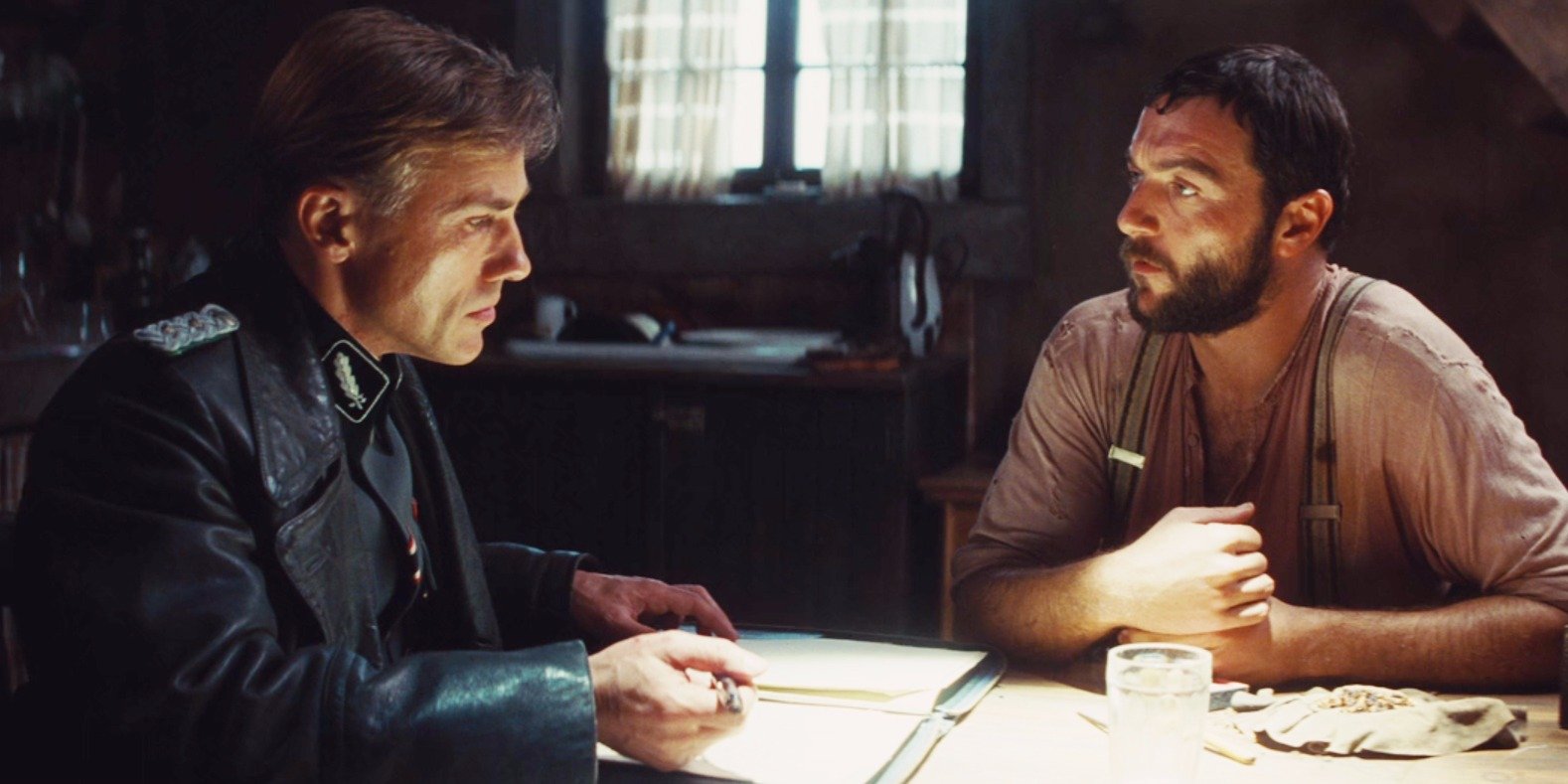
Christoph Waltz and Denis Ménochet
सौजन्य : Universal Pictures
ऑडेन यांनी युद्धा बद्दल काही अप्रतिम कविता केलेल्या असल्यामुळ हा माझा समज दृढ झाला.
रिचर्ड डव्हेनपोर्ट-हाईन्स ( Richard Davenport-Hines) मात्र आपल्याला ह्या कवितेबद्दल हे सांगतात:
"...Religious symbolism was important to Auden in the early
1930s though he did not count himself a Christian. In October 1932, for
example, apparently after looking at Bellini's picture The Agony in the Garden depicting
the arrest of Jesus and hanging in the National Gallery, he wrote his ominous
ballad beginning 'O what is that sound which so thrills the ear'. It is not a
Christian poem, and yet it was Christian imagery that excited him to write it..."
('Auden', १९९५)
जोव्वानी ब्बेलिनी (१४३०-१५१६) यांचे हेच ते अप्रतिम चित्र :

सौजन्य : Wikimedia Commons
नीट पहा... आकाशात तांबड फुटतय ('What are they doing this morning, this morning?'), येशु प्रार्थनेत आहे... आकाशात अँजेल आहे पण खाली जुडास ('O it must be the farmer who lives so near. / It must be the farmer so cunning, so cunning?') येतोय, रोमन सैन्या ('Only the sun on their weapons, dear,') बरोबर, येशूला पकडायला व क्रूसावर लटकवायला आणि म्हणून... "Their boots are heavy on the floor/ And their eyes are burning" वगैरे...
पण ऑडेनना काही वाटत असो, रिचर्ड डव्हेनपोर्ट-हाईन्सना काही वाटत असो, कविता वाचून (चित्र पाहून) माझ्या सारख्या वाचकाला काय वाटते हे सर्वात जास्त महत्वाचे आहे...आणि म्हणून मी मे २९ २०१७ला फेसबुक वरच्या पोस्ट मध्ये म्हटल :
ता. क. डव्हेनपोर्ट-हाईन्सनायांचे आणखी एक वाक्य पहा : .Religious symbolism was important to Auden...तसाच तो मर्ढेकरांना महत्वाचा होता... म्हणूनच विलास सारंग म्हणतात : बा. सी. मर्ढेकर: धार्मिक कवी ... "आधुनिक काळाला अनुसरून ते एक विशिष्ट दैवत भजत नाहीत, तर ईश्वराच्या व्यापक संकल्पनेवर त्यांचा रोख आहे." ..... मराठीतील माझे आवडते कवी सदानंद रेगे तर म्हणायचेच : " 'बायबल' माझं आवडतं पुस्तक आहे."....


